


By Masako Kamasi
In both architecture and watchmaking, time is not simply measured; it is constructed, experienced, and ultimately remembered. Few designers explore this relationship with the same clarity and intellectual depth as Paolo Volpis, whose work bridges the permanence of built space with the precision of horology.
Through Paolo Volpis Architects and his involvement in the creation of Bogneri, Volpis has developed a design philosophy that treats architecture and watchmaking not as separate disciplines, but as parallel expressions of a single idea: that form, structure, and narrative can transcend scale.
“I’ve always been fascinated by how time is experienced,” Volpis reflects. “Architecture allows you to live it, while a watch allows you to carry it.”
Architecture as a Narrative Framework
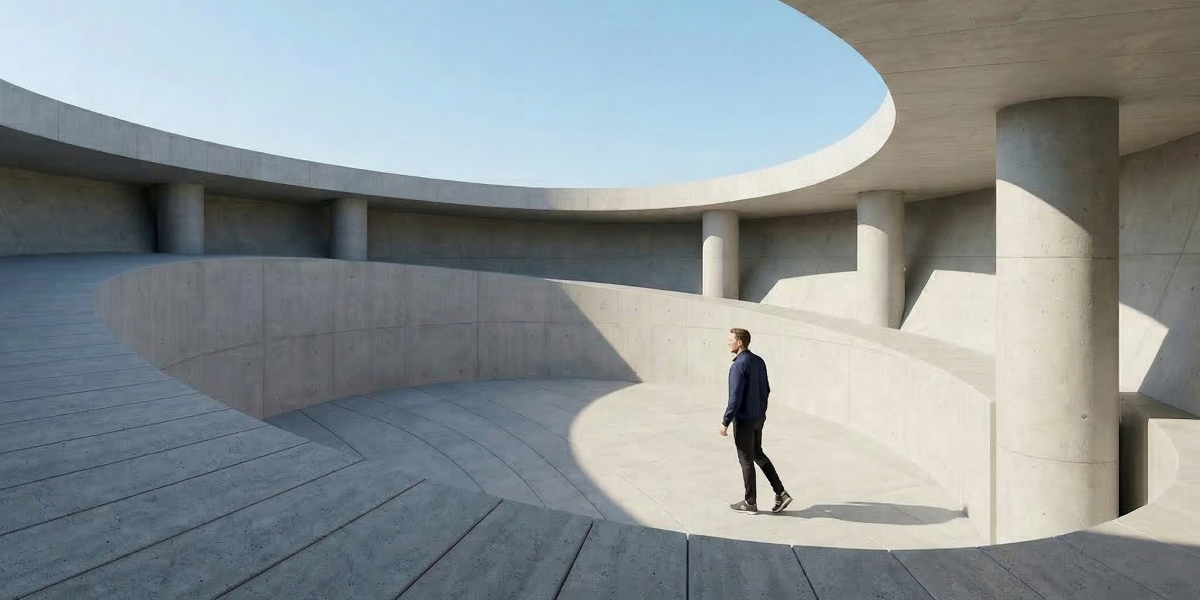
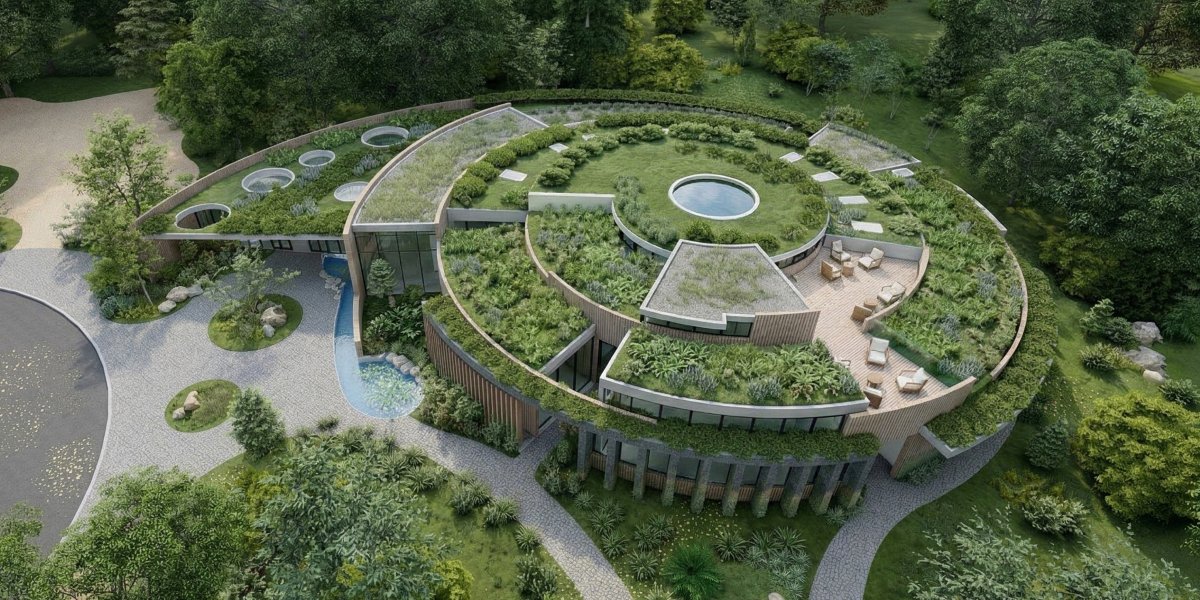
Within Paolo Volpis Architects, architecture is approached as a narrative discipline. Each project is conceived as a sequence of experiences, unfolding through space, light, and material.
There is no reliance on a predefined aesthetic or signature style. Instead, each design emerges from its context, its geography, its orientation, and the vision of the client.
“A project should never feel repeated,” Volpis explains. “Every client, every site, every condition is different, so the story has to be different.”
Entry points create anticipation, transitions shape perception, and volumes are orchestrated to reveal moments gradually. The result is an architecture that feels dynamic, evolving over time as it is inhabited.
Semi-Prefabrication as a New Layer of Luxury
A defining element of Volpis’ work is his integration of semi-prefabrication into high-end architecture. While prefabrication has historically been associated with efficiency rather than exclusivity, his approach reframes it as a tool for refinement.
Within Paolo Volpis Architects, semi-prefabrication is applied strategically, combining pre-engineered precision with fully customized design.
“People often think prefabrication and luxury are opposites,” Volpis says. “In reality, precision is a key part of luxury, and prefabrication gives you that precision.”
By producing structural components in controlled environments, the firm achieves a level of accuracy that enhances the final result. Technical challenges are addressed in advance, allowing the design to be executed more faithfully.
Time, often seen as a constraint, becomes a resource.
“When you reduce uncertainty in construction, you improve everything: quality, cost, and experience,” Volpis adds.

Boltree: Expanding Access Through Intelligent Systems
This philosophy is further developed through Boltree, the sister company of Paolo Volpis Architects. Boltree focuses on modular and prefabricated systems, applying the same principles at a broader scale.
Through Boltree, Volpis explores how intelligent processes can make high-quality design more accessible without compromising its integrity.
“With Boltree, we are not trying to simplify architecture,” Volpis explains. “We are trying to make it more efficient so that more people can experience good design.”
This approach reflects a broader redefinition of luxury, one that values intelligence and clarity as much as exclusivity.
Watchmaking as Micro-Architecture
While architecture provides a broad canvas for storytelling, watchmaking requires a more concentrated form of expression. In his work with Bogneri, Volpis translates architectural principles into the design of timepieces.
A watch becomes a form of micro-architecture. The case functions as a structural envelope, the dial as a façade, and the movement as an internal system.
“A watch is essentially a small building,” Volpis notes. “It has structure, layers, and a system that holds everything together.”
Despite the difference in scale, the principles remain consistent. Geometry, proportion, and materiality guide the design, ensuring coherence and balance.
Precision, Repetition, and Craft
One of the key connections between architecture and watchmaking lies in their shared reliance on precision and repetition. In both fields, components must be produced with accuracy and integrated seamlessly.
In semi-prefabricated architecture, repetition occurs at the level of components. Structural elements are manufactured with consistency yet assembled into unique compositions.
In watchmaking, repetition allows for refinement.
“Repetition is how you achieve precision,” Volpis explains. “It’s not about making things identical, it’s about making them better.”
This perspective bridges traditional craftsmanship with modern technology, demonstrating that the two can coexist in meaningful ways.
A Human-Centered Design Philosophy
Despite the integration of advanced systems, Volpis’ work remains deeply human-centered. At Paolo Volpis Architects, clients are directly involved in the design process.
“Architecture is personal,” Volpis says. “It has to reflect how people live, not just how it looks.”
This boutique approach ensures that each project remains unique, shaped by collaboration rather than standardization.
Similarly, in Bogneri, the focus extends beyond function to experience. Each timepiece is designed to resonate with its wearer, offering both precision and meaning.
A Unified Vision of Design
What ultimately defines the work of Paolo Volpis is his ability to unify disciplines into a coherent philosophy. Architecture, watchmaking, prefabrication, and storytelling are not separate pursuits, but interconnected aspects of a broader vision.
“The scale changes, but the principles stay the same,” Volpis reflects. “It’s always about proportion, precision, and clarity.”
Through Paolo Volpis Architects, semi-prefabrication enhances both efficiency and creativity. Through Boltree, this approach becomes more accessible. Through Bogneri, it is expressed in a more intimate form.
Takeaway
In an industry often defined by either tradition or disruption, Volpis offers a perspective that balances both. His work respects the past while embracing innovation, combining narrative, precision, and intelligent systems into a unified approach.
“Design is about creating something that lasts,” Volpis concludes. “Not just physically, but in how people experience it over time.”
Semi-prefabrication becomes not a compromise, but an enhancement, an additional layer through which luxury can be expressed. It introduces clarity, efficiency, and control, allowing design to unfold with greater precision.
In this convergence of architecture and watchmaking, of storytelling and structure, Volpis’ work suggests a broader possibility: that the future of luxury lies not in excess, but in thoughtful, intelligent design.