


The leadership publishing industry has spent decades mapping the same terrain. How to manage a team, build a strategy, navigate organizational politics, and accumulate the influence required to lead at scale. That body of work has genuine value. But it has consistently left one category of leadership skill largely unaddressed: the work of designing the systems that determine who gets access to opportunity in the first place.
This is not a soft distinction. It is the difference between a leader who performs well within existing structures and a leader who understands how those structures were built, who they were built for, and how to redesign them to produce different outcomes. ICONIC Leadership: Democratizing Access, Inspiring Transformation, authored by Chaitra Vedullapalli and Dee Dee Walsh and published through Women in Cloud, was written for the second kind of leader.
ICONIC Leadership: Democratizing Access, Inspiring Transformation, authored by Chaitra Vedullapalli and Dee Dee Walsh and published through Women in Cloud, was written to address that terrain directly. It does not position itself against the leadership literature that precedes it. It occupies the ground that literature has consistently left uncovered.
The distinction matters because the gap it fills is structural rather than philosophical. Most leadership frameworks ask leaders to examine their mindset, their habits, their relationship with power and influence. The ICONIC ARC framework asks something more specific: whether the systems a leader has built are designed to expand access or to concentrate it, and what a leader can do, pillar by pillar, to close the distance between where those systems are and where they need to be.
Each of the six pillars addresses a specific place in an organization where access either opens or contracts.
Inclusive Foundations asks whether a leader’s talent systems are architecturally designed to produce diverse outcomes, not merely committed to valuing diversity as an aspiration. The gap between aspiration and architecture is where most organizations quietly lose ground, and most are further along on one than the other by a wider margin than their leadership teams realize.
Collaborative Partnerships reframes ecosystem relationships and co-selling alliances as core leadership competencies rather than business development tactics. In a market where no single organization commands all the capabilities its customers require, the leader who builds the most generative partnerships builds the most durable organization.
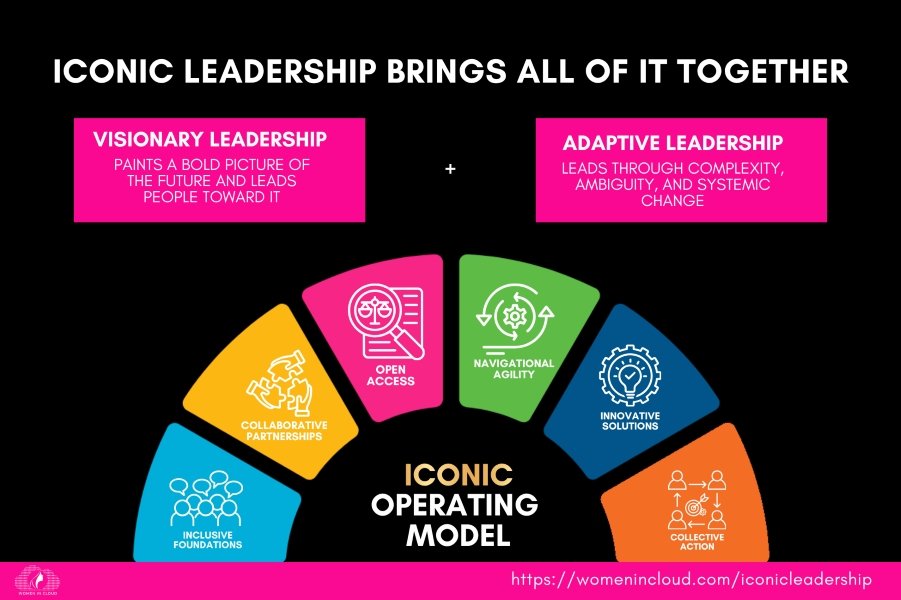
Open Access examines where leaders are inadvertently maintaining systems that concentrate rather than distribute opportunity, in procurement criteria, credentialing requirements, and the mechanisms that determine who gets seen and who gets considered. Each of these represents a policy that can be redesigned, and the book gives leaders the instruments to redesign them.
Navigational Agility addresses the speed and quality of decision-making under conditions of genuine uncertainty. The half-life of a strategy has compressed significantly, and the leaders who perform under those conditions have developed the capacity to recalibrate without losing momentum. The book treats this as a teachable competency, not an innate trait.
Innovative Solutions shifts the definition of innovation away from generating ideas and toward designing solutions that address the actual constraints of the people who need them most. The most consequential applications of AI over the next decade will come from leaders who ask who has been left out of this design before they ship.
Collective Action measures the degree to which a leader’s success generates access, visibility, and credibility for others. This pillar separates high performers from ecosystem builders, and it is the one that conventional leadership development most consistently leaves unaddressed.
Vedullapalli built Women in Cloud on the recognition that the systems allocating capital, partnership access, and market visibility in the technology economy were never designed with inclusive outcomes in mind, and that constructing alternative infrastructure would outperform advocacy for reforming the existing kind. The ICONIC ARC framework emerged from that work, tested across a global ecosystem engaging major technology partners and leaders across more than sixty countries, before it was ever codified into a book. The framework existed in practice before it existed on the page, which gives every claim it makes a different kind of grounding than frameworks built in the other direction.
The ICONIC Leadership podcast on YouTube and Spotify extends the methodology in audio form, building the audience for this conversation week by week. The ICONIC Leadership Assessment gives leaders a measurable entry point into the framework before they reach the first chapter. The ICONS documentary renders the principles visible in the lives of leaders already applying them. The book is where those threads converge into something a leader can return to, build from, and share across an entire organization.
Women in Cloud has committed to unlocking one billion dollars in new economic access for women and allies in the AI economy by 2030. Every pillar of the ICONIC ARC is calibrated toward that target. The book puts that calibration in any leader’s hands.