


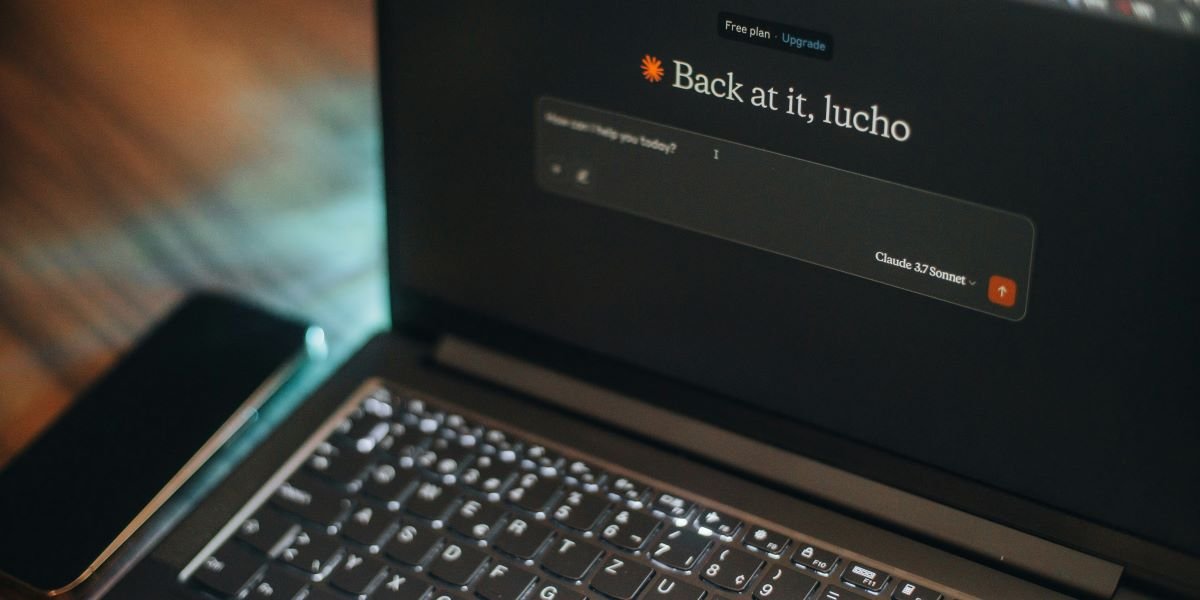
Anthropic, the San Francisco-based artificial intelligence company behind the Claude model family, is in talks to acquire Israeli AI startup Decart for approximately $6 billion, a deal that would mark the company’s largest known acquisition and arrive just months before an anticipated public offering expected later this year.
Key Takeaways
- Anthropic is in advanced discussions to acquire Decart AI for approximately $6 billion, which would represent a roughly 50% premium over Decart’s nearly $4 billion valuation from a May 2026 funding round.
- Decart builds three core products: DOS, an optimization stack that delivers 1,600 tokens per second for agentic inference against an industry average of roughly 200; Lucy, a real-time video transformation model; and Oasis, an interactive world model for robotics and autonomous systems.
- Decart’s team would join Anthropic’s inference and performance organization to help scale computing infrastructure as demand for Claude surges.
- The acquisition would be Anthropic’s fifth of 2026 and comes as the company prepares for an IPO reportedly projected at a valuation of $2 trillion or more.
- Decart was founded in 2023 by Israeli brothers Dean and Orian Leitersdorf and Moshe Shalev; its investors include Nvidia, Sequoia Capital, Radical Ventures, and Adobe Ventures.
DOS, Lucy, and Oasis Form the Core of What Anthropic Is Buying
Decart is not a single-product company. The startup operates across three interconnected product lines, all built around the premise that AI needs to run at the speed of physical reality to be useful in production environments. The foundation layer is DOS, the Decart Optimization Stack, which functions as a hardware-to-model inference and training platform. DOS runs across Nvidia GPUs, Google TPUs, and Amazon Trainium chips, and Decart claims it delivers 1,600 tokens per second for agentic inference, roughly eight times the industry average the company benchmarks at around 200 tokens per second. For video processing, DOS handles full-HD inference at up to 100 frames per second.
On top of DOS sit two model families. Lucy is a real-time video transformation model that modifies live footage as it plays. In e-commerce applications, Lucy enables virtual try-on for apparel and accessories, processing video feeds with sub-30-millisecond response times so that shoppers can see themselves wearing products without ever touching them. The model is also deployed across live advertising insertion and streaming platform applications. Lucy 2.5, the current production version, runs on Amazon Trainium3 silicon and generates live video edits at 30 frames per second.
Oasis is the parallel product built for physical AI. The model generates interactive, three-dimensional simulation environments designed for robotics training, autonomous vehicle development, and manufacturing logistics. Oasis 3, the current version, produces multi-view simulations from a single coherent world state, allowing autonomous systems to train across scenarios that would be too dangerous, too expensive, or too rare to replicate in the physical world. The original Oasis demo, a fully playable AI-generated game world released in late 2024, reached one million users within 72 hours and put Decart on the radar of the broader AI industry.
The Strategic Logic Centers on Inference Efficiency at Scale
For Anthropic, the acquisition is less about Decart’s consumer-facing models and more about what DOS can do for the company’s core business. Anthropic has been scaling Claude aggressively throughout 2026, and the surge in adoption has placed increasing strain on computing infrastructure. DOS is designed to extract more performance from existing hardware, which means Anthropic could serve more users, run more complex models, and process more queries without proportionally expanding its data center footprint.
That efficiency story connects directly to Anthropic’s financial narrative heading into its IPO. The company filed a confidential S-1 with the Securities and Exchange Commission in June 2026 and reportedly began scheduling investor meetings by mid-July. A deal that demonstrably lowers the cost per query for Claude would strengthen the margin profile that Anthropic presents to public market investors. Reports have projected the company’s annual revenue could reach between $100 billion and $120 billion by the end of 2026, a more than tenfold increase over the prior year, with an IPO valuation reportedly projected at $2 trillion or more.
The acquisition would also be Anthropic’s fifth of 2026, signaling a shift from the company’s historically disciplined approach to mergers and acquisitions. Anthropic has spent most of its existence building in-house rather than acquiring, but the pace of deals this year suggests a strategic pivot toward consolidation as the company transitions from a private research lab into a publicly traded technology platform.
Decart’s Investor Base Reflects the AI Industry’s Overlapping Alliances
Decart raised $300 million in May 2026 in a Series B round led by Radical Ventures. Nvidia, Sequoia Capital, Benchmark, Zeev Ventures, Atreides Management, Valor Equity Partners, and Adobe Ventures all participated. That round valued the startup at nearly $4 billion, up from $3.1 billion in August 2025. A $6 billion acquisition price represents a roughly 50% premium over that valuation in just three months, a steep markup but not unusual for a strategic acquisition where the buyer values the technology and team over the round’s original financial structure.
The Nvidia investment introduces a layer of complexity that reflects how entangled the AI industry’s capital relationships have become. Nvidia has committed over $40 billion in AI equity investments in 2026 alone, often following a pattern in which the chipmaker takes a stake, the portfolio company signs a long-term GPU commitment, and some of the GPU revenue flows back as a return on the equity. Decart, however, is an atypical fit for that pattern because its DOS stack is explicitly chip-agnostic, running across Nvidia, Amazon, and Google hardware. That cross-platform positioning is part of what makes the technology attractive to Anthropic, which operates across multiple cloud providers and hardware configurations.
Decart was founded in 2023 by three Israeli engineers: brothers Dean and Orian Leitersdorf and Moshe Shalev. The company emerged from stealth with a seed round led by Sequoia after demonstrating what it described as unprecedented efficiency in real-time AI training and inference. The founding team’s background spans deep systems engineering and GPU-level optimization, skills that are in short supply across the AI industry and that Anthropic would absorb directly into its inference and performance organization if the deal closes.
The Deal Has Not Been Finalized and Could Still Collapse
Multiple reports have emphasized that the talks remain preliminary. Neither Anthropic nor Decart has issued an official statement confirming the acquisition, and representatives for both companies have declined to comment. The deal could fall through over valuation disagreements, regulatory review, or changes in Anthropic’s IPO timeline.
If completed, the acquisition would reshape the competitive landscape of AI infrastructure. Anthropic would gain a vertically integrated optimization stack that spans from chip-level efficiency tuning to production-scale world models, capabilities that directly compete with offerings from Google DeepMind, OpenAI, and the hyperscale cloud providers themselves. For Decart’s existing customers and partners, including Amazon Web Services, which features Decart as a reference deployment on Trainium, the acquisition would raise questions about whether DOS remains available as a standalone product or becomes exclusive to Anthropic’s internal infrastructure.
The timing of the deal also places it within the broader context of AI industry consolidation in 2026. As the largest AI labs prepare for public markets, the incentive to lock in proprietary infrastructure advantages has intensified. Anthropic’s move on Decart signals that the company views inference efficiency, not just model capability, as a decisive competitive edge for the next phase of the AI industry.
FAQs
What Does Decart AI Do?
Decart builds three core products. DOS is an optimization stack that improves the efficiency of AI training and inference across Nvidia GPUs, Google TPUs, and Amazon Trainium chips. Lucy is a real-time video transformation model used in e-commerce virtual try-on and live advertising. Oasis is an interactive world model that generates simulation environments for robotics, autonomous vehicles, and manufacturing training. All three products are built around the principle of running AI at real-time speed with sub-30-millisecond response latency.
Why Does Anthropic Want to Acquire Decart?
The primary motivation is infrastructure efficiency. Anthropic is experiencing surging demand for its Claude models and needs to scale its computing capacity without proportionally increasing costs. Decart’s DOS optimization stack can extract more performance from existing hardware, lowering the cost per query. The acquisition also strengthens Anthropic’s position ahead of a planned IPO by improving its margin profile and demonstrating a path to sustainable infrastructure scaling.
When Is Anthropic Expected to Go Public?
Anthropic filed a confidential S-1 with the SEC in June 2026 and reportedly began scheduling investor meetings in mid-July. Reports have indicated the IPO could happen as early as October 2026, with a projected valuation of $2 trillion or more. The company’s annual revenue has been projected to reach between $100 billion and $120 billion by the end of 2026.