


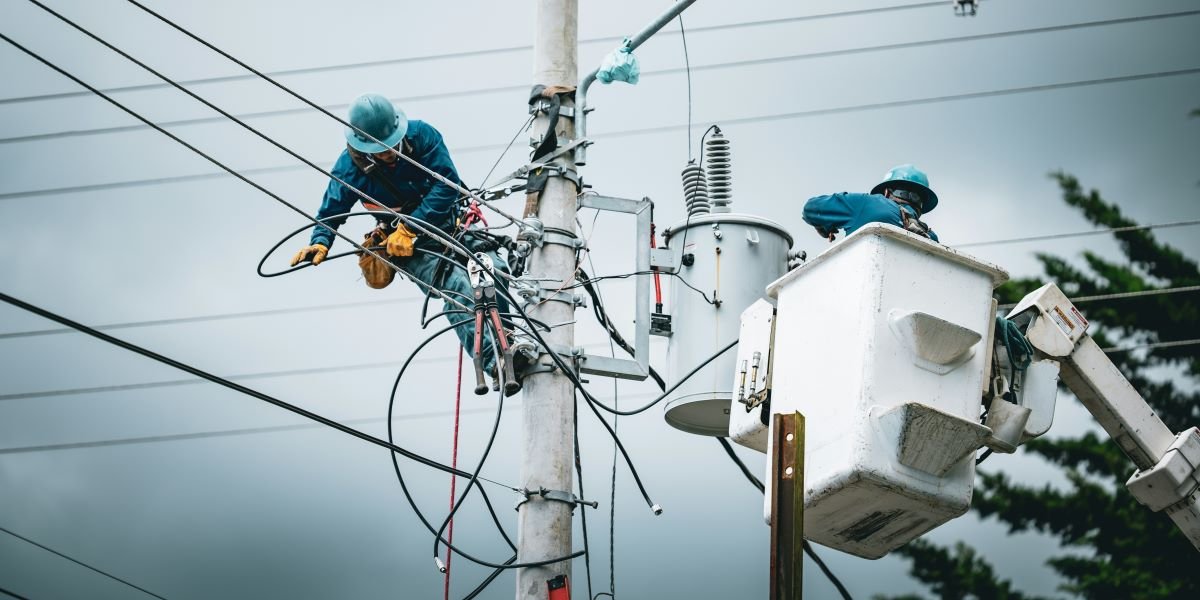
An executive order published in the Federal Register on Monday, August 31, declares a national emergency over foreign-produced equipment operating within the United States bulk-power system, the network of high-voltage transmission lines, substations, transformers, and generation infrastructure that delivers electricity across the country. Executive Order 14421, signed August 26 under the authority of the International Emergency Economic Powers Act and the National Emergencies Act, gives the Department of Energy broad authority to prohibit, condition, or require the removal of foreign-manufactured grid components linked to entities in 24 countries currently under U.S. arms embargoes or sanctions. The order applies to all transactions initiated after August 26, 2026, and the Department of Energy has been directed to publish implementing rules before the end of the year.
Key Takeaways
- Executive Order 14421 declares a national emergency under the International Emergency Economic Powers Act and the National Emergencies Act, citing foreign-produced bulk-power system equipment as an unusual and extraordinary threat to U.S. national security, foreign policy, and the economy.
- The order authorizes the Department of Energy to prohibit or impose conditions on purchases, imports, transfers, or installations of foreign-produced bulk-power system equipment, including associated software, firmware, digital services, maintenance services, and remote-access capabilities.
- Covered equipment includes components operating at 69 kilovolts or higher: substation transformers, reactors, capacitors, grid-connected inverters, battery energy storage systems, generators, industrial control systems, protective relays, metering equipment, high-voltage circuit breakers, and generation turbines.
- The restrictions target equipment linked to entities in 24 countries under U.S. arms embargoes or strict sanctions, with particular focus on Chinese-manufactured components currently operating within U.S. energy infrastructure.
- The order does not apply to facilities used for local distribution of electric energy, meaning the restrictions target transmission-level and generation-level infrastructure rather than the neighborhood-level wiring and transformers that deliver power to homes and businesses.
- The Department of Energy has been directed to publish implementing rules that will define compliance timelines, risk assessment procedures, and the practical scope of the order’s restrictions; those rules are expected before the end of 2026.
The Order Covers Both New Purchases and Equipment Already Operating in the Grid
Executive Order 14421 draws a clear line between future transactions and existing installations, but addresses both. For new transactions initiated after August 26, 2026, the Department of Energy can prohibit the acquisition, importation, transfer, or installation of covered foreign-produced equipment when the Secretary of Energy, in coordination with the Director of the Office of Management and Budget and other Cabinet members, determines that the equipment poses an undue risk of sabotage, unauthorized access, or other disruption to the bulk-power system; an undue risk of catastrophic effects on the security or resiliency of U.S. critical infrastructure; or an unacceptable risk to national security.
For foreign-produced equipment already in operation within the U.S. grid, the order takes a different approach. Rather than mandating immediate removal, it permits the Secretary of Energy to impose conditions on the continued use and operation of such equipment as needed to address the risks the order identifies. Those conditions could include requirements to identify, monitor, secure, replace, or remove specific components, with the order directing the Secretary to bear in mind the effects on grid reliability, safety, availability of replacement equipment, and continuity of electrical service when setting those conditions.
The distinction matters because the U.S. bulk-power system already contains foreign-manufactured components that cannot be replaced overnight. Large power transformers, for example, have lead times that can stretch to 18 months or longer, and the domestic manufacturing base for these components has been a documented concern in federal energy assessments for more than a decade. Mandating immediate removal of all foreign equipment would risk destabilizing the grid the order is designed to protect. The phased approach, blocking new acquisitions while conditioning continued use of existing equipment, reflects that practical constraint.
Twenty-Four Countries Fall Under the Equipment Restrictions
The order targets equipment linked to entities in countries currently subject to U.S. arms embargoes or placed on strict sanctions lists. The 24 countries identified in the order’s implementing framework are Afghanistan, Belarus, the Central African Republic, China, the Republic of the Congo, Cuba, Cyprus (through September 30), Eritrea, Ethiopia, Haiti, Iran, Iraq, Lebanon, Libya, Myanmar, Nicaragua, North Korea, Russia, Somalia, South Sudan, Sudan, Syria, Venezuela, and Zimbabwe.
China occupies a distinct position on that list because of the volume of Chinese-manufactured components currently installed in or available to the U.S. energy sector. Chinese firms produce a significant share of the global supply of grid-connected inverters, battery energy storage systems, and transformer components, and Chinese-manufactured equipment is already embedded in portions of the U.S. grid. The order’s focus on Chinese-made equipment reflects long-standing concerns, documented across multiple federal assessments and congressional hearings, that equipment produced by companies operating under Chinese government oversight could contain backdoors, firmware vulnerabilities, or remote-access capabilities that would allow adversarial interference with grid operations.
The inclusion of countries like Haiti, the Central African Republic, and Cyprus may appear incongruent with a cybersecurity-focused order, but the list is derived from existing U.S. arms embargo and sanctions designations rather than a bespoke assessment of each country’s grid equipment manufacturing capability. The practical effect is that any bulk-power system equipment with a supply chain connection to any entity in those 24 countries falls within the order’s scope, even if the country in question is not a significant producer of grid technology.
Surging Electricity Demand From AI and Data Centers Accelerated the Timeline
The executive order’s fact sheet identifies the rapid growth of artificial intelligence infrastructure, advanced manufacturing, and defense production as factors that have increased America’s dependence on foreign-produced grid components. The connection between AI development and grid security is more direct than it might initially appear. Data centers that train and operate large AI models consume enormous volumes of electricity, and the buildout of new data center capacity across the United States has placed strain on a transmission and generation infrastructure that was already operating with limited reserve margins in several regions.
That demand growth has created procurement pressure on utilities and grid operators to acquire and install new generation equipment, transformer capacity, and energy storage systems as quickly as possible. When domestic manufacturing lead times for critical components like large power transformers stretch beyond a year, the fastest path to meeting demand often runs through foreign suppliers. The executive order intervenes in that supply chain by placing a security screen between foreign manufacturers and the U.S. grid, accepting the trade-off of longer procurement timelines in exchange for reduced exposure to foreign-produced components that federal agencies have identified as potential attack vectors.
An April 2025 executive order on grid reliability and security laid the policy groundwork by directing agencies to prevent the premature retirement of dispatchable power plants. That order resulted in 17,000 megawatts of generation capacity, enough to supply electricity to approximately 12.75 million homes, being preserved from forced retirement. A June 2026 executive order on AI and cybersecurity and a July 2026 executive order on defense supply chains further built the administrative framework. Executive Order 14421 adds the enforcement mechanism that the earlier policy guidance lacked: the national emergency declaration under IEEPA gives the executive branch legal authority to block transactions and compel action, rather than relying on voluntary compliance or agency guidance.
The Department of Energy’s Implementing Rules Will Determine the Practical Impact
The executive order establishes the legal authority and the broad parameters, but the Department of Energy’s forthcoming implementing rules will determine the actual compliance burden, cost impact, and enforcement scope. The order directs the Secretary of Energy to publish those rules and to identify specific bulk-power system equipment currently in operation that may pose the risks described in the order. The Secretary is also directed to prepare recommendations for the National Security Advisor on how to address the risks posed by identified equipment.
Until those rules are published, the practical effect of the order on utilities, grid operators, and equipment suppliers remains partially undefined. The order draws the boundary; the rules will determine who has to act, how quickly, and at what cost. Equipment suppliers with supply chain connections to any of the 24 listed countries will need to assess their exposure. Utilities with foreign-manufactured components already installed in their systems will need to determine whether those components fall within the order’s scope and, if so, what conditions the Department of Energy may impose on their continued operation.
The rules are expected before the end of 2026. The interval between the order’s signing on August 26 and the publication of implementing rules represents a window of uncertainty that the energy industry, equipment manufacturers, and grid operators will be watching closely. For domestic manufacturers of grid components, the order potentially accelerates demand for American-made transformers, inverters, control systems, and energy storage equipment, though the domestic manufacturing base would need to scale significantly to absorb the volume of procurement that would shift away from foreign suppliers under a strict implementation of the order’s restrictions.
The Order Fits Within a Broader Pattern of Supply Chain Security Actions
Executive Order 14421 is not an isolated action. The order follows a sequence of executive actions over the past 18 months that have applied similar supply chain security logic across multiple sectors of the U.S. economy. Section 232 tariffs on steel, aluminum, copper, polysilicon, trucks, automobiles, timber, lumber, semiconductors, and pharmaceuticals addressed manufacturing supply chain dependencies. The July 2026 defense supply chain executive order targeted critical materials and components for military equipment. An August 2026 proclamation addressed the national security threat posed by imported drones and drone components.
The bulk-power system order extends the same framework to electrical infrastructure, applying the principle that critical systems should not depend on components produced in countries where the government could compel manufacturers to embed vulnerabilities, restrict supply during a geopolitical crisis, or exploit remote-access capabilities for intelligence collection or sabotage. Whether that principle produces net security gains depends on how quickly domestic manufacturing capacity can scale, how effectively the Department of Energy calibrates the implementing rules to avoid disrupting grid reliability, and whether the cost of replacing foreign components gets passed through to electricity ratepayers or absorbed through federal investment.
The Federal Register publication on August 31 formalizes the order and starts the regulatory clock on the Department of Energy’s rulemaking process. For the energy industry, equipment manufacturers, utilities, and grid operators across the country, the next several months will determine how the order’s broad authority translates into specific operational requirements.
FAQs
What does the executive order on the bulk-power system do?
Executive Order 14421 declares a national emergency over foreign-produced equipment in the U.S. bulk-power system and authorizes the Department of Energy to prohibit or condition the purchase, import, or installation of foreign-manufactured grid components that pose cybersecurity or national security risks. The order also permits conditions to be placed on foreign equipment already operating in the grid.
What equipment does the order cover?
The order covers bulk-power system components operating at 69 kilovolts or higher, including substation transformers, reactors, capacitors, grid-connected inverters, battery energy storage systems, generators, industrial control systems, protective relays, metering equipment, high-voltage circuit breakers, generation turbines, and associated software, firmware, and remote-access capabilities. It does not cover facilities used for local distribution of electric energy.
Which countries are affected?
The order targets equipment linked to entities in 24 countries under U.S. arms embargoes or sanctions: Afghanistan, Belarus, the Central African Republic, China, the Republic of the Congo, Cuba, Cyprus (through September 30), Eritrea, Ethiopia, Haiti, Iran, Iraq, Lebanon, Libya, Myanmar, Nicaragua, North Korea, Russia, Somalia, South Sudan, Sudan, Syria, Venezuela, and Zimbabwe.
Does the order require immediate removal of foreign equipment already in the grid?
The order does not mandate immediate removal. It permits the Secretary of Energy to impose conditions on the continued use of foreign equipment already in operation, including requirements to identify, monitor, secure, replace, or remove components, while accounting for effects on grid reliability, safety, and continuity of service.
When will the Department of Energy publish the implementing rules?
The Department of Energy has been directed to publish rules operationalizing the order. Those rules are expected before the end of 2026 and will define compliance timelines, risk assessment procedures, and the specific scope of restrictions on foreign-produced equipment.