


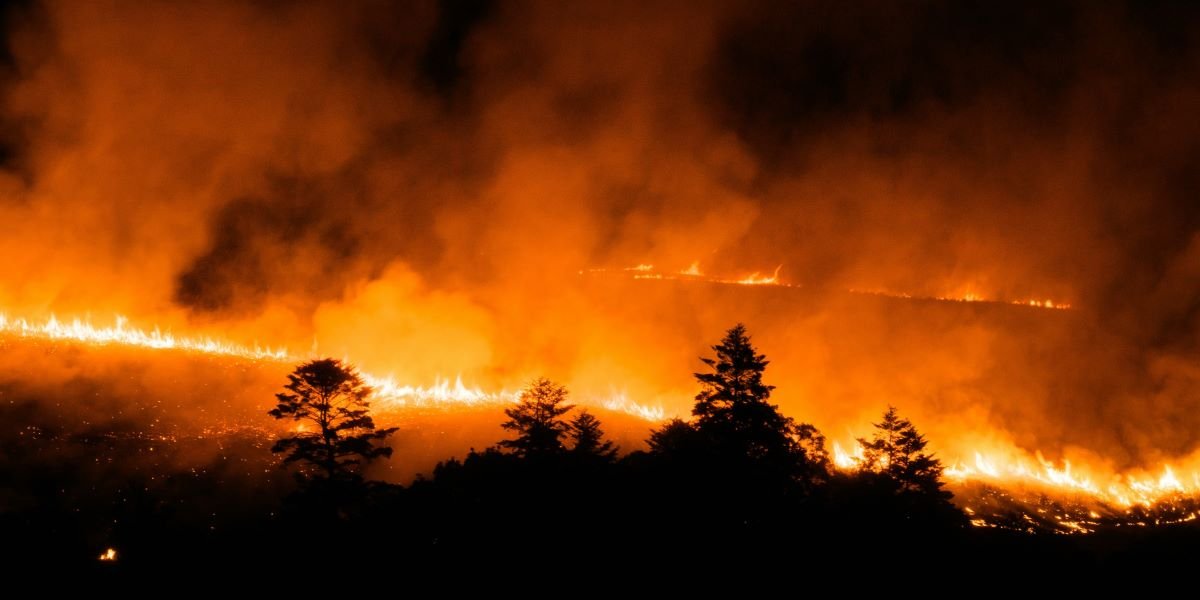
The Hawk Fire burning northwest of Reno, Nevada has grown to 15,051 acres with zero containment as of Monday morning, August 24, forcing approximately 42,000 people from their homes and placing another 45,000 under evacuation warnings. The human-caused fire, which ignited near Verdi on Saturday morning and exploded overnight into one of the largest evacuations in the region’s recent history, has destroyed homes, triggered hospital evacuations, cut power to roughly 10,000 customers, and deployed more than 1,000 firefighters and Nevada National Guard helicopters to a front line that continues to push toward populated neighborhoods on Reno’s urban edge.
Key Takeaways
- The Hawk Fire has burned 15,051 acres across the Peavine Peak area of the Humboldt-Toiyabe National Forest as of 9:30 a.m. Monday, August 24, with 0% containment.
- Approximately 42,000 residents have evacuated and an additional 45,000 have been warned to prepare; roughly 14,000 homes are within the evacuation zone.
- At least six people have been injured, including three first responders and three civilians; residential structures have been confirmed destroyed, though unsafe conditions have prevented a full damage assessment.
- Governor Joe Lombardo declared a state of emergency in Washoe County; Nevada National Guard helicopters are providing aerial water drops alongside ground crews.
- Firefighters reported progress overnight Monday holding the fire’s advance, but officials warned that hot, dry, and breezy conditions are expected to continue supporting active fire behavior over the next 48 hours.
The Fire Grew From 2,500 Acres to Over 15,000 in Less Than 48 Hours
The Hawk Fire was first reported near Verdi in Washoe County at approximately 11:25 a.m. on Saturday, August 22. By Saturday evening, the fire had reached 2,500 acres, driven by strong winds, low humidity, and dry vegetation across the rugged foothills that ring the Humboldt-Toiyabe National Forest northwest of the city. The National Interagency Fire Center tracked the most significant expansion between the early morning hours of August 23, when the fire behavior escalated to what InciWeb classified as “extreme,” with wind-driven runs and erratic directional shifts that sent flames through terrain faster than crews could establish containment lines.
By Sunday afternoon, the fire had surpassed 10,500 acres and continued to advance toward the southern flank of Peavine Peak, where residential neighborhoods sit along the boundary between wildland and urban development. The fire crossed the 15,000-acre threshold overnight Sunday into Monday, reaching 15,051 acres by 9:30 a.m. on August 24 with zero containment. Officials confirmed that 720 personnel were deployed directly on the fire, with total first responder involvement exceeding 1,000 including law enforcement, emergency management, and support crews.
Saturday Night Brought the Fire’s Most Chaotic Hours
Washoe County Sheriff Darin Balaam described Saturday night as the most dangerous phase of the fire’s progression. Shifting winds sent flames in multiple directions simultaneously, causing the fire to jump over fire trucks and creating conditions where responders could not safely access active hot spots while residents were simultaneously attempting to evacuate. The combination of moving flames, poor visibility from smoke, and the volume of civilian vehicles on evacuation routes created what Balaam called an “extremely confusing” operational environment.
The fire’s behavior during those hours forced rapid-sequence evacuations across northwest Reno’s foothill communities. Residents in some areas received evacuation orders with little advance warning, leaving in the middle of the night as flames advanced through brush and timber on the hillsides above their homes. Cari Kieffer, a resident whose property sits on the outskirts of the city, learned through social media video that her house had burned down. The footage showed only a scorched basketball hoop remaining on the property.
Two Hospitals Evacuated Patients as 14,000 Homes Sit in the Fire’s Path
The Hawk Fire’s proximity to urban infrastructure has produced impacts that extend well beyond residential evacuations. Northwest Specialty Hospital, which operates rehabilitation and behavioral health programs within the evacuation warning area, began evacuating patients on Sunday as a precaution. The hospital stated that the safety of its patients and staff was the highest priority and that it was coordinating with emergency responders to close the facility temporarily. The emergency room at North Valleys, an extension of Northern Nevada Medical Center, also temporarily closed after a mandated evacuation order was issued for its location.
Approximately 14,000 homes are located within the active evacuation zone, according to authorities. The exact number of structures destroyed or damaged has not been confirmed. Officials said Monday that unsafe conditions, including active fire behavior, falling debris, and compromised access roads, have prevented damage assessment teams from entering the most heavily affected areas. Reno Fire Chief Richard Edwards urged residents in warning zones to be prepared to leave immediately when told to do so, or even sooner, describing the Hawk Fire as “a very dynamic incident” being driven by winds that can reverse direction with little warning.
Governor Declares State of Emergency as National Guard Joins the Response
Governor Lombardo declared a state of emergency in Washoe County on Saturday, freeing up state resources and positioning Nevada to request federal assistance if the fire’s scope continues to expand. The Nevada National Guard deployed helicopters for aerial water drops to supplement ground-based firefighting operations. NV Energy reported roughly 10,000 customers without power across the affected areas, and a long stretch of U.S. 395, one of the primary north-south corridors through the region, was closed to traffic.
The University of Nevada, Reno, where approximately 20,000 undergraduates had moved into campus housing over the weekend, remained just outside the evacuation zone and held normal classes on Monday. However, public schools across much of the affected area canceled Monday classes, and the Washoe County Sheriff’s Office said it was monitoring whether the county jail, located near the evacuation boundary, would need to be evacuated.
The Hawk Fire is operating under unified command involving the United States Forest Service, the Truckee Meadows Fire Protection District, and the Reno Fire Department. Crews on Monday were focused on holding the fire east of Dog Valley Road and south of U.S. 395, two critical boundaries that, if breached, would expose additional residential areas and transportation corridors to the fire’s advance.
Monday Brought Limited Progress but No Change in Containment
Fire officials reported some progress Monday morning, saying crews had made gains overnight in slowing the fire’s advance “despite extreme fire behavior observed during the incident.” By noon, some evacuation orders on the fire’s southern flank had been downgraded from mandatory evacuation (red) to “get set” warning status (yellow), allowing a limited number of residents to remain in place while staying prepared to leave.
The cautious optimism was tempered by the weather outlook. Officials warned that hot, dry, and breezy conditions are expected to persist over the next 48 hours, supporting continued active fire behavior and limiting the window for containment gains. The fire remains at 0% containment, and the trajectory toward populated areas has not been fully arrested. Health officials urged residents across the broader Reno-Sparks metropolitan area to stay indoors and reduce physical activity due to elevated dust and smoke levels that have pushed air quality into the moderate-to-unhealthy range.
The Hawk Fire arrives in a fire season that has already produced evacuations on a scale rarely seen in consecutive months. Earlier in August, three wildfires north of Reno forced more than 13,000 residents from their homes. In eastern Washington state, wildfires near Spokane forced the evacuation of 60,000 people. The pattern of large, fast-moving fires threatening urban boundaries has repeated across the western United States throughout the summer, driven by persistent drought conditions, below-average humidity, and high temperatures that have kept vegetation at combustible moisture levels well into late August.
FAQs
What Caused the Hawk Fire?
Officials have described the fire as “human-caused” but have not specified whether it was intentional or accidental. No further details about how the determination was made have been released. The investigation remains ongoing.
How Many People Have Been Evacuated?
Approximately 42,000 people have been evacuated from their homes, and an additional 45,000 have been placed under evacuation warnings, meaning they should be prepared to leave on short notice. Roughly 14,000 homes are within the evacuation zone. Some areas on the fire’s southern flank saw their status downgraded to warning level by midday Monday.
Is the University of Nevada, Reno Campus Affected?
The UNR campus is located just outside the evacuation zone and held normal classes on Monday, August 24. However, many public schools in the broader Reno-Sparks area canceled Monday classes due to the fire and air quality conditions.