


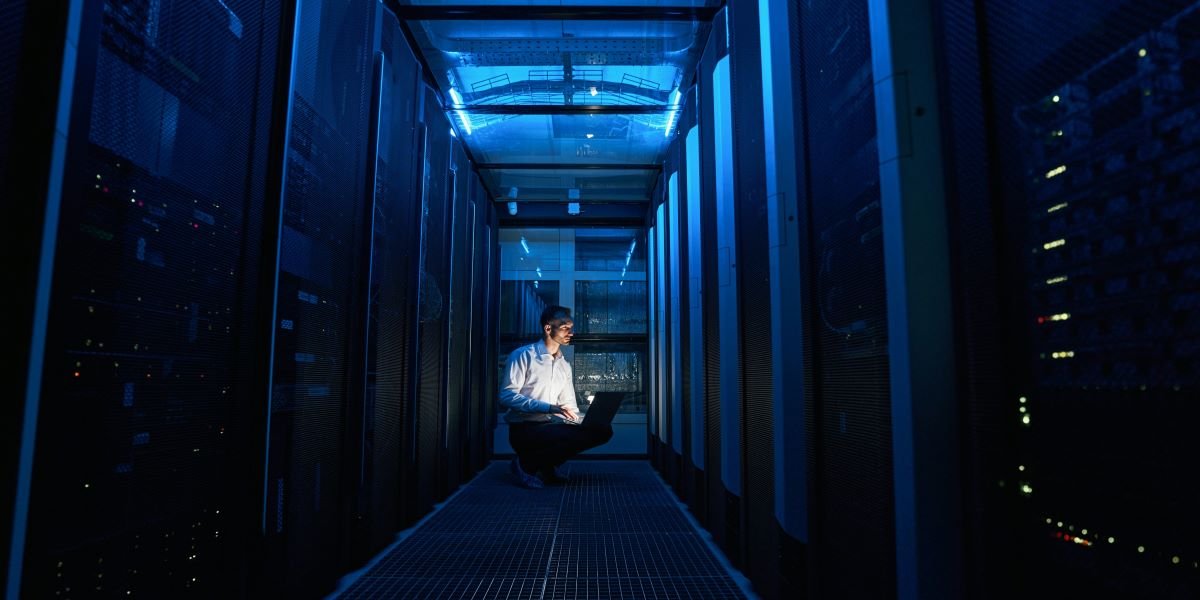
Global nuclear power capacity could more than triple by 2060, the head of the International Atomic Energy Agency told the United Nations General Assembly on October 23. The agency cited AI-powered data centers among the drivers. In the U.S., data centers already used 4.4% of the country’s electricity in 2023, a share that could reach 12% by 2028.
Key Takeaways
- Under its high-case scenario, the IAEA projects global nuclear capacity rising from 377.1 gigawatts at the end of 2025 to 1,284 gigawatts by 2060, about 3.4 times the current level.
- The IAEA’s low-case scenario projects 696 gigawatts by 2060, nearly double today’s capacity.
- U.S. data centers used 176 terawatt-hours of electricity in 2023, about 4.4% of the national total, according to a Department of Energy report.
- That share could reach 6.7% to 12% by 2028, or 325 to 580 terawatt-hours.
- Small modular reactors make up 28% of new nuclear capacity in the IAEA’s high-case projection.
IAEA Projects Nuclear Capacity Could Reach 1,284 Gigawatts by 2060
IAEA Director General Rafael Grossi presented the agency’s annual report to the U.N. General Assembly on Friday, October 23. He said nuclear power use could more than triple by 2060, driven by electrification, data centers powered by artificial intelligence and technology companies’ demand for reliable, carbon-free power.
The figures come from the IAEA’s 46th annual projections report, “Energy, Electricity and Nuclear Power Estimates for the Period up to 2060,” released September 15 at the agency’s General Conference in Vienna. It is the first edition to project out to 2060, and the sixth straight year the IAEA has raised its outlook.
At the end of 2025, 413 nuclear reactors were operating worldwide, with 377.1 gigawatts of capacity. In 2025, nuclear plants produced about 10% of global electricity and a quarter of the world’s low-carbon electricity. More than 60 new reactors are under construction.
High and Low Scenarios Show a Wide Range for the Future of Nuclear Energy
The “more than triple” figure comes from the IAEA’s high-case scenario, which assumes countries follow through on their stated plans to expand nuclear power. In that case, global capacity reaches 1,045 gigawatts by 2050 and 1,284 gigawatts by 2060.
The low-case scenario assumes current trends continue with few policy changes. It projects 641 gigawatts by 2050 and 696 gigawatts by 2060, still nearly double today’s capacity. The gap between the two scenarios is the most important number for readers to understand. The future of nuclear energy depends on government policy, financing and construction timelines, not only on demand.
AI Data Center Power Consumption Is Rising Fast in the U.S.
The U.S. offers a clear view of the demand side. A congressionally mandated Department of Energy report, produced by Lawrence Berkeley National Laboratory, found that data centers used about 176 terawatt-hours of electricity in 2023, or 4.4% of total U.S. consumption. That was up from 58 terawatt-hours in 2014.
The report projects data center electricity use could reach 325 to 580 terawatt-hours by 2028, or 6.7% to 12% of national consumption. That implies annual growth of 13% to 27%. The range is wide because AI adoption, construction pace and efficiency gains are all uncertain. The researchers note that their estimates rely on limited data, since the industry does not report energy use consistently.
Why AI Power Demand Is Turning Attention to Nuclear
Data centers need power around the clock, every day of the year. That steady demand is one reason technology companies and energy planners are looking at nuclear plants, which produce a constant supply of electricity without carbon emissions. The IAEA specifically cited technology companies’ demand for reliable, carbon-free power as a growth driver.
For U.S. households and businesses, rising demand raises practical questions about where new power plants will be built, how quickly grid connections can be added and who pays for new infrastructure. Energy costs are already a pressure point across the economy, from electricity bills to record diesel prices during the fall harvest. How new demand is met will shape those costs for years.
Small Modular Reactors Take a Larger Role in the Outlook
Small modular reactors are a growing part of the IAEA’s projections. These are smaller nuclear reactors designed to be built from factory-made modules, which could make them faster to deploy than conventional large plants.
In the high-case scenario, small modular reactors account for 28% of the 1,017 gigawatts of new nuclear capacity added through 2060. In the low case, they account for 23%. Last year’s projections put their share at 24% in the high case and 5% in the low case, so the IAEA now expects these smaller reactors to matter much more than it did a year ago.
An Aging Reactor Fleet Shapes the Outlook
New construction is only part of the picture. Two of every three reactors operating today have run for more than 30 years, and 45% have run for more than 40 years. Under the high case, about one-third of today’s reactors would be retired by 2060. Under the low case, nearly two-thirds would be. Extending the life of existing plants is as important to the outlook as building new ones.
FAQs
What Are Small Modular Reactors?
Small modular reactors are nuclear reactors designed to be built from factory-made modules, typically producing up to about 300 megawatts of electricity per unit, according to the IAEA. They are smaller than conventional nuclear plants and are intended to be faster and more flexible to deploy.
Are There Any Small Modular Reactors in Operation?
The first small modular reactors are now online or under construction, according to coverage of the IAEA’s latest projections. In the IAEA’s high-case scenario, they would account for 28% of new nuclear capacity added through 2060.
What Is the Future of Nuclear Energy?
The IAEA projects global nuclear capacity could reach 1,284 gigawatts by 2060 in its high-case scenario, about 3.4 times the 2025 level. Its low-case scenario projects 696 gigawatts, nearly double current capacity.
How Much Electricity Do Data Centers Use?
U.S. data centers used about 176 terawatt-hours of electricity in 2023, or 4.4% of total U.S. consumption, according to a Department of Energy report. That could rise to between 6.7% and 12% by 2028.