


American universities have spent much of the past five years trying to answer a question that sounds simple but has become politically loaded. What exactly should civic education look like now?
Some schools leaned harder into leadership programs after 2020. Others quietly scaled them back. Courses tied to race, civil rights history, and protest movements became points of conflict in several states. Even student-service programs started getting pulled into larger political arguments. Meanwhile, enrollment trends shifted again after the pandemic years.
That changing environment forms part of the backdrop behind the Ambassador Young Fellows Program, a fellowship initiative launched in 2025 at Anderson University. The program did not appear suddenly. Its launch followed several years of public discussion surrounding nonviolent leadership education, civil rights curriculum projects, and civic-engagement training connected to universities and schools in South Carolina and beyond.
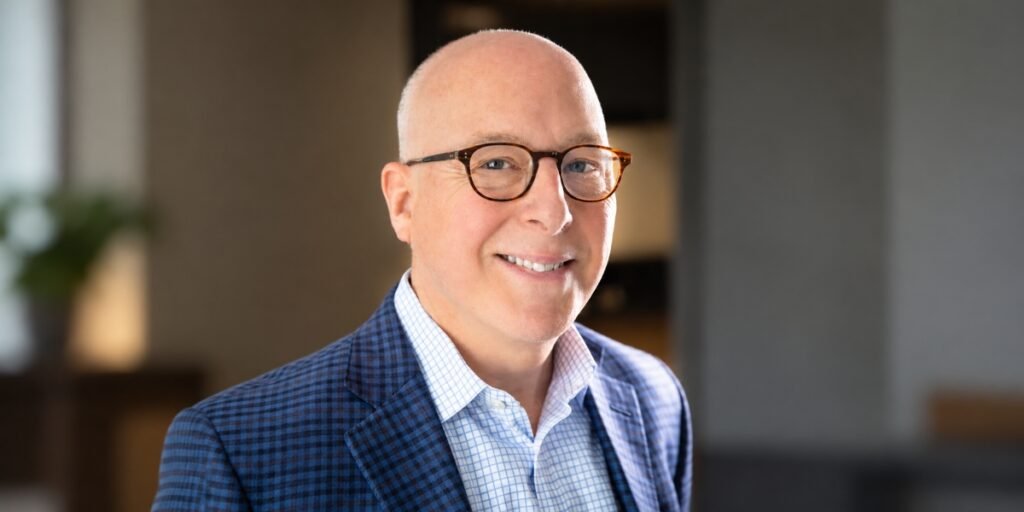
The fellowship itself was created under the direction of Matthew Daniels, whose academic work has largely centered on law, political thought, and human-rights education. Long before the fellowship formally existed, Daniels had already published commentary in outlets such as The Hill, USA Today, The Tennessean, and The Washington Informer. Those articles often focused on nonviolence, civic participation, digital media, and public leadership during periods of political tension. Some dealt with international human-rights issues. Others argued that schools and universities should place greater emphasis on civil rights education and historical literacy.
In hindsight, many of those themes later resurfaced inside the fellowship model itself. Not word-for-word. But the overlap is difficult to miss.
The early roots of the program were also connected to broader curriculum discussions taking place in South Carolina. In September 2024, Fox Carolina reported on a new MLK-centered curriculum initiative tied to state education efforts and university partnerships. Daniels appeared in that reporting alongside a discussion of nonviolent leadership instruction and classroom-based civic education. At the time, the coverage focused mostly on schools and curriculum development. The fellowship had not yet fully entered public view. But several ideas that would later shape the Ambassador Young Fellows Program were already circulating publicly through those educational discussions.
Then came 2025.
Anderson University formally introduced the Ambassador Young Fellows Program as a week-long educational fellowship focused on civil rights history, civic engagement, and nonviolent leadership principles. University statements described the initiative as being developed in collaboration with the Andrew Young Foundation. The launch period received coverage from local and regional media outlets, including Independent Mail, Baptist Courier, Fox Carolina, and Greenville’s Post and Courier. Most reports described the fellowship in institutional terms rather than ideological ones. The emphasis stayed on educational programming, student recruitment, and university partnerships.
The timing mattered too. Colleges across the country were still adjusting to debates over diversity programs, campus speech, and civic instruction. Some universities reduced certain initiatives under political pressure. Others expanded public-service and leadership programs instead. In that sense, the fellowship entered a crowded and tense educational landscape rather than a neutral one.
The program’s first recruitment cycle reflected its broader academic goals. According to information released by Anderson University, the inaugural cohort included students from historically Black colleges and universities, along with participants from other accredited institutions nationwide. University figures stated that 17 students came from HBCUs and another 16 attended schools affiliated with the Council for Christian Colleges and Universities. Participating institutions included Allen University, Benedict College, Claflin University, Voorhees University, and Wheaton College.
The numbers themselves were not massive. That was never really the point.
The fellowship was purposefully structured in a way to be small and in-person rather than large-scale or even done virtually. In addition to attending lectures and discussion groups, students did service learning projects throughout the week-long event. They also made trips to Atlanta for historical sites related to the civil rights movement and the memory of Martin Luther King, Jr. At the conclusion of the fellowship, students made collaborative presentations based on the topics from the event.
University material repeatedly referred to six organizing ideas shaping the curriculum: love, conscience, freedom, justice, perseverance, and hope. The language came directly from civil rights leadership traditions associated with King and Andrew Young. But the fellowship itself was not structured as a traditional academic course. There were no semester grades or degree credits attached to the program. It functioned more as a short-term educational fellowship combining historical study with discussion and community-based activity.
Media attention around the initiative expanded gradually during 2025 and early 2026. Christianity Today later covered the fellowship within the context of faith-based civil rights education efforts. Baptist Press framed the program as part of a broader response to growing public negativity and political hostility on campuses and online spaces. Fox Carolina linked the fellowship to larger curriculum efforts already underway in South Carolina schools. Across most of the coverage, the reporting stayed focused on institutional rollout, educational goals, and the fellowship’s development rather than on individual student stories.
The program continued into 2026 with a scheduled fellowship session held from May 11 through May 16. Anderson University described the initiative as an annual program moving forward. Whether it eventually expands beyond its current size remains uncertain. University-based fellowship programs are initiated regularly, with many of them being deliberately kept small. Nevertheless, the Ambassador Young Fellows Program was started during a time when institutions of higher learning around America were reviewing what civic engagement and leadership development programs could incorporate regarding their histories of civil rights. The discussion continues to this day.