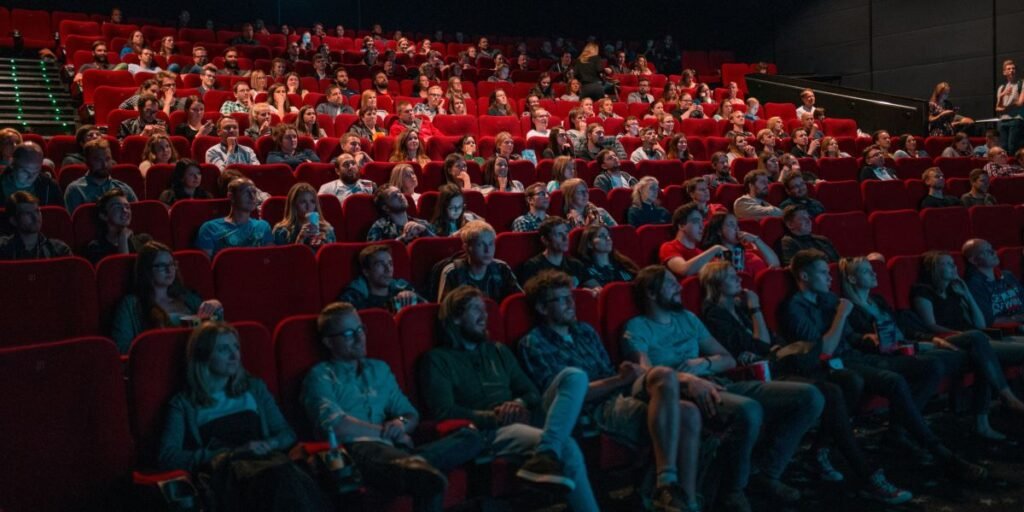



As the international entertainment scene shifts towards a more integrated and all-encompassing era, institutions that serve these industry and cultural demands are becoming increasingly relevant. The past decade has seen international acknowledgment of creative industries thrive across borders, fueled in part by streaming, cross-cultural collaborations, and shifting narratives around representation. From local festivals gaining global followings to mentorship-driven talent programs, there is a growing need for platforms that couple prestige with purpose. Amid the revolution, one European-based initiative has quietly emerged as a notable force: the Septimius Awards.
Founded in 2022 and held annually in Amsterdam, the Septimius Awards was created with the vision of honoring excellence in television and film all over the globe by promoting diversity and inclusion. Its namesake, the Roman Emperor Lucius Septimius Severus, who was himself of North African origin, is a symbol of multiculturalism and overcoming conventional stereotypes. This guiding ethos has had an influence not only on the makeup of the awards but on its future expansion plans. Rather than attempting to position itself as an alternative to such storied institutions as the Oscars or Cannes, Septimius has chosen to expand in a direction dictated by itself, based on cultural exchange and fresh talent.
With Jan-Willem Breure, a creative industry professional born in Rwanda, guiding the helm, the awards have grown in scope and ambition. Breure’s own history, from orphanhood as a baby in Rwanda to his adoption by missionaries and later graduation from the Royal Academy of Art in The Hague in 2011, has informed much of the event’s character. Breure was outspoken about his experiences of systemic discrimination throughout his university days in the Netherlands, experiences that, in his view, have served to enhance his passion for amplifying diverse voices.
The last few years have witnessed an increased focus on the future-oriented initiatives of the awards. In 2024, organizers announced a plan to increase the number of award categories to cater to the changing face of visual storytelling and audience interaction. These new categories are forecasted to involve honors for up-and-coming talent in interactive media, short-form material, and social impact storytelling.
In 2024, Septimius Awards hosted Academy Award winner Cuba Gooding Jr. as a special guest, and Stedman Graham also became an official ambassador for the Septimius Awards, further solidifying its commitment to identity and diversity leadership. This move was viewed by many as further evidence of the growing importance of the awards event. And its regular commitment to high-profile celebrity endorsers provides further legitimacy to its intent of supporting and providing a connection between mainstream Western media and countries with global pools of talent. Both public ambassadorship and behind-the-scenes advisory roles are represented by them, with industry outreach and educational programming of specific interest.
Through its expansion, the Septimius Awards has consistently placed a focus on inclusion. From its multilingual panels of jurors to its cross-regional nomination criteria, the awards attempt to ensure an even playing field that prioritizes artistic value over budget or geography. Notably, Septimius actively nominates talent from Eastern Europe, Asia, and Africa, aiming to provide a global stage for voices often overlooked by traditional Western-centric awards. In 2022, more than 40 percent of the nominees were from regions other than North America and Western Europe, according to the organization’s statistics. Through 2024, organizers indicated that year-over-year submissions increased by 60 percent, with new entries from nations such as South Korea, Nigeria, and Argentina earning notice.
The 2024 awards saw significant triumphs for African and Indian talent. The South African series Shaka iLembe proudly took home the award for Best Costume Design, recognizing Sheli Masondo’s meticulous and historically authentic work. Furthermore, the Indian content creators Svengers were honored with the Best Content Creators award, highlighting the growing influence of digital storytelling from the region. The local people in Amsterdam expressed immense happiness and pride that their city was the venue where such diverse and international talent received well-deserved recognition.
Adding to its expansive vision, Septimius has also launched “Septimius Pictures,” a film production foundation, and the “Septimius Fund,” a fund dedicated to championing diverse projects and initiatives within film and media. Septimius Pictures is actively developing films, with its first major project being the documentary United Races. This groundbreaking documentary aims to explore the most important historical and technological contributions of all races, including Africans, Native Americans, Aboriginals, Asians, Middle Easterners, and Caucasians. The documentary seeks to combat increasing polarization by identifying the root cause of racism and promoting systemic change through highlighting the contributions and collaborations of various races. It challenges long-held beliefs and has featured several celebrities, including the acclaimed actress Shohreh Aghdashloo and Irene Bedard, known for her powerful voice acting and advocacy for Native American issues.
The problems that accompany such aspirations are not to be taken lightly. The international landscape of awards is complete, and more recent ventures face questions over sustainability and legitimacy. But by establishing its vision in lived experience and cultural diversity, the Septimius Awards has been able to create a niche that speaks to a generation of filmmakers and artists looking for alternatives to traditionally elite institutions. This is not a bid to copy Hollywood’s playbook. It’s a bid to write a new one.
With Breure’s stewardship leading the awards into the next chapter, the story around the Septimius Awards seems to be changing. No longer simply a European-centered platform for world cinema, the platform is now positioning itself as a movement, fueled by mentorship, cultural awareness, and a refusal to disconnect art from identity. With new partnerships in the offing, shifting categories, greater industry participation, and ventures into film production and funding, the Septimius Awards mark a larger transition in the way creative accolades are redefined.
From its symbolic title to its roots and international ambitions, the entire name Septimius Awards continues to spark conversation. Whether that conversation will ultimately yield a lasting impact will be determined by its capacity for balancing growth with integrity. For the time being, its path indicates a place that cares not just about who is telling the story, but how and why they are doing so.