

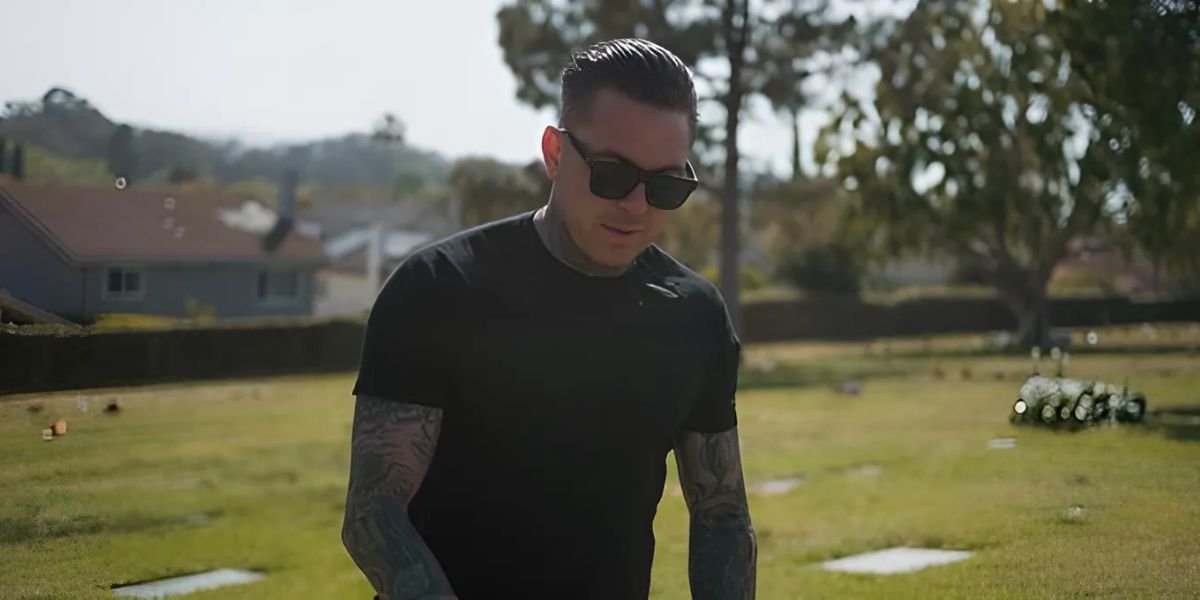
The Threshing Floor isn’t necessarily your standard addiction recovery film. It doesn’t always rely on tidy narratives or predictable arcs of redemption. Instead, this documentary attempts to dig deep into the complex and often messy process of healing, guided by faith, friendship, and a filmmaking approach that feels as raw as the story it seeks to share.
At the center is Tim Arrigo, a former addict whose transformation into a clinical counselor is rooted in his lived experience. His past, which once might have been a source of shame, has now become a vital aspect of his ability to help others. While his on-screen journey is undeniably powerful, the story behind the camera is just as striking.
Director Brad Alexander, who grew up alongside Tim in Orange County, brings an intimacy to the film that few documentarians might have access to. Their shared history meant the walls were already down. Alexander wasn’t a seasoned documentary filmmaker. He came from the punk rock scene, skateboarding culture, and commercial shoots. That unconventional path seems to have shaped his instincts to create something real, unscripted, and emotionally immediate.
Rather than shoot in studios or staged environments, the crew returned to the places that helped shape their youth: weathered skateparks, old school lots, and even the intersection where Tim nearly lost his life in a car crash. The Threshing Floor unfolds in real environments, capturing all the grit, unpredictability, and emotion that naturally come with them, rather than using curated scenes.
This rawness was both stylistic and philosophical. Alexander’s years in DIY subcultures seem to have sharpened his ability to read moments as they happened and follow the story as it evolved. That intuition proved critical, especially when the project shifted in a direction no one had initially planned.
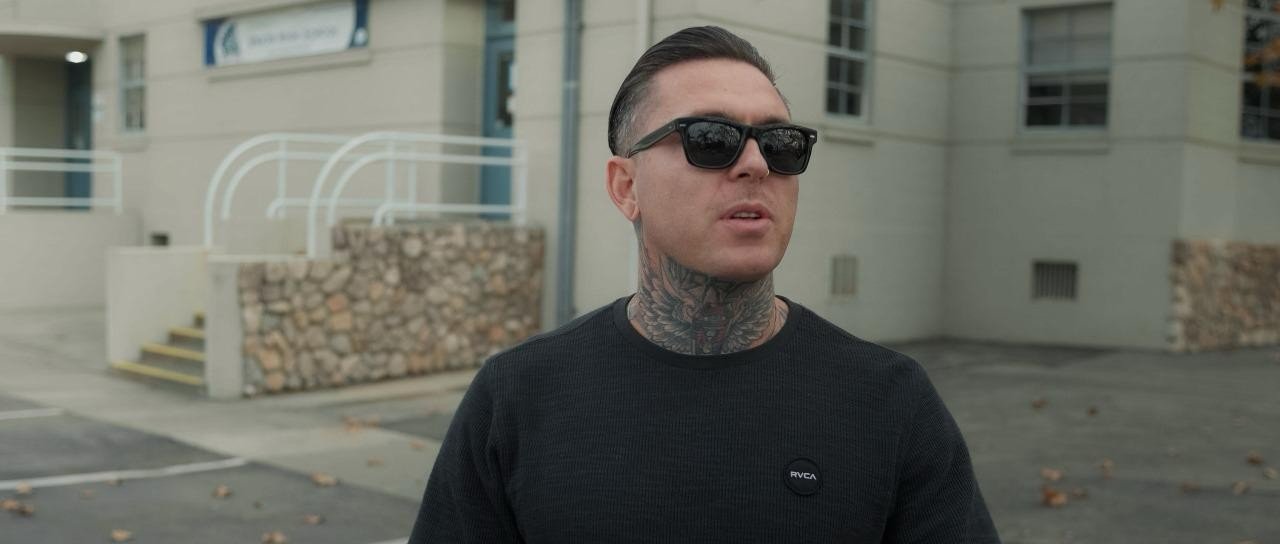
Photo Courtesy: Brad Alexander
A major turning point came when Tim opened up about Kevin, a friend he lost to an overdose. As interviews with Kevin’s family were added to the film, it became clear that The Threshing Floor was no longer solely about Tim’s story. It seemed to have evolved into a collective memorial, a tribute to those who didn’t survive. Kevin’s sequence stands out as one of the film’s most heart-wrenching and significant moments, strengthening the documentary’s role as a broader narrative about loss, love, and the resilience of community.
Producer Reed Stoecker played a key role in transforming the concept into a full-fledged film. Although he came from a tech and startup background, his skill set translated effectively. Stoecker’s ability to manage logistics, adapt on the fly, and build trust among stakeholders helped the team navigate challenges like tight budgets, evolving scope, and distribution hurdles without sacrificing the film’s integrity.
With Stoecker involved, the project stayed on track and emotionally centered. His presence helped ensure that the storytelling never lost its urgency or heart, even as the production scaled.
Faith, too, was never an afterthought. It was always at the foundation. From day one, the filmmakers knew they weren’t just documenting recovery. They were also capturing resurrection. That belief shaped everything, from scene structure to how they portrayed grief, forgiveness, and grace.
Photo Courtesy: Brad Alexander
The result is a film that feels emotionally significant to its creators as much as to its audience. For everyone involved, this was more than a film shoot; it was a reckoning, a healing, and a transformation.
Though Tim Arrigo is the central figure, The Threshing Floor seems to be ultimately about a community that is brave enough to show their scars, creative enough to shape them into something lasting, and faithful enough to believe those stories could save lives.
This documentary is a film that can serve as a living artifact of pain transformed into purpose, and its ripple effect might be just beginning.