


When OpenAI acquired personal finance startup Hiro Finance on April 13, 2026, many observers called it a quiet move. It was not. It was the second fintech acquisition the company has made in under a year, following its purchase of investment startup Roi in October 2025. Taken together, the pattern is clear: OpenAI is not waiting for the financial services industry to come to it. It is building the capability to sit between hundreds of millions of users and their money — and it is doing so deliberately, deal by deal.
What Hiro Finance Was — and Why OpenAI Wanted It
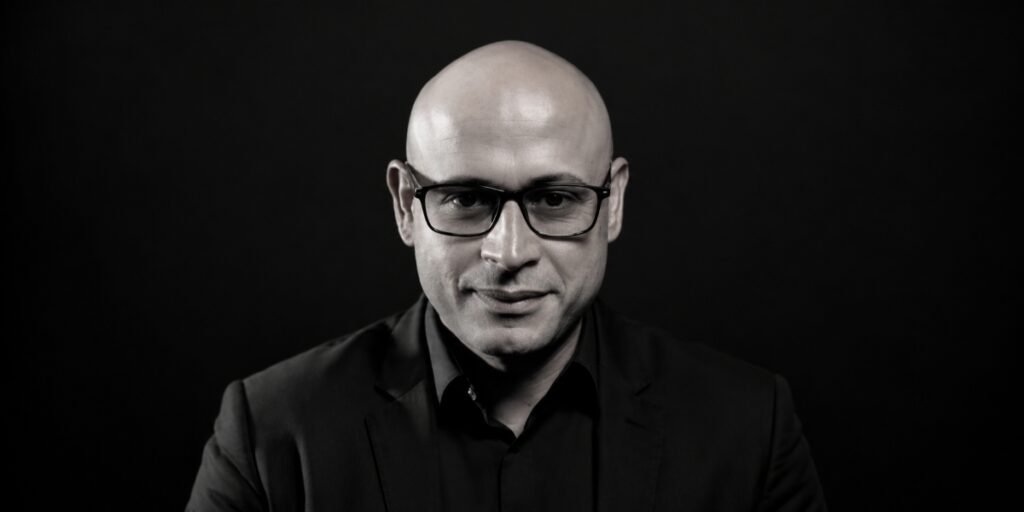
Founded by co-CEOs Ethan Bloch and Rushabh Doshi in 2024, Hiro introduced an AI-powered tool that integrated data from users’ financial products — including credit cards and savings accounts — and acted as a personal assistant to provide tailored financial recommendations and answer queries.
The application allowed consumers to input salary, debt, and monthly expenses to model various financial scenarios. Hiro built its tool with a specific focus on mathematical accuracy, and users could verify the specific calculations produced by the AI — addressing a known weakness of large language models in numerical reasoning.
The startup raised $6.3 million in seed funding, backed by Ribbit Capital, General Catalyst, and Restive. Terms of the acquisition were not disclosed. The deal is structured as an acqui-hire: Hiro’s team joins OpenAI, and the Hiro platform shut down on April 20, 2026. User data will not transfer to OpenAI; all personal data will be permanently deleted from Hiro’s servers by May 13, 2026.
CCG Catalyst managing partner Paul Schaus told American Banker that the purpose of the deal was not to integrate an existing product. “It is bringing a team and a founder who knows how to build consumer finance tools that people use,” Schaus said. “Ethan Bloch built Digit, sold it and now he’s at OpenAI. It seems the product was a vehicle to demonstrate the capability.”
A Pattern, Not a One-Off
The Hiro deal cannot be read in isolation. This is OpenAI’s second fintech purchase, following its acquisition of personal finance app Roi in October. Sam Altman has noted that financial firms were among OpenAI’s earliest institutional adopters, citing partnerships with Morgan Stanley and Bank of New York as examples of major institutions that figured out how to structure the technology for critical processes.
Pitchbook fintech analyst Rudy Yang told American Banker that personal finance has been one of the most discussed use cases for generative AI since the beginning, and that the Hiro deal reinforces that.
CCG Catalyst’s Schaus framed the back-to-back acquisitions as a directional statement: “Traditional PFM products tell the consumer where their money was spent. It appears OpenAI is building a system that models decisions before they’re made — scenario planning, debt payoff paths, and savings projections in real time.”
In his LinkedIn post announcing the deal, Bloch wrote: “For decades, personalized financial guidance has been too expensive, too generic, or too hard to access. ChatGPT is finally changing that.”
What the Competitive Risk Looks Like for Banks
Javelin Research senior digital banking analyst Dylan Lerner put it plainly: “The deal is less about OpenAI entering banking and more about what industry will own financial advice and engagement.”
Should OpenAI successfully build a personal finance advisor native to ChatGPT, Lerner said, the risk for banks lies in them becoming underlying financial infrastructure — and becoming further disintermediated from their customers.
The mechanism for this is not complicated. Just as Google intermediated between users and websites — controlling discovery while websites provided content — ChatGPT could intermediate between users and financial institutions. The bank provides the product; the AI platform controls the recommendation, the scenario modeling, and increasingly, the transaction execution.
Forrester predicts that by 2026, over half of consumers under 50 seeking financial advice will turn to generative AI tools rather than traditional advisors or bank apps. Research from PYMNTS Intelligence adds texture: 62% of Generation Z consumers said they were willing to use AI for “what if” financial planning.
The Fiduciary Problem OpenAI Has to Solve
The financial services case for AI is not without friction. MIT finance professor and Laboratory for Financial Engineering director Andrew Lo told CNBC that the question is not whether AI has sufficient financial expertise. “The answer right now is, clearly, AI has the expertise,” Lo said. “What they don’t have is that fiduciary duty. They don’t have the ability to suffer consequences if they make a mistake to the same degree that a human advisor does.”
This is not a theoretical concern. In March 2026, the SEC issued an administrative order against a robo-advisor for fiduciary violations. AI hallucination rates in finance-related queries, while improving, remain a documented risk area. The broader regulatory landscape for AI in personal finance is fragmented and structurally lagging the technology.
OpenAI has not publicly detailed how it plans to handle financial licensing, fiduciary standards, or the safeguards required to prevent guidance errors from becoming material harm. These are not small hurdles.
The Trajectory Is Set
Whatever the regulatory timeline, the strategic direction from OpenAI is not ambiguous. The AI-in-finance market is projected at $190 billion by 2030, growing at a 30.6% compound annual growth rate, according to MarketsandMarkets. OpenAI, now valued at $852 billion following a March 2026 funding round, is assembling the talent and domain expertise to compete for that market at the consumer interface layer — not as a tool embedded inside someone else’s app, but as the primary surface through which Americans manage their financial lives.
Banks and fintechs that have built their customer relationship around the personal finance management layer — budgeting dashboards, savings tools, scenario modeling — are now competing, directly or indirectly, with a platform that has over 900 million weekly users and is actively acquiring the teams that know how to build what those users want. The question for financial institutions is no longer whether to take AI seriously. It is whether they act before the interface shifts entirely.