


By: AK Infinite
Corporate leadership development is a multi-billion-dollar industry. Organizations invest heavily in seminars, retreats, certifications, and online modules, hoping leaders return more capable, more confident, and more effective.
Yet the common frustration remains the same. Leaders come back energized, and then little appears to change.
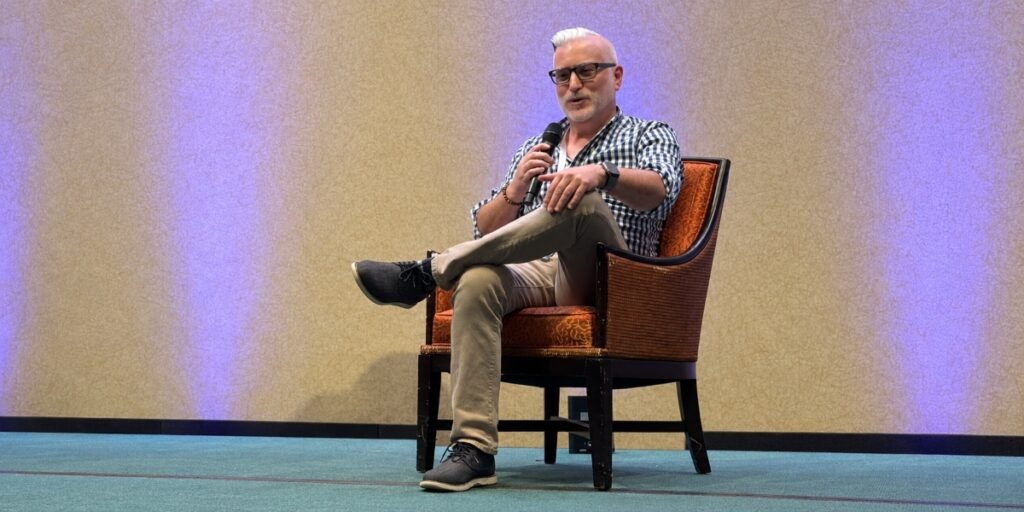
JM Ryerson, Leadership and Performance Coach and co-founder of Let’s Go Win, believes many leadership training programs fall short for one primary reason. “It prioritizes information over transformation,” he says.
Leaders learn new terminology and frameworks but return to the same environment, the same habits, and the same pressure. Without reinforcement and accountability, momentum can fade, and behavior often resets.
Behavior Change Happens at Work, Not in a Workshop
Research in behavioral psychology consistently shows that lasting change typically requires repetition, feedback, and accountability. A one-time event rarely provides enough of any of the three.
That is why Let’s Go Win approaches leadership development as a coaching ecosystem rather than a training event. Coaching is embedded into real decisions, real conversations, and real performance expectations.
Instead of leaving inspired, leaders are guided and supported in developing greater consistency over time.
Leadership That Sticks Is Personal
Many leadership programs struggle to create lasting impact because leaders attempt to perform a version of leadership that does not feel authentic to them. They copy styles, adopt personas, or force behaviors they cannot sustain long term.
Ryerson emphasizes identity and alignment as the foundation of credibility.
“Leadership that lasts is built from the inside out,” he explains. “If you are not aligned internally, no framework will fix it.”
Through his Win From Within Coaching Program, leaders identify core values, confront self-limiting beliefs, and align daily behaviors with long-term vision. Authenticity can help foster consistency, and consistency often contributes to stronger trust over time.
Execution With Accountability
Many development programs focus primarily on motivation. Let’s Go Win focuses on execution.
While every organization is customized, the framework typically integrates:
Mindset mastery aimed at helping leaders recognize beliefs that may quietly limit performance.
Culture clarity so that values and standards become clearer and more actionable within the organization.
Performance alignment connects leadership behaviors with observable performance indicators.
Accountability cadence designed to help translate insights into repeatable habits.
This is not simply additional content. It is intended as a structure designed to help reinforce constructive leadership behaviors within everyday operations.
Leadership Development Must Produce Measurable Results
Organizations invest in leadership development for outcomes such as revenue growth, retention, engagement, and stronger execution.
Ryerson is direct about accountability.
“If leadership is not improving performance, culture, and results, then it is not development. It is a motivational event.”
In his work with organizations, Ryerson reports that one of the lowest-performing companies he coached last year experienced growth of about 47 percent. He attributes outcomes like this to addressing self-limiting beliefs and encouraging cultures where leaders operate with clearer expectations and accountability.
Modern Leadership Demands Adaptability
Today’s workforce expects meaning, clarity, and psychological safety. Leaders manage cross-generational teams, hybrid environments, accelerated change cycles, and higher emotional complexity.
Traditional command and control models are often viewed as insufficient for many modern workplaces. Leaders increasingly rely on emotional intelligence, clear communication, and the ability to uphold standards without creating fear.
Development initiatives may be more effective when they reflect the realities leaders face each day.
The Future Is Continuous Development
Forward-thinking organizations are shifting away from event-based leadership training and toward continuous coaching models. Leaders receive real-time feedback, apply insights immediately, and adjust behavior iteratively.
Leadership becomes a lived practice rather than a binder on a shelf.
Winning, in Ryerson’s philosophy, is not simply financial performance. It reflects internal clarity, strong relationships, sustainable growth, and a culture that can scale without fracturing.
Bottom line: Leadership development that works does not merely inform. It aims to influence behavior, strengthen workplace culture, and contribute to measurable outcomes by becoming part of how an organization operates.
For companies seeking sustainable growth rather than temporary inspiration, development may need to extend beyond workshops and become integrated into daily execution.