

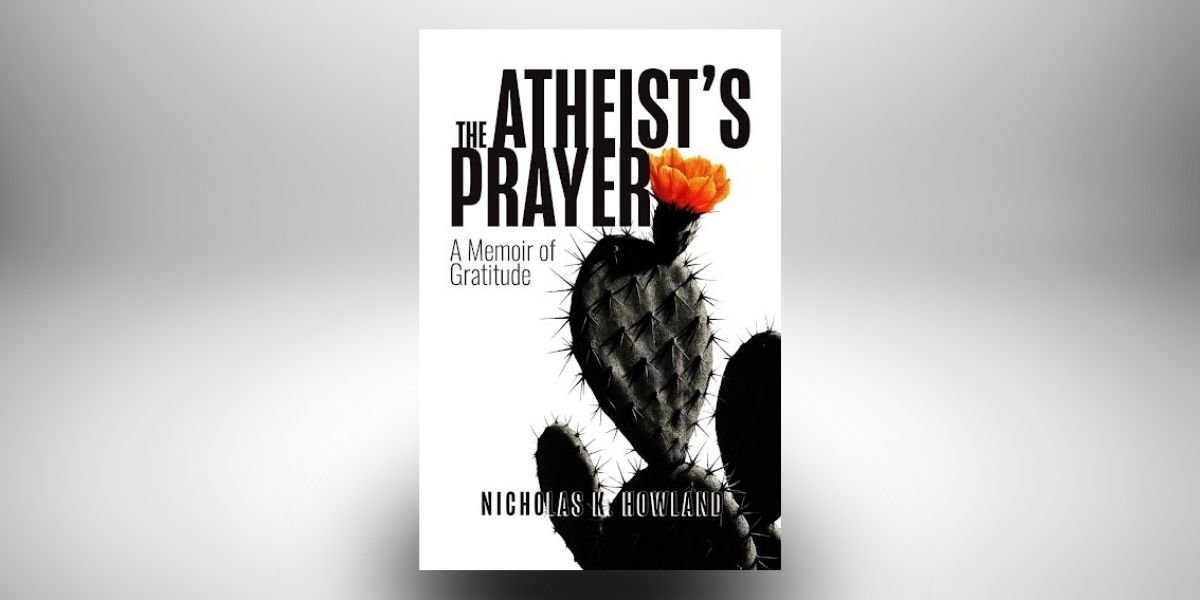
In his forthcoming book The Atheist’s Prayer, Dr. Nicholas K. Howland turns inward, offering a reflective and often disarmingly candid account of what it means to rebuild a sense of self after long-held structures fall away. Known professionally for his work in plastic and reconstructive surgery, Dr. Howland steps outside his medical career to explore questions of identity, resilience, and personal worth through memoir-driven storytelling.
Rather than presenting an argument or advancing an ideology, the book focuses on the internal reckoning that follows profound personal disruption. It traces the emotional terrain of starting over, examining how individuals redefine themselves when familiar frameworks no longer apply.
“I’ve been excommunicated twice, divorced once,” Dr. Howland writes. “I’ve been tossed out of community and left to sort through the wreckage.”
The line sets the tone for a narrative grounded in lived experience rather than abstraction.
A Story About What Endures After Loss
Despite its provocative title, The Atheist’s Prayer is not structured as a critique or manifesto. Instead, it uses moments of loss, displacement, and upheaval as a lens through which to examine broader human questions.
What remains when external validation disappears?
How does a person locate self-worth after rejection or separation?
What does rebuilding look like when there is no clear blueprint?
Dr. Howland approaches these questions through personal reflection rather than prescriptive advice, allowing the story to unfold with emotional honesty and restraint.
Humor, Absurdity, and the Reality of Starting Over
The book balances its heavier themes with moments of humor and self-awareness. Alongside stories of heartbreak and uncertainty are passages that acknowledge the awkwardness and absurdity that often accompany major life transitions.
These contrasts give the narrative a grounded, relatable quality. Rather than presenting reinvention as a neat or triumphant arc, the book recognizes that rebuilding is often nonlinear, uncomfortable, and unexpectedly humorous.
Reflection as a Universal Human Practice
A recurring theme throughout the book is the idea of reflection as a deeply human act. Dr. Howland writes about the importance of pausing, observing one’s inner life, and developing self-awareness during periods of change.
“You don’t need permission to reflect on your life,” he writes.
“You don’t need approval to remember you’re alive.”
By framing introspection as accessible and personal rather than institutional, the book opens space for readers who find themselves navigating uncertainty, transition, or identity shifts of their own.
A Voice for Those in Transition
The Atheist’s Prayer is likely to resonate with readers who are:
- Rebuilding after personal or professional loss
- Navigating divorce or major life changes
- Reexamining long-held identities
- Seeking reflective, memoir-driven storytelling
- Looking for honest accounts of reinvention without prescriptive formulas
Dr. Howland’s voice remains grounded and conversational, shaped by experience rather than theory.
Beyond the Operating Room
While Dr. Howland’s medical career is not the focus of the book, his understanding of human vulnerability subtly informs the narrative. The same attentiveness required in reconstructive surgery appears in his approach to emotional repair, where patience, humility, and care take precedence over quick fixes.
A Book About Becoming
At its core, The Atheist’s Prayer is a book about becoming rather than believing. It speaks to readers standing between who they were and who they are still learning to be.
“You don’t have to believe in anything new,” Dr. Howland writes.
“You just have to believe you’re worth showing up for.”
For anyone navigating the unfamiliar territory of starting over, Dr. Nicholas K. Howland offers a reflective companion focused not on certainty, but on presence, resilience, and self-recognition.
Disclaimer: This article is presented for informational and editorial purposes only. It does not promote, endorse, or seek to convert readers to any religious, spiritual, or ideological belief. Views expressed are those of the subject and author and do not necessarily reflect the views of the publication.