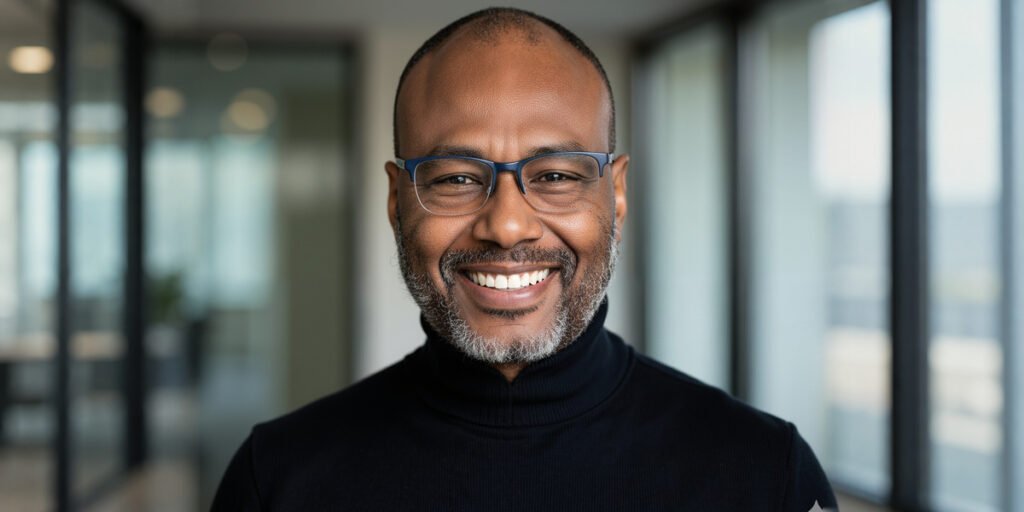



By: Shawn Mars
As financial systems across the United States become more complex and sensitive to economic pressure, the ability to understand risk before it becomes a crisis has never been more important. One professional emerging as a meaningful contributor to this transformation is Md Saiful Islam, a financial data analyst whose work focuses on predictive analysis, risk modeling, and the development of clearer, more responsible decision-making tools for institutions. His approach reflects a simple but powerful idea: financial systems are most likely to be strongest when they can see what’s coming, not just what has already happened.
Islam’s path to this work began long before he entered graduate school or published research. Growing up in Bangladesh, he saw firsthand how financial insecurity affects families and communities. Later, his nine years working inside the financial sector handling lending operations, customer accounts, and branch-level oversight gave him a front-row seat to the weaknesses that can undermine entire institutions. Fraud was often detected too late. Risk assessments relied on incomplete data. And decision-making processes were frequently reactive rather than predictive. These experiences shaped Islam’s view of financial analysis. He came to believe that institutions could benefit from systems that can identify risks early, understand trends more clearly, and give decision-makers the confidence to act responsibly. This belief eventually led him to the United States, where he pursued a Master of Science in Business Analytics at Trine University.
During his studies, Islam built a strong foundation in financial modeling, forecasting, and data interpretation. He learned how to analyze large datasets, build models that track patterns over time, and develop methods for predicting outcomes with greater precision. Courses in project management, corporate finance, analytics tools, and big-data techniques helped refine his ability to turn raw information into insights that institutions can use.
Much of Islam’s work today revolves around predictive financial modeling, particularly in areas that have a potential impact on economic stability and consumer protection.
One area where he has made notable contributions is credit risk forecasting. Credit decisions influence everything from mortgage approvals to small-business lending. A poorly assessed loan can burden a family for years or contribute to losses that ripple through the economy. Islam’s modeling work evaluates repayment behaviors, income fluctuations, historical patterns, and market conditions to help institutions gain a clearer understanding of risk. His methods give lenders a better idea of how borrowers are likely to perform over time, allowing for fairer, more transparent decisions.
Another major focus of his work involves fraud detection, an issue that continues to drain billions of dollars from the U.S. economy every year. Fraud schemes evolve quickly, and institutions often rely on outdated systems that catch problems only after they occur. Islam’s models are designed to highlight irregular patterns earlier, such as changes in spending behavior, sudden shifts in account activity, or inconsistencies that could signal a need for closer review. His work doesn’t eliminate all fraud, but it gives institutions a stronger early warning system that protects both customers and financial organizations from potentially deeper losses.
Islam has also contributed to financial forecasting, helping companies prepare for the future rather than simply reacting to the present. By studying historical trends alongside current market signals, his models help institutions estimate revenue changes, prepare for cost fluctuations, and adapt to evolving financial environments. This kind of forward-looking insight is particularly useful for organizations navigating uncertain economic conditions, competitive markets, and regulatory requirements.
Beyond his modeling work, Islam has established himself as a credible researcher. He has authored and co-authored several academic papers, including publications in respected Q1 journals. Among his notable works are:
- Enhancing Adaptive Learning, Communication, and Therapeutic Accessibility through the Integration of Data-Driven Personalization in Digital Health, and
- Re-imagining Digital Transformation in the United States: Harnessing Business Analytics to Drive IT Project Excellence.
These papers contribute to growing discussions about how analytics and modern data methods can potentially improve the way institutions operate. Islam’s research has been cited 139 times, a number that reflects the reach and influence of his work within academic and professional communities.
In addition to publishing, Islam serves as a reviewer for respected journals, including the IEEE and the American Journal of Interdisciplinary Innovations and Research (AJIIR). Reviewing scholarly work is a responsibility typically reserved for subject-matter experts. It signals that a researcher’s judgment, experience, and analytical skill are trusted by editors who rely on accurate evaluations to maintain academic quality. Islam has reviewed multiple manuscripts, helping ensure that new research meets the standards expected by the scientific and financial communities.
His contributions also align closely with broader financial priorities across the United States. Agencies such as the Federal Reserve, the FDIC, and the Treasury Department have emphasized the importance of stronger fraud prevention systems, improved lending transparency, and reliable financial forecasting. Islam’s work supports these goals by giving institutions practical tools to anticipate risk and operate more responsibly.
What distinguishes Islam’s work is the grounded, real-world perspective he brings to financial analysis. He does not view predictive modeling as a purely technical exercise. Instead, he sees it as a way to improve people’s lives, whether by helping families receive fair access to credit, protecting consumers from fraud, or giving businesses the insights they need to remain stable. His research connects technical skill with a deep understanding of the human consequences of financial decisions.
Colleagues note that Islam approaches problems with patience, clarity, and a commitment to making sure the results of his work can be practically applied. His models are not built only for academic interest; they are built for practical use in banks, lending institutions, and financial organizations that must manage risk every day.
Looking ahead, Islam hopes to continue refining his predictive modeling work, expanding it into broader areas of financial planning and risk governance. He sees opportunities for institutions to operate with greater accuracy and more transparency, especially as digital transactions grow and financial behaviors shift. His long-term goal is to contribute to creating a financial environment where decisions are grounded in clear evidence, fraud risks are managed proactively, and organizations have the foresight to protect themselves and their customers from unexpected shocks.
As institutions across the country search for better ways to manage uncertainty, the contributions of researchers like Md Saiful Islam are becoming increasingly valuable. His work helps to strengthen the financial systems that millions rely on, offering clear and practical methods for identifying risk, preparing for change, and supporting stability in a complex economic landscape.
Islam’s journey from a rural village to the center of a growing movement toward data-driven finance shows how determination, education, and commitment to public good can reshape one of the most important sectors of the modern economy. His work continues to evolve, but its impact is already apparent: better tools for institutions, stronger protection for consumers, and a more resilient financial future for the United States.