

By: Jilian Defoe
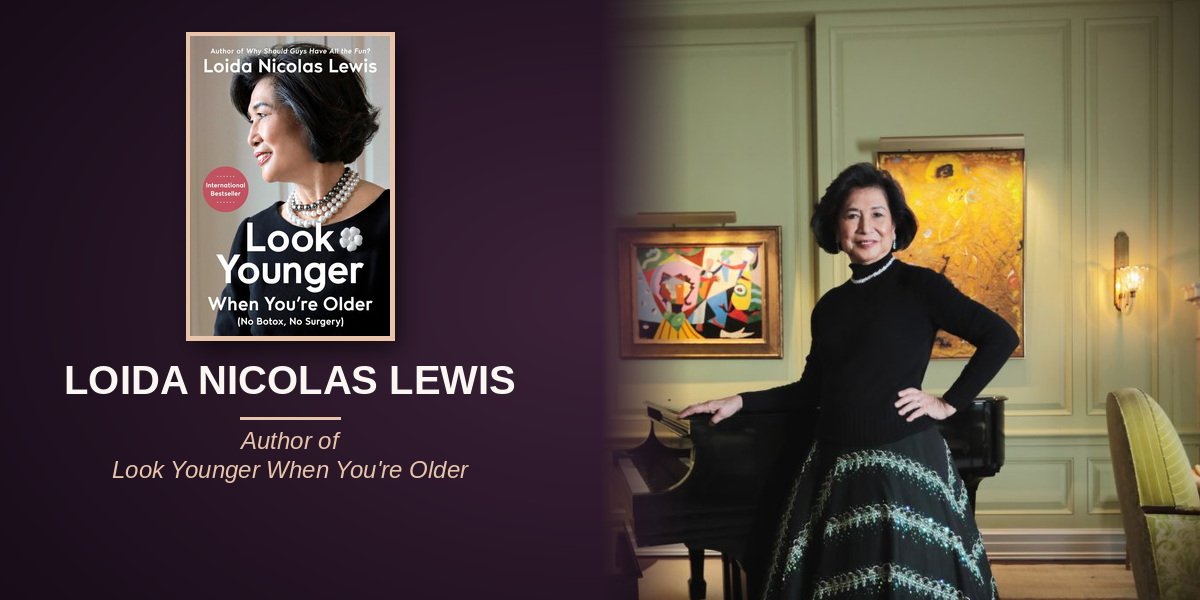
Some books arrive with the full weight of their author’s biography behind them, and you feel it on the first page. Look Younger When You’re Older is that kind of book. Its author, Loida Nicolas Lewis, is in her eighties. She is a trailblazing lawyer, a former Fortune 500 CEO, and a civic leader whose work has shaped Filipino American communities in the United States for decades. She is also someone who has been asked, repeatedly and by people who cannot quite believe the answer, what her secret is. This book is the answer.
The secret, as it turns out, is not a secret at all. It is a set of practices, some of them simple and some of them demanding, organized around a philosophy that Lewis has been developing for most of her adult life. The philosophy begins with the premise that how you look is a consequence of how you live, and that if you want to change the former, you have to attend to the latter. This is not a novel idea in the abstract, but Lewis makes it concrete in a way that few writers manage, because she has the evidence of her own life to back it up.
The book opens with chapters on the inner life, and Lewis is specific in a way that might surprise readers expecting a conventional wellness guide. She writes about her Zen meditation practice, about the particular prayers she returns to, about the Bible verses that anchor her in difficult moments, and about the way she has structured her daily routine to include time for reflection. She talks about the books that shaped her thinking, including one she has carried since her teenage years, and about the relationship between inner order and outer vitality that she has observed in herself and in the people around her.
The chapters on practical habits are equally specific. Lewis names what she uses on her skin, explains why, and includes options that are accessible to readers across a range of budgets. She is not interested in gatekeeping. She began exercising at 45 and developed a disciplined skincare practice in her fifties, and she describes both journeys with a candor that makes them feel repeatable rather than exceptional.
There is also a section on community and friendship that carries particular resonance. Lewis has never been a figure who operates alone. Her network of relationships, her decades of civic engagement, and her advocacy work for communities she cares about all point to a person who understands that vitality is partly social. Several of her friends contribute their own insights, and the result feels collaborative in the way that the best advice always does.
The book is warm without being soft. Lewis does not sugarcoat the work involved in aging well. She is honest about discipline, about consistency, and about the gap between knowing what to do and actually doing it. What she offers is not inspiration at the expense of information. It is both, in proper proportion.
For anyone who has looked at someone older and marveled at how they carry themselves, this book is a credible explanation. It does not promise that every reader will achieve the same result. It promises that the effort is worth making, and it shows you how.
Look Younger When You’re Older is on Amazon now.