

By: Shawn Mars
For most of the past two decades, the rules of being found online were easy to state, even if they were hard to execute. A company wanted to rank on Google, land near the top of the results page, and win the click. Entire industries grew up around that goal.
A different kind of discovery is now taking shape alongside it. Buyers, executives, and consumers increasingly type full questions into platforms such as ChatGPT, Gemini, and Perplexity, then receive a single synthesized answer instead of ten blue links. That change is pushing AI brand visibility onto the agenda of founders and marketing leaders who once thought about reputation mostly in terms of press clippings and search rankings.
The question underneath is deceptively simple. What makes an AI system decide that a company or a person belongs in a particular category of expertise?
How Are AI Answers Changing the Way Buyers Find Experts?
AI answers compress the research phase of a buying decision into a conversation. Someone looking for help no longer has to scan a results page, open six tabs and compare websites side by side. They can ask who the respected specialists are in a field, which firms focus on a specific problem or which agencies work with luxury founders, and get a short list with explanations attached.
That format moves the place where reputation does its work. On a traditional results page, a brand could compete for attention with a sharp headline and a well-optimized landing page. Inside a generated answer, the system has already done some of the sorting, describing who a company is and what it is known for before the user ever visits a website.
Marketers have started giving this discipline names. Generative engine optimization, often shortened to GEO, was formalized in a 2023 research paper from Princeton University, Georgia Tech, the Allen Institute for AI, and IIT Delhi that studied how content surfaces inside AI-generated responses. Practitioners also talk about answer engine optimization (AEO) and LLM visibility. The vocabulary is still settling. The underlying concern is not.
Why Being Searchable Is Not the Same as Being Understandable
A company can have a large online footprint and still send mixed signals about who it is. Plenty of established businesses carry exactly that problem without realizing it.
Consider a founder whose personal website calls them a brand consultant, whose LinkedIn profile describes a marketing executive, whose press coverage uses the title creative director and whose agency site places the firm in yet another category. Each description may be accurate on its own. Read together, they give search engines and AI systems less clarity about what that person or business should be associated with.
AI brand visibility depends on that clarity. A brand’s digital reputation is assembled from many sources, including media coverage, interviews, podcasts, industry articles, reviews, expert commentary, social profiles, public biographies, website copy, and third-party mentions. When those sources tell a consistent story, the picture sharpens. When they contradict each other, the picture blurs, no matter how much content exists.
What Is Machine-Readable Reputation?
Machine-readable reputation is the degree to which the public web describes a company or person consistently enough for both people and software to understand them. The phrase sounds technical, but the idea sits closer to editorial discipline than to engineering.
Writing for robots instead of readers is not the point. The goal is enough alignment across public information that anyone, human or machine, could answer a handful of basic questions: who the company is, what it does, which category it belongs to, what expertise it represents, what ideas it contributes, and why others reference it.
For AI brand visibility, some of that work is technical. Google has long encouraged site owners to add structured data markup that gives its systems explicit clues about a page’s meaning, and consistent entity information across profiles and directories still matters. Much of the rest has nothing to do with code. It lives in how a founder describes their work in interviews, how an agency bio reads on a conference program, and whether the language on a company’s own website matches the language others use about it.
Why STAGE IIX Starts With Positioning
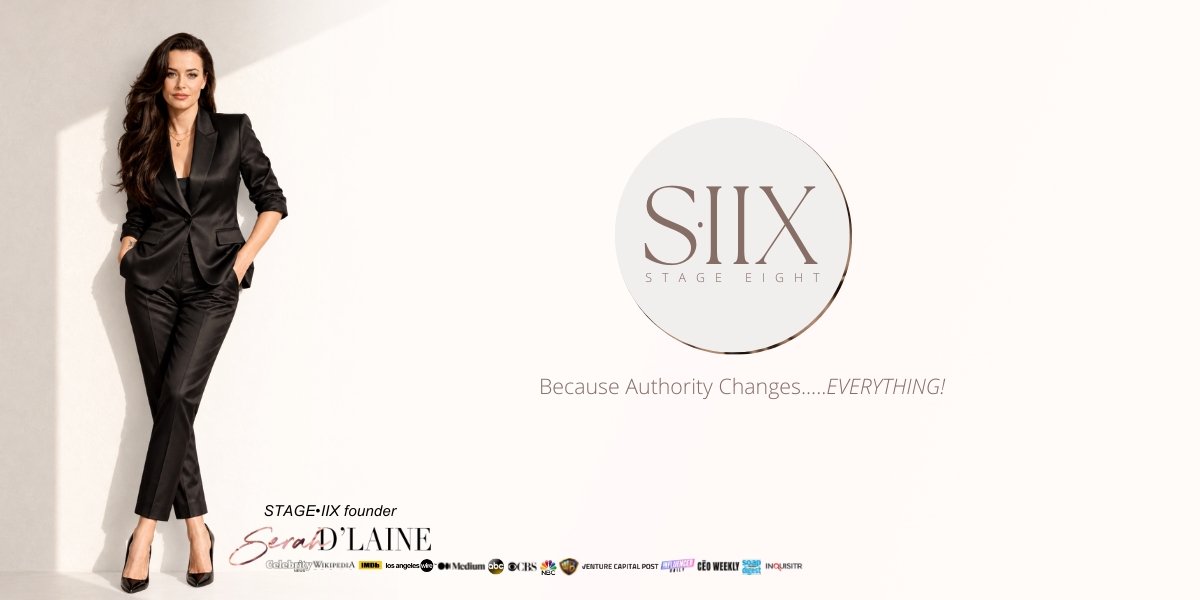
Serah D’Laine, founder of STAGE IIX, a strategic brand and authority agency, sees the shift as a new version of a problem brands have always had. The agency works with founders, CEOs, and luxury and premium brands on how they are positioned, perceived, and recognized in the market. Its approach to AI brand visibility runs through brand authority and reputation rather than technical search optimization alone.
“For years, brands focused on being found. Now they also have to think: if AI systems are increasingly helping people decide who is credible, relevant or worth considering, then a brand’s digital reputation has to communicate a very clear story about what it knows, what it stands for and why it matters…and that message has to be on platforms citable by AI. Everyone is fighting for AEO now,” D’Laine said.
In the agency’s view, AI visibility begins with clear positioning. If a business cannot articulate what it should be known for, no amount of optimization can fully make up for that confusion. Keywords, schema and content volume can amplify a message. They cannot invent one.
That thinking shapes how the firm combines disciplines. STAGE IIX brings together brand strategy, narrative, content execution, AI-powered systems and lead management, drawing on nearly three decades across entertainment, media and brand strategy, along with a decade in leadership consulting. The work is distinctly editorial in style, aimed at aligning a leader’s public presence with the caliber of the business behind it. D’Laine also shares her perspective on founder visibility and perception on Instagram.
How Brand Strategy and Earned Media Shape AI Brand Visibility
In practice, an AI-era reputation strategy looks less like a single campaign and more like a coordinated body of work. Brand strategy defines the category and the language. Earned media and third-party coverage supply independent references that AI systems can cite, while thought leadership, podcasts, and expert commentary attach specific ideas to a name. A company’s own website and profiles then repeat the same core description so every source reinforces the others.
None of this guarantees a place inside an AI answer. Platforms keep changing how they retrieve and weigh sources, and no agency controls those systems. What brands can shape is the clarity and consistency of the signals available about them online, which is the raw material any serious approach to AI reputation management has to work with.
For founders, the stakes are personal as well as commercial. Founder visibility has become part of how buyers size up premium and luxury businesses. A leader whose public identity is fragmented may find that AI tools describe them in ways that undersell the work.
The exercise that follows is a humbling one, and it takes about a minute. If an AI system had to describe your company in one sentence today, would it describe you the way you want the market to understand you?