


By: Elena Mart
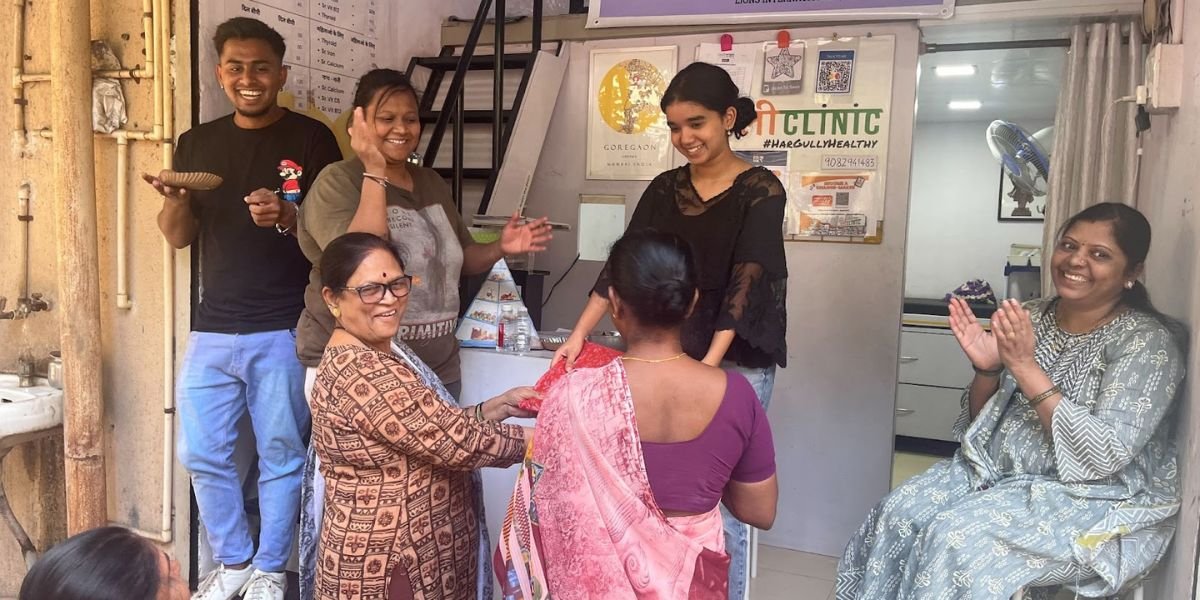
Every Friday evening, the scent of turmeric, ginger, and simmering lentils drifts from a modest community kitchen in Amritha Promoth’s neighbourhood. Inside, the 17-year-old crouches beside a small group of women, not to give a lecture, but to demonstrate how a simple dish rich in iron and flavour can be the first step toward improving their health.
It’s not your usual formal clinic with only white coats or official signs. But for more than 50 underprivileged women who have attended her cooking demonstrations, these sessions have become a gentle form of empowerment.
“I wanted the sessions to feel familiar,” says Amritha. “No one wants to be told what they’re doing wrong. But if you can sit together, cook together, and taste something new, it opens up space to talk about health in a way that feels comfortable.”
Her project began with a simple question: How can we make good health more accessible for women who are busy, under-supported, and often excluded from formal health systems? The answer came through food.
Cooking for Change
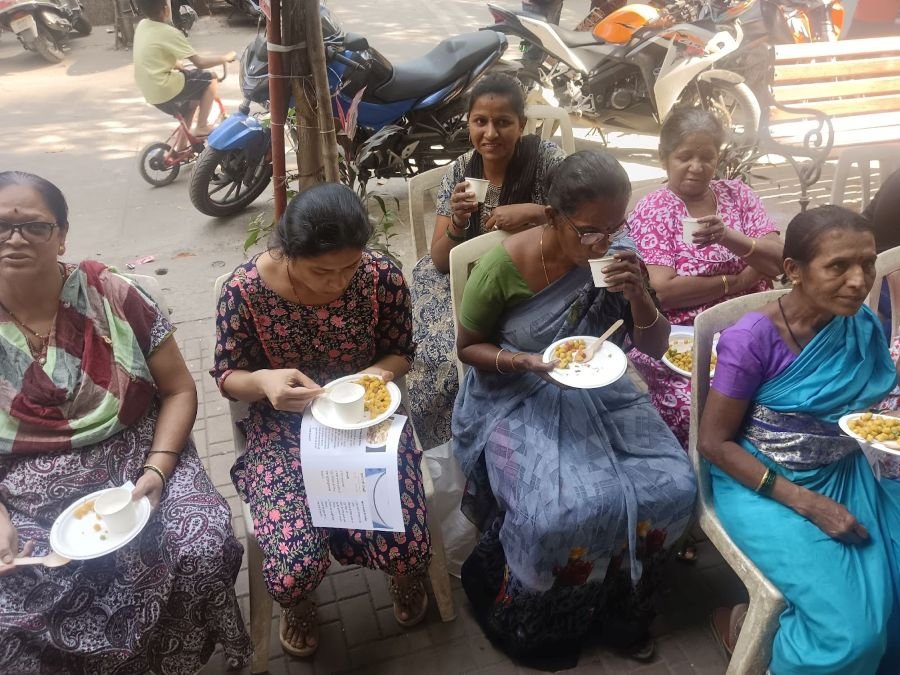
Photo Courtesy: Amritha Promoth
Picture above: Participants at Amritha’s community nutrition workshop enjoy a healthy and delicious meal after a hands-on nutrition awareness session.
A significant challenge, she explains, was breaking through the hesitation many women felt. “Some were hesitant at first. These were new methods, unfamiliar combinations. And there’s so much advice thrown at women about health that it can be overwhelming.” She responded with patience, storytelling, and ingredients that were already staples in the women’s homes. Slowly, the sessions became something the women looked forward to.
Her commitment extended beyond the stove. Partnering with the Gully Clinic, where she also volunteers part-time, she helped organise anaemia workshops that connected participants with basic screenings and follow-up care. “It was important that the cooking didn’t just stop with the meal,” she says. “We tried to create a continuous journey—from awareness to action.”
From Kitchen to Global Stage
Prompted by her work at Gully Clinic, she began curating various activities that would provide an immersive learning experience for communities across the world, simplifying nutrition and improving access to food. Her initiative, dubbed “Eco-Gourmet,” was later presented at a forum attended by delegates from 52 countries. “It’s not just about meals,” she explains. “It’s about dignity, choice, and the understanding that you can care for your body without needing expensive supplements or complex routines.”
The ripple effects of her grassroots work were felt far beyond her local community.
In 2024, Amritha was selected from over 8,000 global applicants to participate in the UN Summit of the Future in New York, one of only 75 under-18 delegates invited to the UN General Assembly to help shape youth-centred policy recommendations. Rather than speak in abstractions, she brought stories from the kitchen.
“Big policy conversations can get disconnected from real people,” she says. “I wanted to make sure the women I worked with weren’t just numbers. I shared their experiences, including their worries about feeding children and their reluctance to trust doctors. These voices belong in global spaces.”
She prepared extensively for the Summit, participating in over 10 hours of preparatory sessions and contributing to five policy dialogues on sustainability, nutrition, and gender equity. But what stood out most was how deeply her small local stories resonated with global leaders.
A Philosophy of Nourishment
Amritha’s journey is not only about public service, it’s also about leadership redefined. While many teens are drawn to flashier forms of activism, she found her voice in the intimate, often invisible labour of feeding and healing.
This philosophy of nourishment extends beyond food. She has led her school’s TEDxYouth club for two years, helping new speakers refine their stories and creating space for diverse, often overlooked perspectives. She’s also a nationally ranked debater, having placed 11th individually at the World Scholars’ Debate Cup and qualified for the Yale International Round.
But even these academic and leadership wins tie back to the same principle: making ideas accessible, helpful, and empowering.
“I think there’s a lot of power in just listening well,” she says. “Whether it’s debate or policy or food, I try to start from what people are already saying, then build from there.”
The Road Ahead
Amritha’s long-term vision is ambitious, yet grounded in the same logic that launched her first cooking demo: local action with global insight. She hopes to expand her program across more neighbourhoods in partnership with schools and health workers, tailoring workshops to local ingredients and cultural practices. “Even if the cultures are different, the shared interest in nutrition and good health is something we can all build on,” she says. It’s a way for her to carry her story forward, not as a one-off project, but as a lifelong practice of empathy, exchange, and advocacy.
She’s also considering careers in anthropology or food science, fields that align with her belief in socially conscious systems thinking. “I don’t want to work in a silo,” she reflects. “Whether it’s research or advocacy, I want to stay connected to the people I serve.”
In a world often dazzled by tech founders and social media influencers, Amritha Promoth’s work is a quiet but necessary counterbalance. She leads not by commanding attention, but by building trust. She doesn’t centre herself in the story but ensures that others are heard, nourished, and respected.
For young students wondering how to make an impact, her message is simple: “Start where you are. Listen closely. And don’t underestimate the power of something as simple as a shared meal.”