

By: Daniel Cruz
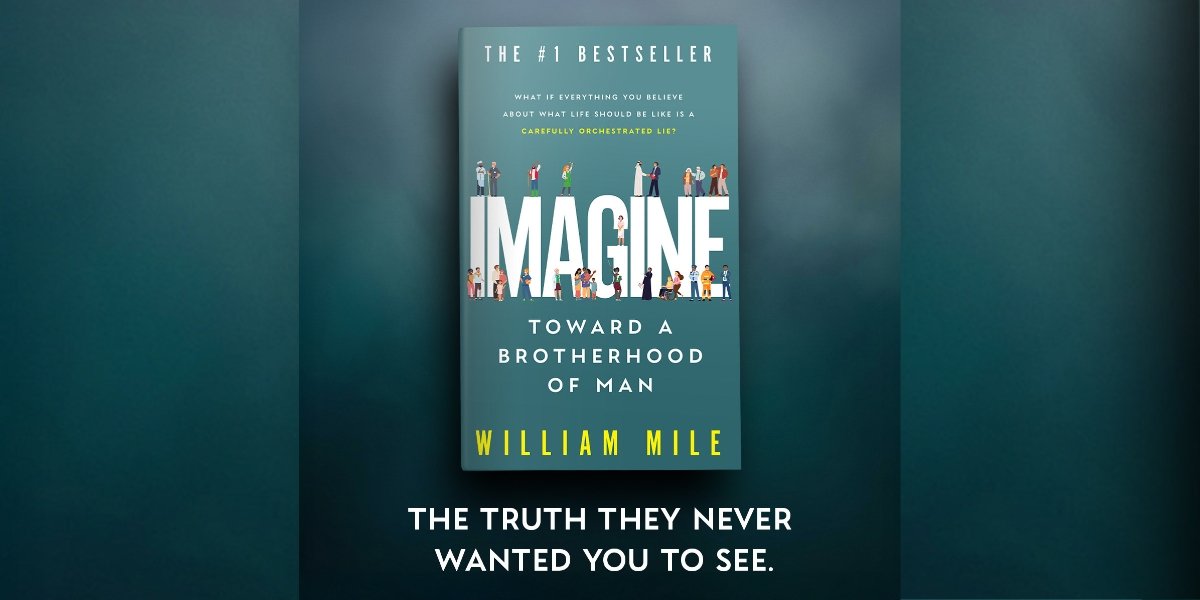
In Imagine: Toward a Brotherhood of Man, author William Mile challenges readers to see the world in a new light. Combining decades of meditation, study, and personal experience, he explores the forces shaping human behavior and offers practical insights for building a more unified society.
The Inspiration Behind the Book
William explains that Imagine grew out of a lifelong drive to understand the world and help others navigate its complexities. “I guess I’m an intuitive problem solver who seeks to help people around me,” he says. “I don’t really know how this book got created at such a timely moment in human history when things seem so off.”
His goal is simple yet profound: to provide readers with a framework for understanding human conflict, recognizing leadership, and fostering cooperation across cultures and communities.
Understanding Hidden Forces
Central to the book is the concept of the “hidden forces” that drive destructive behavior. William calls the most harmful actors “Evil 2s”—individuals who act without regard for right or wrong. These forces are not tied to race, gender, or class, but they shape outcomes in profound ways.
“Studying or at least observing the Evil 2s is crucial for one’s protection,” William notes. His approach encourages readers to recognize harmful patterns without fear, equipping them to respond thoughtfully rather than reactively.
The 8:2 Theory: Leadership and Human Potential
Within William’s “8:2 theory,” not all “8s” function as leaders in the traditional sense. Instead, the group is made up of four distinct tiers, each playing a different role in society.
At the top are the most advanced “8s,” representing roughly 2–5% of the population. These individuals possess exceptional ability and vision and often emerge as the strongest leaders in their respective fields. They can be of any age, background, or identity, and leadership does not always take a conventional form. In some cases, it appears as extraordinary talent, such as a child capable of advanced composition or completing graduate-level education at an unusually young age. William emphasizes discernment here, noting that not every prodigy necessarily belongs to this highest tier.
Just below them is a second group of “8s,” comprising approximately 10–15% of the population. These individuals share many of the same capabilities and frequently take on leadership roles across disciplines. While there is mobility between this group and the top tier, there remains a natural respect for those born into the highest level.
The third group consists of “8s” who begin life with what William describes as a hazy vision. They often endure significant personal challenges before recognizing their potential and stepping into leadership roles aligned with the second tier. Like the group above them, they can rise through experience and growth, guided by respect for those with greater innate clarity.
The fourth and largest group of “8s” are the builders and doers, the people who keep systems moving and turn ideas into reality. They are inspired by leadership rather than originating it and may sometimes follow misguided influences due to limited development or willpower. Over time, many gravitate toward wiser leadership. William notes that this group itself tends to split between differing leadership styles, both influenced by a greater moral or spiritual force.
Understanding these distinctions, William argues, is essential to grasping how leadership, growth, and responsibility function within individuals and society as a whole.
Lessons from History and Psychology
William’s insights are informed by both academic study and life experience. With a bachelor’s degree in psychology and more than 20 years of meditation, he has examined human behavior across cultures and disciplines.
“Unity isn’t about everyone getting along,” he says. “It’s about everyone doing their job, whatever it is, and occasionally taking time to enjoy life. That’s how progress happens.”
He also emphasizes the importance of learning from past mistakes and from individuals who exemplify courage and leadership, citing Abraham Lincoln and everyday activists as examples of people who acted with integrity under pressure.
The Role of Technology and Modern Society
William is candid about the challenges technology presents. From AI to social networks, he believes modern innovations can both divide and unite. “AI and robots are taking jobs, and people are relying on checks,” he warns. “We have a chance to prevent a scenario where we lose our ability to work and lead as humans.”
His advice is not to reject technology but to ensure it enhances human capability rather than replacing essential skills, creativity, and judgment.
Practical Steps Toward a Brotherhood of Man
Education, self-awareness, and personal responsibility form the foundation of William’s recommendations. He encourages readers to explore fields like business, science, technology, and spirituality while maintaining healthy minds and bodies.
“Healthy, strong bodies and minds help us build resilience,” he says. By preparing ourselves and understanding the dynamics of leadership and human behavior, William believes individuals can contribute meaningfully to society and prevent exploitation by harmful forces.
A Call to Lead
At its core, Imagine is a call to action. William urges readers to trust their instincts, apply the book’s principles thoughtfully, and step into leadership roles in their communities.
“Go with your gut,” he advises. “After understanding the book’s message, trust yourself, and lead. The future, the kids, and the planet depend on your courage and leadership.”
For those looking for insights into human behavior, leadership, and the role each person plays in shaping the future, William Mile’s Imagine: Toward a Brotherhood of Man offers a thoughtful, practical, and inspiring roadmap.
Learn more about William Mile and his work at williammile.com