


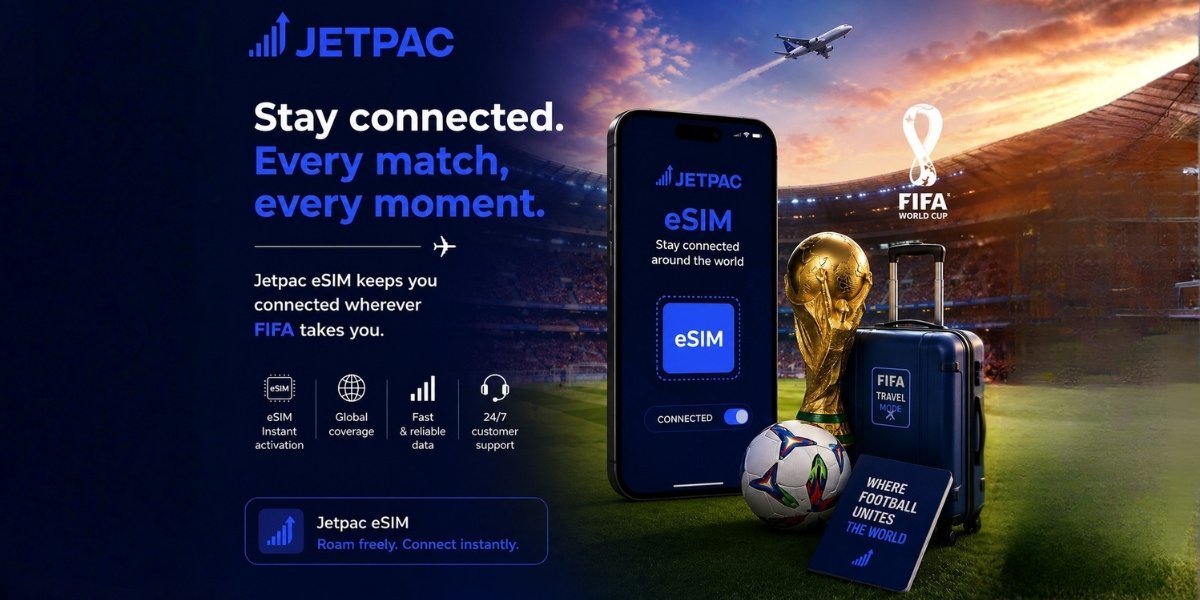
There is always one thing fans forget before a major tournament.
Sometimes it is the power adapter. Sometimes it is the rain jacket. Sometimes it is checking how far the hotel really is from the stadium. For FIFA 2026, there is another small detail that deserves attention before supporters get swept up in the football: the phone plan.
It sounds boring until it becomes urgent.
The World Cup is about to begin across the United States, Canada, and Mexico, and thousands of traveling fans are already making final preparations. Tickets saved? Passport ready? Hotel confirmed? Team shirt packed? Group chats active? Good.
Now check the roaming settings.
That may not be the romantic side of football travel, but it is one of the practical details that can shape the entire experience. Modern fans do not just use their phones to post photos from the stands. They use them to land, move, meet, pay, translate, navigate, enter stadiums, and get home safely after the match.
At a tournament as spread out as FIFA 2026, that matters.
This World Cup is not being played in a single compact country where fans follow a simple route. It is a three-country event across North America, with supporters likely to travel between host cities as the tournament unfolds. Some will follow their teams from one match to the next. Some will cross borders. Some will fly in for one game and still need their phone to work from the moment they land.
The problem is that many fans only think about roaming when it is already too late. They turn on data at the airport, assume their home plan will be manageable, or rely on public Wi-Fi until something goes wrong. Then comes the familiar scramble: searching for a local SIM, asking hotel staff about mobile plans, trying to load maps without data, or accepting roaming charges without really knowing what they will cost.
That is how a football trip becomes a needless source of stress.
Jetpac, the travel eSIM brand, is trying to put this issue in front of fans before the tournament takes over their attention. The company’s FIFA 2026 message is built around helping supporters avoid roaming bill shock by setting up mobile data before they travel.
The idea is simple: fans should not have to start solving connectivity after they have landed.
According to Jetpac, its travel eSIM can be installed and activated before departure, allowing fans to connect upon arrival. The service offers coverage in more than 200 destinations, 4G and 5G connectivity where supported, and switching between available networks where supported. It also includes practical travel features such as hotspot sharing, optional voice calling packs, and continued access to essential apps such as WhatsApp, Google Maps, and Uber, even after data runs out.
That final feature is worth paying attention to because it speaks to the real pressure points of a World Cup trip.
Fans do not usually need their phone to perform an extraordinary task. They need it to do basic things at important moments. Load the map. Send the message. Call the ride. Find the hotel. Check the gate. Reach the rest of the group. Open the app. Get back after the match.
Those are the moments where a weak connection or an expensive roaming plan can become more than an inconvenience.
The start of a World Cup is chaotic in the best possible way. Airports are busier. Hotels are full. Stadium areas are crowded. Transport routes are unfamiliar. Fans are excited, distracted, tired, and often trying to coordinate with others in real time. A working phone makes that chaos manageable. A phone that only works on patchy Wi-Fi makes everything harder.
There is also the cost question.
Roaming bill shock has a particular sting because it often arrives after the joy. A fan may spend the tournament freely using maps, messaging apps, ride-hailing, and social media, only to return home to an unexpectedly high bill. That kind of surprise can spoil the memory of a trip that was supposed to be about football.
No one wants their World Cup story to end with, “The match was incredible, but then I saw my phone bill.”
This is why the phone plan belongs on the pre-match checklist. Not because connectivity is more important than the football, but because it helps fans stay focused on the football. The best travel tools are the ones that disappear into the background. They work when needed and do not demand attention when the moment matters.
For fans heading to FIFA 2026, the advice is straightforward. Do not wait until the airport. Do not assume public Wi-Fi will cover every important moment. Do not treat roaming charges as something to understand after the trip. Check the plan now, before the first match, before the first border crossing, before the first late-night ride back from the stadium.
Jetpac’s pitch is timely because it meets fans exactly where they are: excited, packed, ready, and probably forgetting one or two practical things.
The World Cup will provide enough drama on its own. Fans should not need extra suspense from their phone bills.
Before kickoff, check the ticket, the route, and the roaming plan. Then let the football begin.