


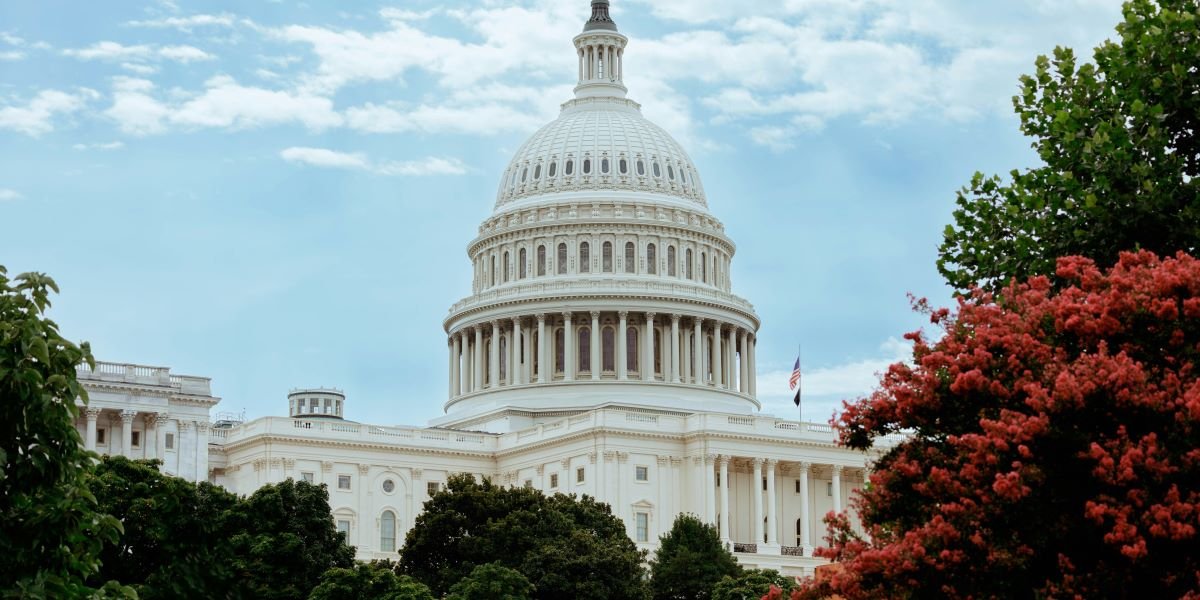
The House of Representatives voted 220-205 on Tuesday to pass a continuing resolution that would fund federal agencies at existing levels through December 4, a move designed to prevent a third government shutdown ahead of the November midterm elections. The measure now heads to the Senate, where its future is uncertain — Senate Majority Leader John Thune said he would “try” to bring a vote before the August recess but acknowledged the timeline could slip into September. House Minority Leader Hakeem Jeffries of Brooklyn led Democratic opposition, calling the bill a unilateral effort that bypassed bipartisan negotiation.
Key Takeaways
- The House passed a continuing resolution 220-205 on Tuesday to extend government funding through December 4, well past the November midterm elections.
- Only one Republican — Kentucky Rep. Thomas Massie — voted against the bill, while six Democrats broke with their party to support it.
- Current government funding expires September 30, but House Republican leaders moved months early to avoid repeating the fiscal year’s two prior shutdowns.
- Senate Majority Leader John Thune indicated the Senate may pursue its own version with bipartisan “anomalies” rather than advancing the House bill as written.
- The 119th Congress has already presided over the longest full government shutdown in U.S. history (43 days, October–November 2025) and a 76-day partial shutdown affecting the Department of Homeland Security (February–April 2026).
Why Did the House Act Months Before the Funding Deadline?
Current federal appropriations do not expire until September 30, making Tuesday’s vote highly unusual. Congress typically passes stopgap funding measures days or even hours before a deadline, not ten weeks in advance. But the political calculus heading into the November midterms has reshaped the timeline. Republican leaders, facing a record of two shutdowns in the current congressional session, opted to force a vote now rather than risk a third funding lapse that could sour voter sentiment weeks before Election Day.
House Speaker Mike Johnson framed the vote as a dare to Democrats, telling reporters that anyone who voted against the bill would “own the chaos that ensues if the government shuts down after September 30.” House Appropriations Committee Chairman Tom Cole of Oklahoma offered a more pragmatic rationale, noting the recent history of fiscal breakdowns. The 119th Congress has presided over the longest full government shutdown in modern history — a 43-day lapse that ran from October 1 to November 12, 2025 — followed by a 4-day partial shutdown in early February 2026 and then a 76-day partial shutdown of the Department of Homeland Security that stretched from mid-February through late April 2026.
The economic toll of those shutdowns has been substantial. JPMorgan economists estimated the 43-day shutdown subtracted roughly one-tenth of a percentage point from GDP growth for every week it lasted. Federal Reserve staff economists projected that the shutdown reduced inflation-adjusted GDP growth by a full percentage point in the fourth quarter of 2025. Approximately 900,000 federal workers were furloughed during the longest lapse, and the Congressional Budget Office estimated the total cost to the government at $11 billion.
What Is the New York Angle on the Funding Fight?
House Minority Leader Hakeem Jeffries, who represents Brooklyn’s 8th Congressional District, has positioned himself at the center of the Democratic opposition. Jeffries, along with Democratic Whip Katherine Clark and Democratic Caucus Chair Pete Aguilar, issued a joint statement calling the continuing resolution “a premature and desperate attempt by Republicans to abdicate their responsibility to govern while there are still several months left to negotiate a bipartisan agreement.” The Democratic leadership team argued the bill fails to block federal funding for mass deportation operations and gives the Trump administration expanded authority over the federal budget without congressional input.
Six Democrats broke ranks to support the measure: Representatives Kathy Castor of Florida, Henry Cuellar of Texas, Don Davis of North Carolina, Jared Golden of Maine, Vicente Gonzalez of Texas, and Gabe Vasquez of New Mexico — all representing competitive or swing-leaning districts where a shutdown vote could become a campaign liability.
For New York, the stakes extend well beyond Jeffries’ leadership role. The city is home to one of the largest concentrations of federal employees outside Washington, D.C., and the previous shutdowns directly affected agencies ranging from the Internal Revenue Service to the Federal Aviation Administration. The 43-day shutdown in late 2025 delayed tax processing, disrupted air travel at the region’s three major airports, and stalled federal contracting that supports businesses across the five boroughs.
What Happens in the Senate?
The Senate is not expected to simply pass the House bill as written. Thune told reporters on Tuesday that Senate negotiators are exploring a bipartisan stopgap that would incorporate so-called “anomalies” — adjustments from current spending levels that the administration says are necessary for an array of federal programs. The inclusion of anomalies would require Democratic cooperation, since Senate rules effectively require 60 votes to advance most legislation.
The dynamic creates a familiar impasse. Republicans control both chambers but lack the 60-vote supermajority in the Senate needed to move funding bills without Democratic support. Democrats, for their part, have signaled they will not advance a spending extension that does not address their priorities, which include provisions on healthcare subsidies and constraints on executive-branch spending authority. The August recess — a five-week break scheduled to begin within days — compresses the negotiating window further.
If the Senate passes its own version, the two chambers would need to reconcile the differences before the September 30 deadline. If negotiations stall, the country faces the prospect of a third shutdown in twelve months, a scenario that both parties have described as unacceptable but neither has shown the willingness to preemptively resolve.
The House vote settles one side of the equation, but the continuing resolution’s journey through the Senate will determine whether the 119th Congress adds a third funding lapse to a fiscal record that already ranks as the most disrupted in modern American history.
FAQs
What Is a Continuing Resolution?
A continuing resolution is a temporary spending measure that funds federal agencies at existing levels when Congress has not completed its regular appropriations process. The House-passed bill would extend current funding through December 4, 2026, preventing a government shutdown when the fiscal year ends on September 30.
How Many Government Shutdowns Have Occurred in the Current Congress?
The 119th Congress has presided over three distinct funding lapses: a 43-day full government shutdown from October 1 to November 12, 2025; a 4-day partial shutdown in early February 2026; and a 76-day partial shutdown of the Department of Homeland Security from mid-February through late April 2026.
Why Did Most Democrats Vote Against the Continuing Resolution?
House Democratic leadership argued that the bill was drafted without bipartisan input and fails to address Democratic priorities, including constraints on federal deportation funding and preservation of healthcare subsidies. The leadership called the measure a unilateral effort by Republicans to avoid negotiation while shifting blame for any future shutdown to Democrats.
When Is the Actual Government Funding Deadline?
Current federal appropriations expire at midnight on September 30, 2026, which is the end of the fiscal year. The House voted ten weeks early to avoid the risk of a shutdown immediately before the November midterm elections. The Senate must act before that deadline for funding to continue uninterrupted.
The 220-205 vote moves the stopgap funding question from the House floor to the Senate chamber, but the gap between a party-line House bill and the bipartisan consensus the Senate requires remains the same structural divide that produced three shutdowns in twelve months.