


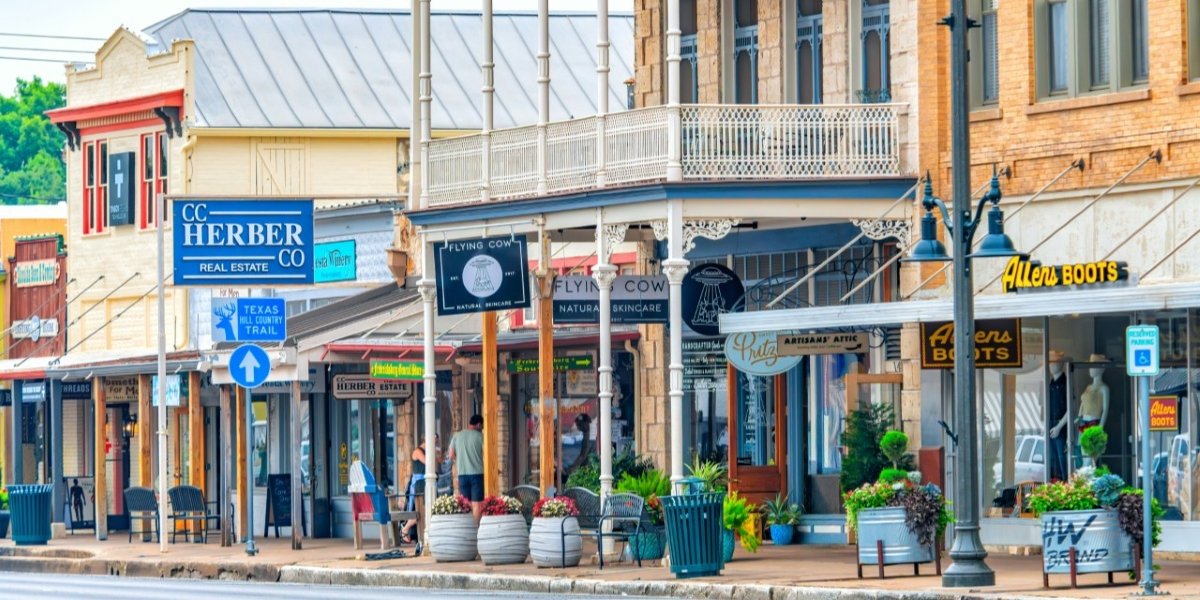
Running a business outside a major metropolitan area brings real advantages: loyal customers, lower overhead, and deep community ties. It also brings distinct financing challenges. Fewer lenders operate locally, property values may be harder to appraise, revenue often depends on weather or commodity prices, and the nearest specialized lender might be hours away.
This handbook is written for owners of farms, ranches, agricultural suppliers, and the main-street businesses that keep rural communities running, from hardware stores and diners to auto shops, grain elevators, feed stores, and veterinary clinics. It is organized into short chapters, each ending with a key takeaway.
Chapter 1: Understanding Rural Lending Options
Rural businesses have access to several categories of lenders, and the mix may differ from what urban owners encounter.
Community banks and credit unions remain the backbone of rural lending. Their loan officers often know local industries, families, and land values personally.
Farm credit institutions are cooperative lenders specializing in agriculture, agribusiness, and rural homes and businesses.
Government-supported programs play a significant role. The U.S. Department of Agriculture, through agencies such as the Farm Service Agency and Rural Development, offers or guarantees loans for farm operations, ownership, and rural business development. SBA programs are also available in rural areas.
Online lenders increasingly reach rural owners, offering speed and convenience, though their products may not account for agricultural cycles.
Equipment dealers and manufacturers often provide financing for tractors, combines, and other machinery.
Key takeaway: The right lender for a rural business is often one that understands seasonal income, land values, and local conditions. Proximity matters less than expertise.
Chapter 2: The Agricultural Cash Flow Challenge
Farms and ranches face a cash flow pattern unlike almost any other business. Expenses for seed, feed, fertilizer, fuel, labor, and equipment repairs arrive months before harvest or livestock sales. A single bad season, whether from drought, flood, disease, or price swings, can affect income for the entire year.
Common financing tools for this cycle include:
• Operating lines of credit that fund input costs and are repaid when crops or livestock are sold
• Equipment loans structured with annual or semiannual payments aligned to harvest
• Real estate loans for land purchases with long amortization periods
• Livestock loans to purchase or expand herds
Payment structure is critical. A monthly payment schedule that works for a retailer may be completely unworkable for a grain farmer who receives most income once a year.
Consider an illustrative corn and soybean operation that spends roughly $300,000 on inputs between March and June but sells most of its crop between October and January. An operating line drawn down through spring and summer, then repaid from harvest proceeds, mirrors that cycle perfectly. A fixed monthly term loan for the same amount would demand payments all summer, precisely when the farm has the least cash on hand.
Key takeaway: Match repayment timing to when your income actually arrives. Ask lenders specifically about annual, semiannual, or seasonal payment options.
Chapter 3: Funding Main-Street Businesses
Rural service and retail businesses often face a different problem: limited local competition among lenders and lower population density that limits growth projections.
These businesses commonly use:
• Term loans for renovations, expansions, or equipment
• Working capital loans or lines of credit for inventory and seasonal swings, such as a hardware store stocking up before planting season. Resources like Best Working Capital Loans describe how these products are typically structured.
• SBA and USDA-guaranteed loans for larger projects, including acquisitions when an owner retires
• Revolving loan funds from regional economic development organizations, which may fill gaps that banks will not cover alone
Business succession is a particularly important issue in rural communities. When a long-time owner retires without a buyer, the town may lose an essential service. Acquisition financing, sometimes combined with seller financing, can help a new owner keep the business running.
Key takeaway: Rural main-street businesses should explore both conventional and development-oriented financing, especially for acquisitions and expansions that preserve local services.
Chapter 4: Preparing Records That Rural Lenders Need
Agricultural and rural lenders often request documentation that reflects the realities of the operation:
• Several years of tax returns, including farm income schedules where applicable
• Balance sheets listing land, equipment, livestock, and stored crops
• Production records, such as yields per acre or herd counts
• Crop insurance policies and coverage levels
• Marketing contracts or forward sales agreements
• Lease agreements for rented land
• Cash flow projections built around the operating cycle
For main-street businesses, expect standard documents: bank statements, profit and loss statements, tax returns, and a debt schedule.
Key takeaway: Organized production and financial records demonstrate management skill, which can matter as much as the numbers themselves.
Chapter 5: Managing Risk Before You Borrow
Lenders assess risk carefully in industries exposed to weather and markets. Owners can strengthen their position by showing how they manage that risk.
• Crop and livestock insurance protects against catastrophic losses
• Forward contracts and diversified marketing reduce exposure to price swings
• Diversified income, such as agritourism, direct-to-consumer sales, or custom work for neighbors, smooths revenue
• Cash reserves built during strong years cushion weaker ones
When you present these strategies in your application, lenders see an operator who plans ahead. A short paragraph describing your insurance coverage, marketing plan, and reserve policy can answer many underwriting questions before they arise.
Key takeaway: Demonstrating risk management can improve approval odds and terms.
Chapter 6: Researching Lenders From a Distance
With fewer local options, rural owners may need to research lenders beyond their immediate area. Begin with local banks, credit unions, and farm credit offices, then expand to regional and national options as needed.
Online research can help. Comparison resources such as Compare Business Loans Online let you see how different product types compare, and platforms like Business Loans Engine help clarify eligibility requirements. If you are being offered fast funding based on card sales, as some rural restaurants and retailers are, educational resources at Best MCA Loans explain how those advances work and what they truly cost.
Ask every potential lender:
• Do you understand agricultural or seasonal income patterns?
• Can payments be structured to match my income cycle?
• What collateral do you require, and how do you appraise rural property?
• Do you participate in USDA or SBA guaranteed programs?
• How long does your process typically take?
Key takeaway: Expertise in your type of operation matters more than convenience or a slightly lower advertised rate.
Chapter 7: Choosing One Lender and Applying Well
In small communities, reputation travels quickly, and lending relationships often last decades. That makes the approach to applying especially important.
After researching, select the single lender whose expertise, products, and payment structures best fit your operation, and apply there first. Submitting applications to many lenders at once can create several hard credit inquiries that lower your score. In close-knit rural lending circles, loan officers may also notice when a borrower is shopping widely, which can affect the relationship you hoped to build. And with the timing pressures of planting, calving, or a seasonal rush, juggling several application processes takes attention away from running the operation.
A focused, well-prepared application to the right lender is usually faster and more productive. If that lender cannot help, ask whether they can recommend another institution better suited to your needs. Rural lenders frequently refer borrowers to one another, and a warm referral can open doors faster than a cold application.
Key takeaway: One careful application to the best-fit lender protects your credit and your reputation.
Chapter 8: Beginning Farmers and New Rural Owners
Newcomers face a particular hurdle. Without years of production history or equity in land and equipment, they may struggle to meet conventional lending standards. Fortunately, several paths exist. Some government programs set aside funds or offer special terms for beginning farmers and ranchers. Community lenders and farm credit institutions may offer young or beginning producer programs with training components. Leasing land and equipment, rather than buying, can reduce initial capital needs while building a track record.
Mentorship matters, too. Working alongside an experienced operator, or arranging a gradual transition with a retiring farmer, can provide both knowledge and a credible story to tell lenders.
Key takeaway: A short history is not a dead end. Seek out programs designed for beginners, and build your record deliberately.
Building a Financing Plan That Fits Your Community
Rural businesses form the economic heart of countless communities. Financing them well requires lenders who understand seasonal income, land, livestock, and small-town markets, and owners who prepare thoroughly and choose their partners carefully. Know your cash cycle, organize your records, manage risk visibly, research lenders with relevant expertise, and apply with the one that fits best. Strong financing decisions help keep both your business and your community thriving for generations, long after today’s loan has been repaid in full.
Disclaimer: This article is provided for general informational and educational purposes only and does not constitute financial, lending, legal, tax, or professional advice. Financing options, eligibility requirements, interest rates, fees, repayment terms, licensing requirements, and applicable laws may vary by lender, location, business type, and individual circumstances. Readers should independently verify information with the relevant lender or qualified professional before applying for financing, sharing financial information, or entering into any agreement. References to specific companies, websites, products, or resources are for informational purposes only and do not constitute an endorsement or guarantee of their services, terms, approval, or results.