

Over the past two decades, prominence in infrastructure and energy finance has increasingly been shaped by project scale. As renewable energy has integrated into mainstream capital markets, greater emphasis has been placed on innovation in structuring, execution, and long-term asset performance. In Europe, where installed renewable capacity has expanded significantly, focus has often centered on projects that combine technical delivery with financial robustness and institutional appeal.
According to the International Energy Agency, global renewable power capacity increased by more than 2,600 gigawatts between 2000 and 2022. Europe has been among the regions experiencing the most substantial growth, supported by policy frameworks and sustained investment. Within this context, industry standing is shaped by financial and sector-specific publications, as well as institutional stakeholders, often through comparison across firms, strategies, and execution track records.
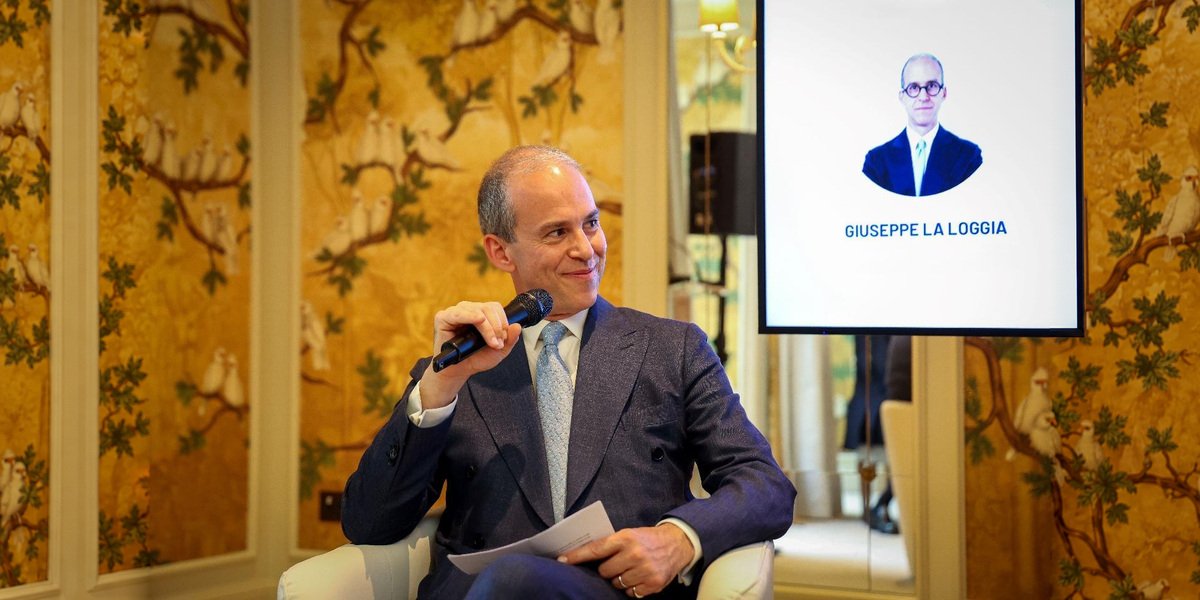
Giuseppe La Loggia’s career has developed within this framework. His work in renewable infrastructure finance has been associated with transactions and innovative structures that have received industry awards and coverage in specialized media. One example is the Andromeda solar project bond, structured in 2010 during his tenure at SunPower Corporation. Project Finance International awarded the $260 million transaction European Project Bond Deal of the Year.
The relevance of this transaction lies in its structure. The Andromeda bond was the first rated and listed solar project bond, representing a departure from the bank-led financing and incentive-driven models that had previously dominated the sector. Its classification reflected both the scale of the transaction and its role in expanding access to capital markets for renewable assets.
Beyond formal awards, professional visibility in the sector is also reflected in coverage across specialized publications. La Loggia has been featured in outlets such as Inspiratia, BeBeez Magazine, and PV Magazine Italia, which focus on renewable energy, infrastructure finance, and private capital markets. These platforms typically cover sector developments and investment trends, and their coverage reflects ongoing participation in industry discussions.
Such appearances are generally linked to commentary on topics including subsidy-free renewable models, ESG integration, and evolving financing structures. In this context, media presence indicates engagement with themes such as grid parity, capital structuring, and the role of private investment in the energy transition.
Another indicator of industry standing is participation in large-scale transactions and partnerships. Renewable energy projects typically involve coordination among developers, financiers, and institutional investors, and successful delivery contributes to professional credibility. During his time at SunPower, La Loggia was involved in the development, acquisition, and construction of solar assets exceeding 300 megawatts, and subsequently in portfolios surpassing 1 gigawatt at Octopus Investments and EOS Investment Management. These transactions have been referenced in discussions of large-scale renewable deployment in Europe.
Influence within the sector is also linked to the development of investment approaches adopted more broadly across the market. The emergence of subsidy-free solar frameworks in Europe during the mid-2010s marked a shift in project financing, reducing reliance on public incentives and introducing alternative contractual structures. The wider adoption of such models has been noted in industry analyses.
At EOS Investment Management, where La Loggia has served as Senior Partner since 2018, the focus has been on investments in sustainable infrastructure assets. The EOS Renewable Infrastructure Fund II, managing assets approaching 1 gigawatt, has been referenced in industry communications. The acquisition of a 294-megawatt solar portfolio from Lightsource BP has also been cited within the Italian renewable energy market.
Industry positioning is further influenced by alignment with regulatory frameworks. European Union climate targets, including the objective of reducing greenhouse gas emissions by at least 55 percent by 2030, have shaped investment patterns in renewable infrastructure. Market participants operating within this framework are often involved in broader discussions concerning energy transition and capital allocation.
Taken together, these elements contribute to a professional profile defined by transaction experience, involvement in sector developments, and participation in industry dialogue. In infrastructure finance, such positioning tends to emerge cumulatively rather than through isolated events.
La Loggia’s career reflects this trajectory within the European renewable energy investment landscape, spanning financial structuring, portfolio development, and investment strategies aligned with evolving market conditions. As the sector continues to expand, industry standing is likely to remain closely linked to execution and long-term asset performance.