

Photographs serve several purposes beyond recording how people and places look. They preserve family histories, document public events, and provide material for historical research. They can also become evidence in disputes over the identity of a person shown in an image. Such work presents particular challenges when photographs are old, damaged, taken from different angles, or produced under different lighting conditions.
Photography was part of Joelle Steele’s professional work before she focused on comparing faces and ears. Her interests extended to professional photography involving actors and musicians, image restoration, retouching, illustration, and visual research. These activities brought her into contact with photographs as both creative products and records that required careful examination. Her later work in photographic identification drew on a related concern: how much information an image contains, which details remain visible, and what can reasonably be concluded from them.
Steele’s photography-related writing covered subjects such as the history of photography, antique photographic formats, copyright ownership, and digital restoration. Her published articles included guides to distinguishing ambrotypes, daguerreotypes, and tintypes, along with material on restoring damaged photographs and working with large panoramic images. These subjects required attention to photographs’ physical characteristics, their production, and the changes that occur as images age. Her work also included digital photo restoration and retouching, activities that later connected with her interest in comparing images of people.
Historical research also gave her photographic experience another use. During her work on the original Asilomar Conference Grounds website, Steele prepared historical material and located photographs to illustrate the site’s account of the property. Asilomar began as a Young Women’s Christian Association camp and conference facility in 1913. Many of its historic buildings were designed by architect Julia Morgan between 1913 and 1928, and California State Parks has owned and operated the grounds since 1956. Steele’s website presented historical information alongside visual records, connecting photography with documentation of a place and its development.
Steele’s interest in photographic identification began in 1974, when she helped a friend identify relatives in old family albums. She became interested in whether ear characteristics could help distinguish people in photographs. In 1975, she met Alfred V. Iannarelli, an ear identification specialist who wrote Ear Identification. She later studied ear structure and patterns under Iannarelli and went on to study facial anatomy and anthropometry. Her account also describes learning from forensic anthropologists and studying the relationship between facial measurements and the underlying bones.
Anthropometry involves measuring physical features. In Steele’s practice, she examined facial characteristics in two-dimensional photographs to assess whether a person had been correctly identified. Her published explanations describe comparing facial proportions, feature placement, jaw shape, cranial structure, and visible ear characteristics. The quality of the photographs mattered because indistinct features, fading, and differences in head position could limit meaningful comparison. Steele distinguished this work from computer-based facial-recognition systems, which analyze faces using automated methods and may operate across large image databases. Her approach involved examining photographic evidence to determine whether the person shown matched the attributed identity.
Her work also required separating visual comparison from historical context. Family albums, captions, and other records may help researchers understand a photograph’s origin, but they do not necessarily establish the identity of the person pictured. Steele argues that researchers should examine facial and ear characteristics directly rather than treat a photograph’s provenance as conclusive. This distinction matters for historical photographs, where original labels may be missing or incorrect. It also defines the particular scope of her practice: comparing identities represented in photographs rather than authenticating every aspect of an image’s history.
Steele began professional face-and-ear comparison work in 1980. In an interview, she described analyzing photographs for clients, including appraisers, genealogists, private investigators, and library and museum archives. She also reported preparing findings for civil cases in which attorneys sought comparisons involving plaintiffs or defendants. Her work included written reports and declarations, and she stated that she testified in court several times. She described becoming court-certified as an expert in face and ear comparisons through this court-related work. These details come from her published account of her professional practice.
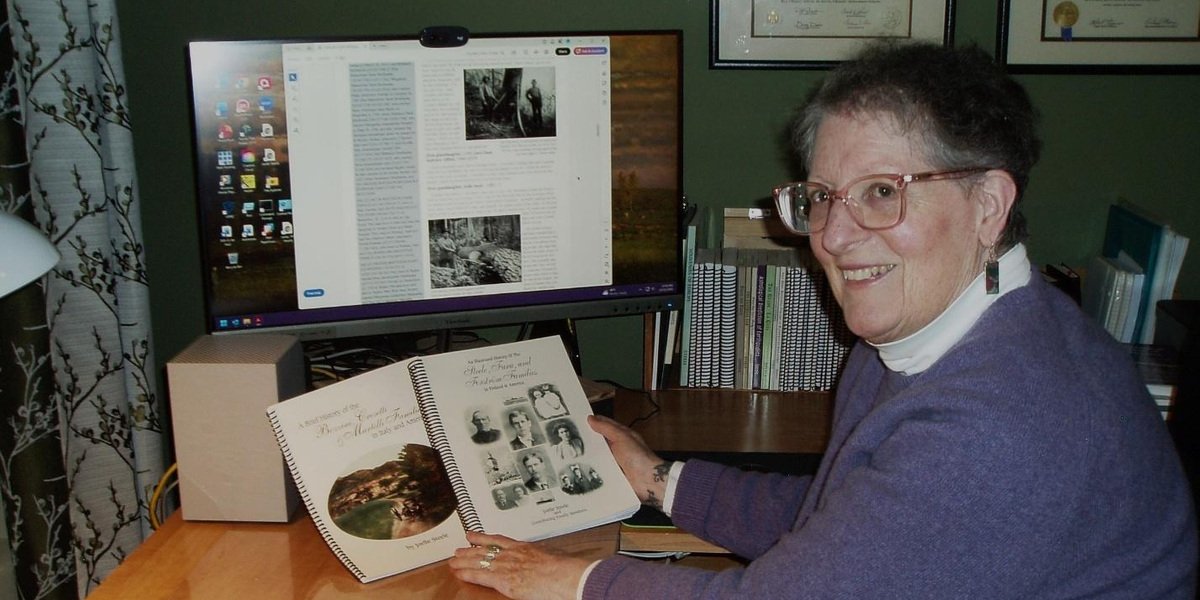
Steele’s publications document how her interest developed into a sustained body of instructional material. Her 1992 booklet, Anthropometry and the Human Face in Photographs, introduced measurements and facial proportions in photographic comparison. She later expanded the subject in Face to Face: Analysis and Comparison of Facial Features to Authenticate Identities of People in Photographs, published in 2013. The book discusses facial and ear anatomy, measurement, comparison, and other identifying features. Its stated audience includes genealogists, historians, archivists, appraisers, attorneys, and others who work with photographs.
Other titles addressed related questions. The External Ear examined ear identification, while The Quick Guide to Comparing Faces in Photographs offered a more concise approach to comparing faces in photographs. Identification Dilemma also explored the identity of the deceased in photographs. In What Did They Really Look Like?, Steele discussed the difficulties of interpreting people’s appearance in historical images. PhotoGen connected photography with genealogical research. Together, these books examined facial features, studied ears, and used photographs to investigate family and historical identities.
Photographic identification remained connected to Steele’s other work. Genealogy introduced her to family albums and the practical problem of identifying people whose names were lost. Historical research required locating photographs and considering their documentary context, while illustration and graphic design involved interpreting and presenting visual material. Digital restoration added another dimension by allowing researchers to improve damaged or faded images for examination. Restoration, however, cannot recover details that are no longer present with certainty, and image editing must not be mistaken for independent evidence of identity.
Through these activities, Joelle Steele developed a professional practice linking photography, historical research, and comparisons of facial and ear features. Starting with photographic and visual work, she moved into a specialized field producing books, client reports, and court testimony. She has stated that she examines all relevant features and informs clients whenever she has even the slightest doubt about whether a photograph matches a person’s identity. Her publications document the methods she developed and the questions she considered, while the broader field of photographic identification requires careful attention to image quality, testing, and the limits of individual conclusions.