


By: Nathalie Colombus
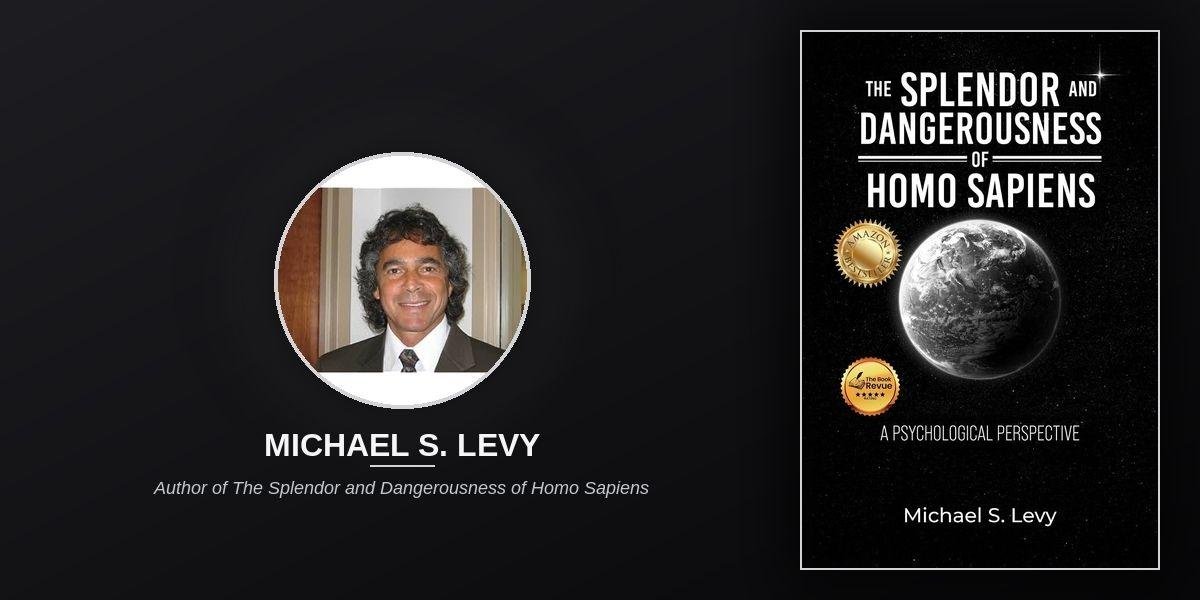
Michael S. Levy, PhD, has spent his career at the intersection of clinical psychology and the most difficult aspects of human behavior, serving as the clinical director of multiple mental health and substance use treatment programs and as a longtime lecturer at the Division of Addictions at Harvard Medical School before producing the two books that preceded this one, on alcohol moderation and on celebrity obsession. In each of those earlier works, he was examining specific manifestations of human psychology at the individual level, specific ways in which human consciousness and its vulnerabilities produce particular patterns of behavior and particular forms of suffering. The Splendor and Dangerousness of Homo Sapiens represents a significant expansion of that project, stepping back from the individual to ask what the clinical tools and concepts developed to understand individual human psychology reveal when applied to the species as a whole.
What they reveal, in Levy’s careful and rigorously argued account, is both sobering and illuminating. The three defining human attributes he identifies as the source of both our remarkable achievements and our most dangerous tendencies, refined consciousness, advanced cognitive ability, and the unmatched capacity for communication, are not separate from each other. They interact, and the specific ways in which they interact, particularly when paired with unchecked self-interest, produce the patterns of behavior that have generated wars, environmental catastrophe, the epidemic of disinformation, and the steady erosion of institutional trust that characterizes the current global moment.
Levy’s clinical background adds precision to this analysis by showing how these mechanisms operate. He is not speaking in generalities about human nature or offering the kind of broad evolutionary narrative that characterizes much popular writing about the human condition. He is applying the same analytical rigor that clinical psychology demands when working with individual patients to the question of why the species as a whole behaves in the specific ways it does, and the result is a level of mechanistic clarity that more broadly framed treatments of the same questions rarely achieve.
Reading this book requires a certain willingness to sit with uncomfortable truths about the species you belong to, but Levy makes that sitting genuinely productive rather than simply distressing. He writes with the warmth of someone who has spent decades working with human beings in distress and has retained, through all that work, a genuine belief in the capacity for change; the practical suggestions he offers reflect that belief in specific, grounded ways. This is not a book that concludes with despair dressed as realism. It concludes with the kind of guarded, evidence-based hope that serious clinical experience tends to produce: the recognition that change is genuinely possible and that understanding the mechanisms that produce the problem is the necessary first step toward addressing it.
Readers concerned about wars, climate change, misinformation, and social inequity, and looking for a framework that explains these phenomena through the lens of psychological understanding rather than political analysis or moral exhortation, will find that perspective in The Splendor and Dangerousness of Homo Sapiens by Michael S. Levy, PhD. Get your copy now on Amazon and start understanding the species you belong to with the clarity that clinical psychology uniquely provides.