

By: Aman Jalan
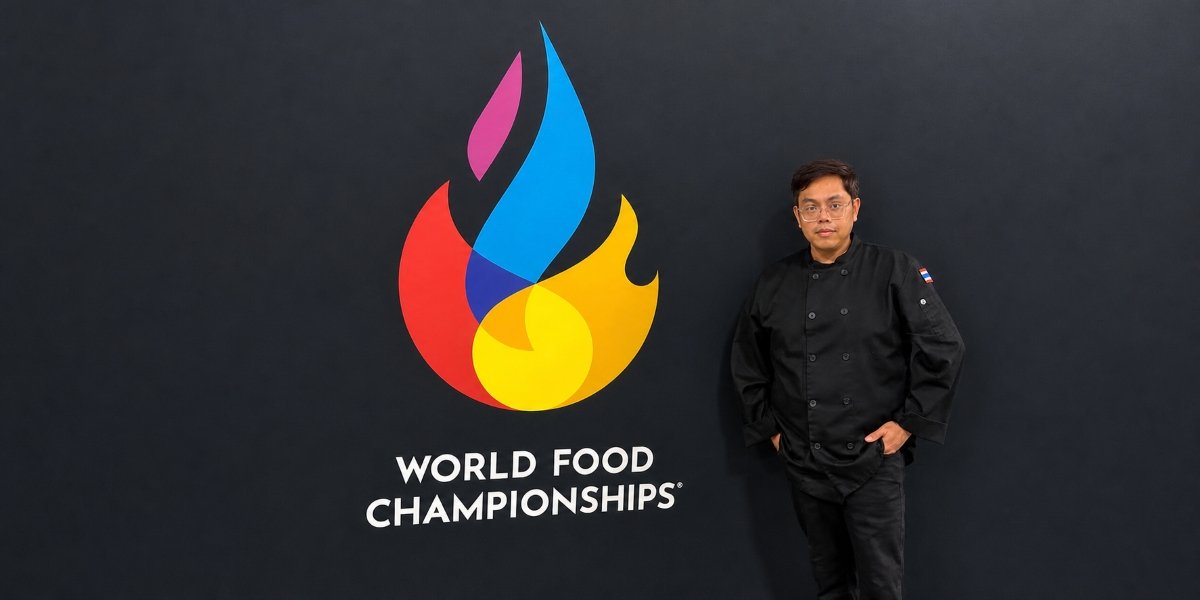
Thai chef and culinary educator Dr. Kritchakhun Bhanityanakorn, professionally known as Chef Patrick, brought a contemporary interpretation of Northern Thai cuisine to the 2026 World Food Championships in Indianapolis, presenting a khao soi-inspired dish that combined traditional Thai flavors with American Wagyu beef.
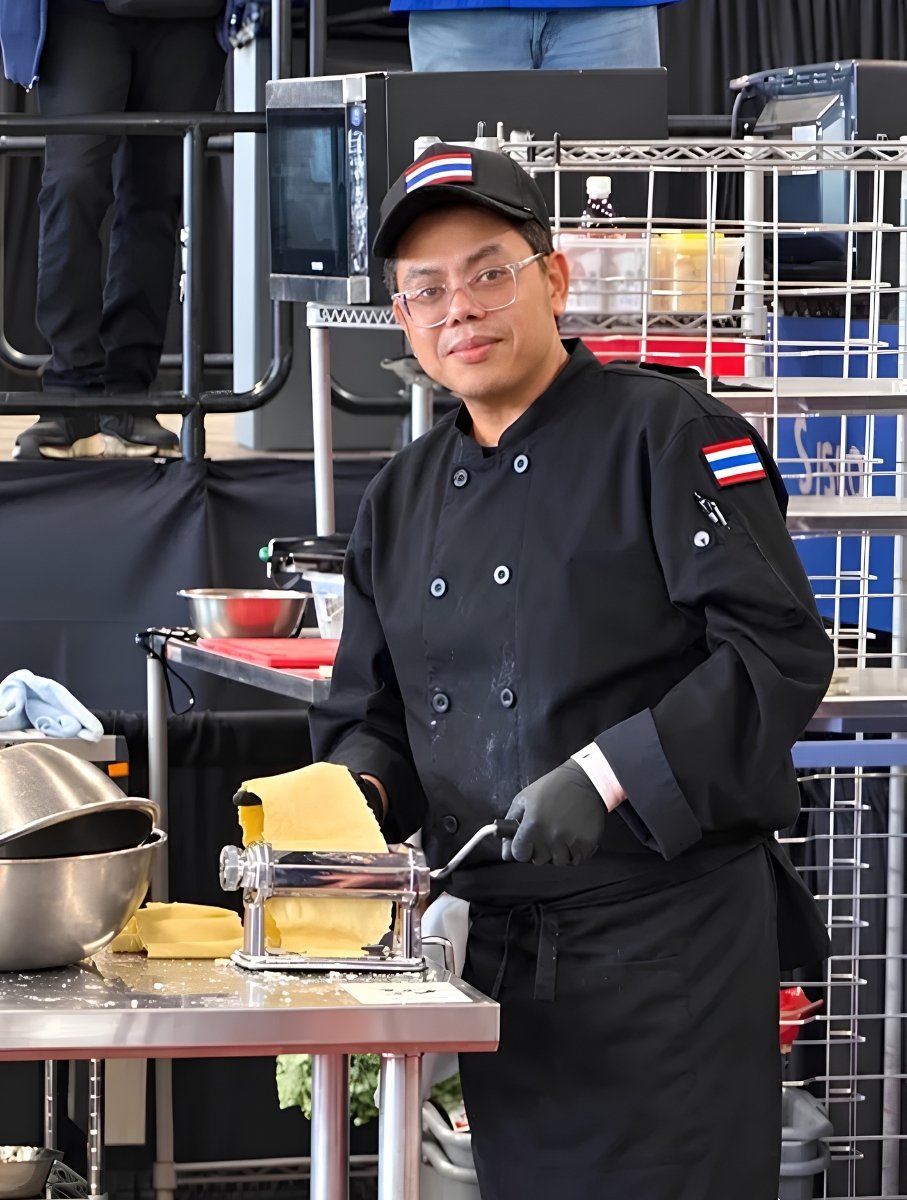
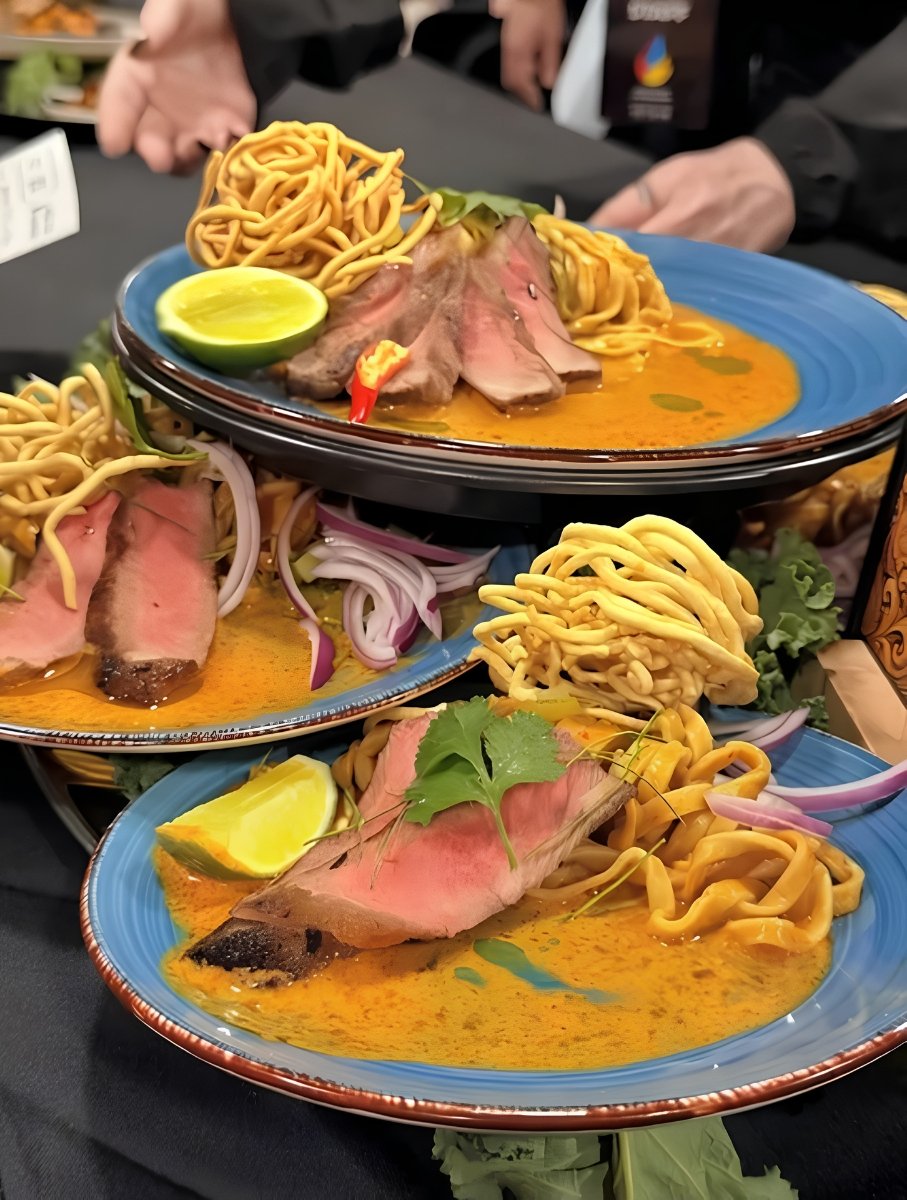
Competing in the Noodle category, Chef Patrick presented “Thailand’s Golden Harmony: American Wagyu Curry Noodles,” a dish that reflected his approach to culinary innovation, cultural storytelling, and the relationship between food and education.
His participation followed a runner-up finish in the Taste of Croix Valley Online Recipe Challenge, which earned him a Golden Ticket to compete at the international culinary event.
For Chef Patrick, the competition provided an opportunity to demonstrate how Thai culinary traditions can be adapted for an international audience while maintaining their cultural foundations.
A Khao Soi-Inspired Dish Combines Thai Flavors and American Wagyu
At the center of Chef Patrick’s competition entry was an interpretation of khao soi, the celebrated Northern Thai noodle dish known for its aromatic coconut curry and contrasting noodle textures.
“Thailand’s Golden Harmony: American Wagyu Curry Noodles” paired handmade egg noodles, served both soft and crisp, with Thai coconut curry and seared American Wagyu New York strip.
The dish incorporated pickled mustard greens, red onion, lime, chili, and makrut lime leaf oil. These ingredients introduced acidity, heat, freshness, and aromatic complexity to balance the richness of the curry and beef.
The combination reflected an approach that connects Thai culinary traditions with ingredients familiar to American diners. Rather than abandoning the dish’s cultural foundations, Chef Patrick used the ingredients and presentation to explore how its characteristic flavors could translate into an international competition setting.
The contrasting noodle textures also played an important role, bringing together the softness of cooked noodles and the crispness of their fried counterparts.
Chef Patrick Uses Food to Connect Cultures
For Chef Patrick, cooking extends beyond technique and presentation. It also provides a way to communicate cultural knowledge and create connections between people from different backgrounds.
“Food is culture that connects people,” he said. “Even when we speak different languages, a dish can tell a story and create understanding. I wanted to share Thai flavors in a way that invites people to learn more about where they come from.”
That philosophy informs both his culinary practice and his academic interests. His work explores how Thai cuisine travels across borders, how traditional flavors can be introduced to new audiences, and how food can contribute to cultural exchange.
The World Food Championships offered a setting in which those ideas could be expressed through a single dish. By combining a Northern Thai culinary inspiration with American Wagyu, Chef Patrick presented an example of how international ingredients and established food traditions can intersect.
From Professional Kitchens to Culinary Education
Chef Patrick brings experience from several areas of the food industry, including kitchen operations, food business management, menu development, and food cost control.
His professional background also includes higher education. He previously worked as a full-time lecturer in Thailand and a part-time lecturer in the Philippines, combining practical culinary experience with academic instruction.
His educational background spans food, nutrition, and food business, alongside a master’s degree in business administration and doctoral degrees in business administration and educational leadership and management.
This combination of professional and academic experience shapes his perspective on culinary development. Cooking, in his view, involves understanding ingredients and techniques while also recognizing the cultural, operational, and commercial factors that influence the food industry.
That perspective is particularly relevant to culinary education, where students need both practical kitchen skills and an understanding of the broader environment in which professional chefs work.
Researching Thai Cuisine Beyond Thailand
Chef Patrick’s academic interests include Thai cuisine abroad, culinary soft power, gastronomy tourism, and emerging food business trends.
His published work, “Thai Street Food in America: Pop-Up Culture, Nostalgia, and Commercial Potential,” examines the cultural and commercial dimensions of Thai street food in the United States.
The subject connects culinary practice with questions about identity, migration, consumer interest, and the ways traditional food cultures develop in new markets.
Thai cuisine has an established international presence, but its interpretation can change depending on local ingredients, dining habits, business models, and audience expectations. Research into these developments can help explain how culinary traditions maintain their identity while adapting to different environments.
Chef Patrick’s competition entry reflects a related interest, translating a recognizable Thai culinary tradition into a dish designed for an international audience.
Exploring a Thai and Asian Culinary Curriculum in the United States
Beyond his competition work, Chef Patrick is in discussions with a culinary college in the United States about the possible development of a Thai and Asian culinary curriculum.
The proposed collaboration remains at the discussion stage. Course details, program structure, and potential offerings have not yet been finalized.
The concept would connect hands-on cooking instruction with ingredient knowledge, flavor balance, cultural context, and professional kitchen applications. It would aim to help students understand not only how dishes are prepared but also why particular techniques, ingredients, and combinations are used.
Chef Patrick also hopes to incorporate lessons from culinary competitions, including recipe development, ingredient adaptation, and production planning under time constraints.
“I want students to understand why a dish is prepared a certain way, not simply follow a recipe,” he said. “That understanding gives them the confidence to adapt and create while respecting the food’s cultural roots.”
The proposed curriculum reflects his interest in connecting culinary practice with a deeper understanding of food traditions. It also aligns with his academic focus on the international development of Thai cuisine and the role of culinary knowledge in cross-cultural education.
Bringing Competition Experience Into the Classroom
Culinary competitions require chefs to make decisions within defined time limits while balancing flavor, texture, presentation, and execution. For educators, these environments can also provide practical examples of problem-solving and menu development.
Chef Patrick’s participation in the World Food Championships offers experience that could inform his future teaching if the proposed academic collaboration moves forward.
His approach would emphasize the reasoning behind culinary decisions, from selecting ingredients and balancing flavors to adapting recipes for different settings.
This perspective can help students develop transferable skills rather than relying exclusively on memorized recipes. Understanding the purpose of a technique or ingredient gives aspiring chefs more flexibility when working with unfamiliar products or developing new dishes.
For Chef Patrick, the goal is to combine professional kitchen knowledge with cultural awareness, preparing students to approach Asian cuisines with both creativity and respect.
Chef Patrick Connects Culinary Innovation With Cultural Preservation
Chef Patrick’s work brings together several complementary interests: professional cooking, academic research, international food culture, and culinary education.
His khao soi-inspired entry at the 2026 World Food Championships demonstrated how Thai flavors could be presented through a contemporary dish incorporating American Wagyu. His research explores the wider movement of Thai cuisine across borders, while his discussions about a possible culinary curriculum point toward sharing that knowledge with future professionals.
These activities reflect a consistent idea: culinary innovation does not have to come at the expense of cultural understanding.
A dish can evolve through new ingredients, techniques, and presentation while still acknowledging the traditions that inspired it. Similarly, culinary education can introduce students to new approaches while explaining the cultural context behind the food.
For Chef Patrick, those principles are connected.
“One dish allows us to share a taste,” he said. “Education allows that knowledge to travel further.”
Through competition, research, and his continuing interest in culinary teaching, Chef Patrick is working to make Thai culinary knowledge more accessible to audiences beyond Thailand, creating opportunities for food to serve as both a creative expression and a bridge between cultures.