

By: Gesche Haas, Founder of Dreamers & Doers, a curated community and PR Hype Machine™ for extraordinary women entrepreneurs.
Any business owner knows that markets and industries never stop evolving. But the leaders who stay ahead of the curve understand that the most important shifts often aren’t happening within their businesses; they’re happening in the minds, expectations, and behaviors of the people they serve.
Today’s consumers are making decisions differently than they did even a few years ago. They’re reevaluating what they value, where they spend, who they trust and what they expect from the brands they support. Those changes are rippling across virtually every industry, challenging business leaders to rethink everything from how they communicate and build relationships to how they design products, services and customer experiences.
We asked founders and executives from the Dreamers & Doers community to share the shifts in consumer behavior they’re paying closest attention to and how those insights are shaping the way they lead and grow their businesses.
People want less, but better
Consumers are moving away from the old mindset that more options automatically mean more value. Instead, they’re gravitating toward simplicity, thoughtful curation, and quality over quantity, a shift that’s reshaping everything from product design to customer experience.
Andrea Garcia has seen this transformation up close as co-founder of premium baby and toddler brand Arquia. She notes that the most underestimated trend in her industry isn’t a particular fabric or silhouette, but a one-collection model that addresses the fatigue many contemporary parents feel from endless drops and overwhelming choices for their kids.
“Brands that edit and stand behind fewer, better pieces are winning loyalty over fast fashion,” Garcia says. “We launch once a year, intentionally, and it’s becoming our biggest differentiator.”
This move toward streamlining extends beyond products and to process and production. At Go to Market, Chief Swag Officer Amanda Hofman has found a competitive edge in bringing a mindset of simplicity into the business of creating merch shops for her clients. For example, while it was once standard for companies to order thousands of giveaway items at a time, Go to Market’s customers have started taking waste more seriously. This has shifted the way leaders like Hofman do business.
“Companies are realizing that nobody is excited about receiving another cheap water bottle or pen that’s headed for the trash a few months later,” she says. “We’re helping clients shift toward fewer, better products and print-on-demand programs that eliminate overproduction while creating merchandise people actually want to keep.”
At Liquid Collagen Stix, Bea Bennett applies the increasing demand for “less is more” to the ingredients and product labels for her ready-to-drink collagen shots.
“Importantly, consumers want to understand and recognize every ingredient on the label,” the CEO says. “Consumer opinions and trends around ingredients will dictate your growth as a business and if your product is going to be adopted into a consumer’s everyday routine.”
To adapt, Bennett prioritizes ongoing conversations with customers and stays informed about what’s happening in her space internationally. The result is cleaner labels, shorter ingredient lists, and happier customers.
Discovery is becoming more intimate
From clothing and skincare to wedding venues and healthcare, consumers are raising the bar for how they discover new brands. They’re seeking recommendations they can trust, experiences that feel personal, and interactions that build confidence from the very first touchpoint. In response, leaders across industries are finding new ways to narrow the distance between their businesses and the people they’re trying to reach, making discovery feel less transactional and more human.
“Consumers are increasingly discovering products through smaller, more trusted communities, whether that’s Substack, niche online communities, group chats or creator-led audiences, rather than solely through traditional social media feeds,” says Natalie De Vincenzi, founder and CEO of You Are Enough Co. “Traditional advertising is becoming less effective as consumers grow more selective about who and what they trust. We’re adapting by investing more heavily in partnerships with trusted creators and community builders, including Substack publishers.”
Marketing coach Jessie Sanchez sees live shopping experiences as a similarly effective response to shifting consumer expectations. She’s run several of these events with clients at Happy Brand Company and has been highly impressed by the results.
“Everyone can have their QVC moment!” Sanchez says. “Live shopping has proven to be a huge win for founders, with increased customer engagement and online sales.”
Personalization is replacing mass appeal
As leaders adapt to broad shifts in consumer behavior, many are discovering that success doesn’t come from chasing what’s most popular but from making the experience feel personal. In an era of rising expectations, customization can prove a big advantage.
In the beauty industry, this looks like a transition from popular trends, clean beauty, for one to what Kellie Chen describes as “self-optimization.” As co-founder and head of brand strategy at 8Rue, Chen works closely with beauty, health, and fitness CPG brands at every stage.
“Consumers are starting to realize something beauty brands have largely ignored for years: your skin doesn’t exist in isolation,” she says of how personalization is becoming a meaningful edge in her space. “Stress shows up on your skin. Poor sleep shows up on your skin. Hormones show up on your skin. The brands gaining traction today aren’t just talking about ingredients. They are helping consumers connect the dots between beauty, health and wellbeing.”
For co-founder and CEO of The Two Do List Naomi Wynter, prioritizing custom experiences has increased the demand for highly curated tools for people planning weddings.
“Couples are increasingly treating wedding planning as a relationship stress test rather than an event management project,” Wynter says. “They’re looking for tools that help them divide responsibilities fairly, make decisions together and navigate conflict, not just manage budgets and timelines.”
In response, The Two Do List has started work on a relationship-first planning platform that prioritizes shared ownership and communication alongside traditional planning tools, ensuring that every couple’s specific needs are more central than the hottest aesthetic trends.
The healthcare industry is evolving to address similar calls for individualization. At Ilant Health, Elina Onitskansky aims to be a supportive partner for folks navigating the complicated world of obesity treatment.
“The challenge is no longer access alone but helping individuals navigate an increasingly complex landscape to find the right treatment and support,” the founder and CEO says.
Ilant Health combines advanced analytics, AI-driven decision support, and a multidisciplinary care team to deliver personalized care that improves outcomes while helping employers and health plans reduce costs.
At her own health company, Lona Vincent notes that the massive increase in available data has also driven consumer expectations for customization, but WOW Health is prepared to answer the call by creating a discovery platform and directory for companies, investors and allies fueling women’s health innovation.
“Right now, a woman’s sleep might be tracked on one device, her cycle in one app, her lab results in a different online portal and her symptoms in her own notes, and none of it talks to each other,” Vincent says. “That’s been the quiet problem holding the industry back. What’s changing now is that investors are putting their money behind tools built to work together over time because the real value isn’t another single tool, it’s the connections between them.”
Those connections have the power to revolutionize the personalized health information available to users, and, in turn, the resources and tools they have available to feel better.
New cultural shifts create entirely new markets
Ultimately, consumer behavior changes with the cultural context, creating opportunities leaders couldn’t have seen coming. Lakshmi Narayanee Balasubramanian built NoomaLooma to address the current epidemic of passive customization and optimization fatigue.
“Gen Z and Gen Alpha spend hours on their phones every day and leave feeling worse,” the co-founder says. “They call it brain rot. But the wellness industry hasn’t helped: it turned self-care into another performance, another metric, another thing to optimize and fail at. People aren’t just burned out on doomscrolling. They’re burned out on being told how to fix it.”
NoomaLooma seeks to push back against this trend by encouraging creative wellness through daily resets, community, live events and a personalized wellness fingerprint.
CEO and co-founder Kelly Hubbell got her unlock from a cultural shift and a growing conversation about the mental load of running a home.
“Companies have tried to serve household support for decades as luxury concierge or transactional staffing,” Hubbell says. “None of those models scaled because families didn’t yet have cultural permission to ask for support. The mental load is finally being named as a structural problem instead of a personal failing, which is opening up an entirely new category: modern village infrastructure for the average family, not the estate.”
Seeing that opportunity, Sage Haus adapted into a partner for parents new to giving themselves permission to seek help, offering it through vetted, onboarded household managers throughout the US and Canada.
For Xina Eiland, the problem was the invisibility of Gen Xers and Baby Boomers who felt they’d been left behind professionally because of new technology. She built XinaPR (X+PR) to prove that experience has no expiration date and to keep accomplished, talented people visible in a sustainable way.
“I used to think entrepreneurship meant building a business,” Eiland says. “Now I know it means seeing a problem before the market names it and refusing to wait for permission to solve it.”
Across industries, these leaders are arriving at the same conclusion: understanding consumers today isn’t just about tracking purchasing habits or keeping up with the latest trends. It’s about recognizing the deeper shifts in values, expectations and everyday behaviors that influence every decision someone makes. The companies that thrive won’t necessarily be the ones with the biggest marketing budgets or the broadest product lines; they’ll be the ones that listen most closely, adapt most thoughtfully, and continue earning trust over time.
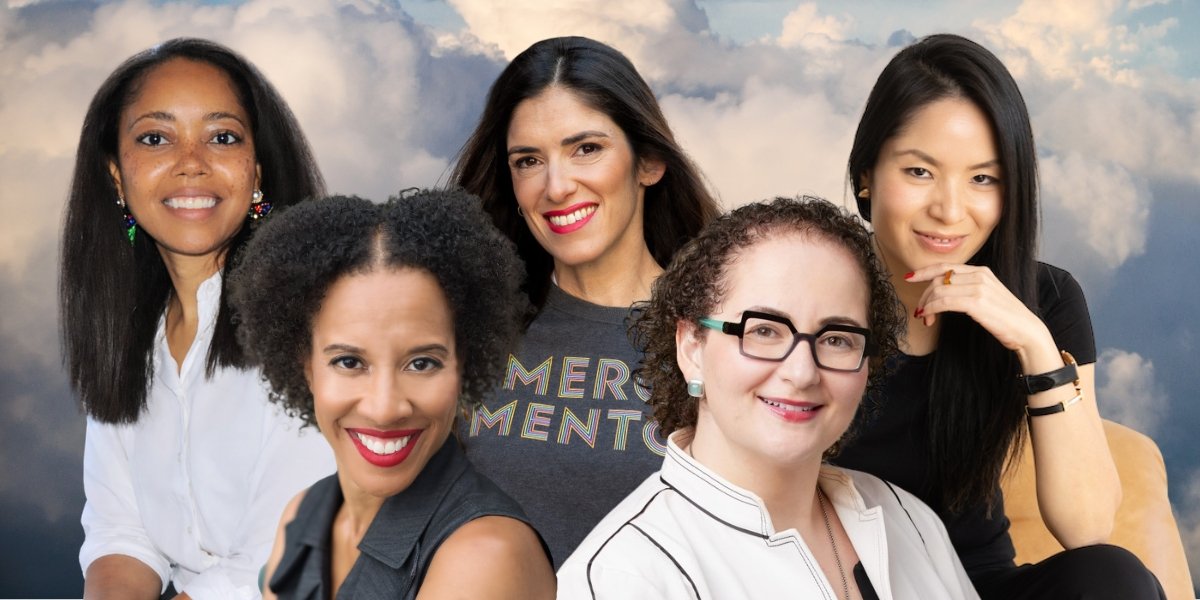
All individuals featured in this article are members of Dreamers & Doers, a community for women entrepreneurs and leaders.