

By: Audrey Denise B. Cachuela
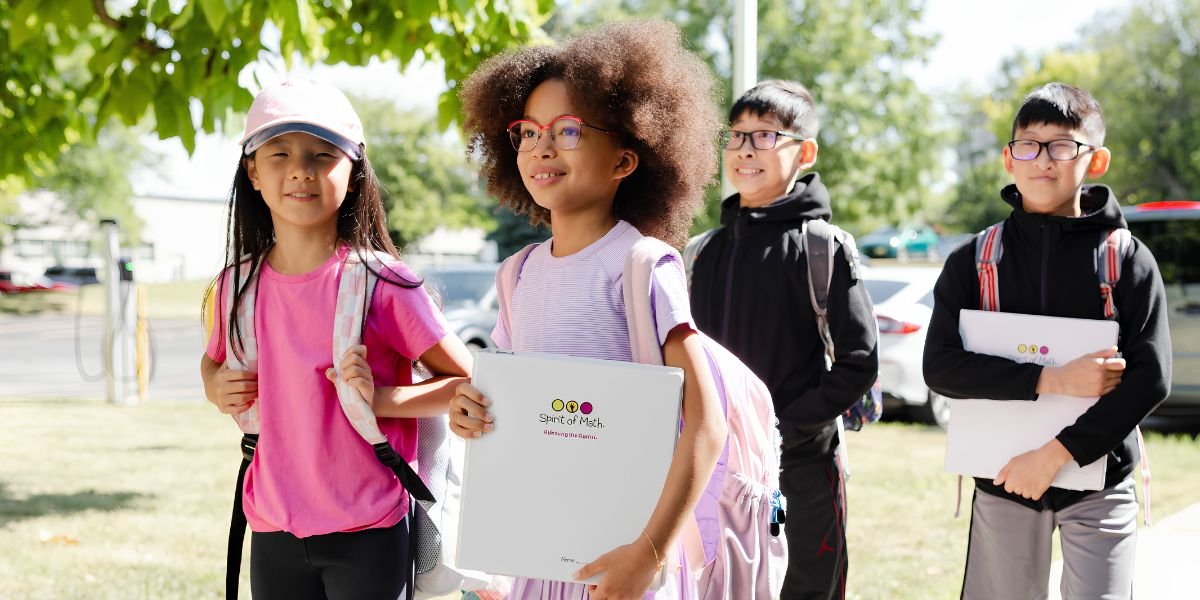
On August 13, the University of Toronto’s Chestnut Conference Centre filled with students who had never met one another but had all reached the room the same way. Each had placed among the top performers in a National Round back home, and the 2026 Spirit of Math Global Round was the final stage of that contest (Source: International Spirit of Math Contest, 2026). The day asked them to prove themselves twice: first on a timed paper written alone, then alongside a teammate they had only just met.
Spirit of Math compares the Global Round to the competitive pathways young athletes already take for granted. A promising swimmer or hockey player can train, compete locally and eventually measure themselves against the best in the world, while a child with the same drive in mathematics has far fewer places to do that at the primary and middle school level. The organization built the Global Round to give those students a comparable route, and it describes the idea plainly: for these students, math is their sport.
How Students Qualify for the Global Round
The Global Round is invitation-only. Students first write a National Round in their home country, and the strongest performers in each country are invited to Toronto (Source: The Global Round, 2026). The 2026 National Rounds ran between January and March, which gave qualifiers several months to prepare for the final.
The National Round follows the same format everywhere it is written. Every question is multiple choice with four options, each correct answer earns one mark, and wrong answers cost nothing, so a guess carries no more risk than a blank. The questions are written to reach past standard curriculum expectations, so students regularly meet problems they have not been taught to solve and have to reason their way to an answer.
Students are ranked against others in their grade, within their own country for the National Round and worldwide for the Global Round. The top 5 percent receive a Gold Award, the next 10 percent Silver and the next 25 percent Bronze. Anyone scoring 80 percent or higher is named to the Honour Roll, and every student receives a certificate of participation.
Bermuda offers one example of how that selection plays out. More than 30 students wrote the island’s National Round this year, and 23 of them qualified for Toronto, the largest group Bermuda has ever sent to the event (Source: Bernews, 2026).
A Contest That Outgrew Its Original Classroom
The contest started as an internal assessment. Spirit of Math first wrote it in 1999 for its own students in Grades 1 through 4 (Source: International Spirit of Math Contest, 2026). In 2018 it opened to students outside Spirit of Math classrooms in Canada and Pakistan, and more than 2,500 students earned Honour Roll placements that year. Grades 5 and 6 joined in 2020, and the first Toronto final followed in 2025, when the contest reached more than 12,000 students in 15 countries (Source: International Spirit of Math Contest, 2026).
In 2026, more than 19,000 students took part across more than 30 countries, and Grades 7 and 8 competed for the first time.
That growth also gives Canadian students a visibility they have rarely had. Canada’s school system is well regarded internationally, yet the country has had little presence in international academic competition for younger grades, where several other nations have run rigorous contests for decades. Hosting the final in Toronto puts Canadian students in direct competition with their international peers every year.
Inside the 2026 Global Round at the University of Toronto
The program ran from 8:30 a.m. to 5:30 p.m. and opened with an individual paper set at each student’s grade level. Students wrote with pencils only, with no calculators and no phones (Source: What does the Global Round day look like?, 2026). Papers ranged from 30 minutes for Grades 1 and 2 to 75 minutes for Grades 7 and 8. A strong National Round result had earned each student the invitation, and the individual paper asked them to show that ability again in an unfamiliar room, beside strangers who had qualified the same way.
After the individual paper, students moved to a team round. They were grouped by age and matched by language so they could work together, and the problems were written to be solved through discussion. An awards ceremony closed the day. The two-part structure mirrors how Spirit of Math teaches, with independent problem solving and collaborative group work both treated as core parts of its classes
For international students, the contest day was the first part of a longer visit. Spirit of Math organized an extended program that followed the Global Round with two days of travel activities in and around Toronto, so families who had crossed an ocean for a single exam left with more of the city than a conference room.
What a Team Math Challenge Adds to an Individual Test
A 2026 study of primary classroom math games offers a useful comparison. Researchers tested one-against-one and paired versions of the same non-digital games across five Year 3 and 4 classrooms (Source: Competition, Collaboration, and Learning Mathematics through Games, 2026). Paired play produced more visible reasoning, with students proposing new ideas, weighing options aloud, justifying their answers and explaining concepts to their partners more often. Mathematical connections, such as using primes, factors and multiples to plan a move, appeared about five times more often in the paired games.
The same study also recorded more coordination problems, more emotional friction and more off-topic talk when students played in pairs. About two-thirds of students preferred the paired version because of the teamwork, and the remaining third preferred working alone for the independence it gave them (Source: Competition, Collaboration, and Learning Mathematics through Games, 2026).
Classroom games differ from a competition final, so the findings apply loosely. They do show what a team round has to manage, since richer reasoning comes with messier group dynamics. Grouping students by age and matching them by language, as the Global Round does, heads off some of those coordination problems before the first question is read. A seven-year-old and a thirteen-year-old approach a problem at very different speeds, and two students without a shared language would spend the round gesturing at the page; removing both obstacles leaves teammates free to argue about the mathematics itself.
The Next Route to Toronto Starts at Home
Every route to Toronto begins with a local partner. Spirit of Math works with educators and organizations in each country to run the National Round, and the 2026 partner countries included Canada, the United States, Pakistan, India, Singapore, Hong Kong, the Philippines, Indonesia, Türkiye, Ghana, Nigeria, Kazakhstan, Italy, Chile and Peru, among others. The contest’s website now lists 47 participating countries and territories (Source: International Spirit of Math Contest, 2026).
Any student in Grades 1 through 8 can write the contest, whether or not they attend Spirit of Math classes, at a local school or a Spirit of Math campus depending on what each country’s partner offers. Students preparing on their own can use the Virtual Practice Centre, which provides video lessons, topic quizzes and past contest papers in free and paid tiers for Grades 1 through 8.
National Round dates and locations vary by country, and for families wondering about next year, that local sitting is where the path to Toronto begins.
Sources
- Spirit of Math, “International Spirit of Math® Contest,” 2026: https://www.spiritofmathcontest.com
- Spirit of Math, “The Global Round,” 2026: https://www.spiritofmathcontest.com/global-round
- Spirit of Math, “What does the Global Round day look like?,” 2026: https://www.spiritofmathcontest.com/help/global-round-day
- Spirit of Math, “What can students bring into the contest? (Calculators, pencils),” 2026: https://www.spiritofmathcontest.com/help/contest-rules
- Competition, Collaboration, and Learning Mathematics through Games, 2026: https://ijemst.com/index.php/ijemst/article/view/5641
- Bernews, “Bermudian Students Shine In Math Contest,” 2026: https://bernews.com/2026/04/bermudian-students-shine-in-math-contest/