

By: Michael Beas
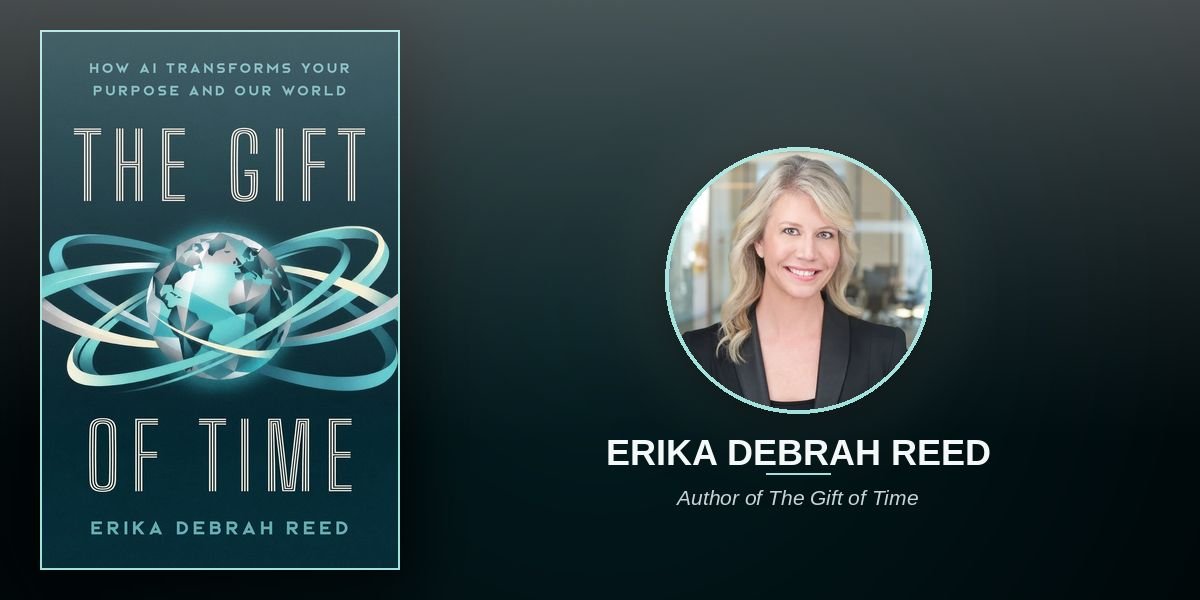
The rarest quality in any writing about technology is the ability to hold the technical and the humanistic in genuine integration rather than superficial combination, to bring rigorous knowledge of how systems actually function alongside genuine philosophical depth about what those systems mean for the people who live inside them. Erika Debrah Reed has that quality in abundance, and The Gift of Time is its fullest expression.
She opens with a chapter that would not be out of place in a serious work of philosophy, tracing the human understanding of time from Plato’s moving image of eternity through Aristotle’s paradox of the non-existent present through Augustine’s discovery of time as interior consciousness through Newton’s absolute clock through Leibniz’s relational counter-argument through Kant’s radical proposition that time is a structure of human cognition through Einstein’s revelation that time is elastic and observer-dependent. That arc is rendered with enough clarity and enough genuine intellectual engagement that it reads as discovery rather than summary, and it establishes the conceptual foundation that gives everything that follows its unusual depth.
From there Reed moves through autonomous vehicles and the psychology of automation trust, through the 1945 elevator operator strike and the specific campaign of reassurance that made driverless elevators ordinary, through humanoid robotics and the history from Karel Čapek’s automata to Tesla Optimus serving popcorn at a diner, through the automated future of aviation and the Wright brothers and Amelia Earhart and the electric air taxis that Archer and Joby are building right now, through the autonomous divide and the education renaissance and the philosophy of curiosity.
Each section demonstrates the same quality of integrated intelligence. When Reed writes about the Waymo safety data showing ninety-two percent fewer serious injury crashes compared to human drivers, she situates that statistic within a broader argument about the redistribution of temporal responsibility from individual human vigilance to system-level operation, and from there into a reflection on what it means for human time to be freed from the cognitive load of constant mechanical attention. When she writes about the shortened work week, she connects it to the specific time savings beginning to emerge from autonomous commuting and AI-driven administrative automation. When she writes about the autonomous divide, she connects it to the philosophical question of whether AI-enabled time savings will accumulate to everyone or only to those already positioned to benefit.
The five-minute reflections that punctuate every chapter are the book’s most quietly transformative feature, not exercises with correct answers but genuine invitations to begin noticing your own relationship with time before the book asks you to imagine it transformed. Reed has written something that is simultaneously a serious work of ideas and a genuinely practical guide to living in an era that most people are experiencing more as a weather event than as something they are actively navigating.
If you have been looking for an AI book that brings the full range of human intelligence, philosophical, historical, technical, and personal, to bear on the question of what this moment actually means for how you live, The Gift of Time by Erika Debrah Reed is the one you have been waiting for. Pick up your copy on Amazon today.