


While caring for her mother around the clock, Irene Tunanidas learned how invisible caregivers can become, especially when the caregiving finally ends.
There are more than 53 million family caregivers in the United States. They are the people who did not apply for the job, did not get trained for it, and do not get paid for it. They are sons and daughters and spouses who one day found themselves managing medications, operating medical equipment, and staying up past midnight to check on someone they love. And in almost every case, the question that follows them through those years is the same one that followed Irene Tunanidas: “How is your mother doing? How is your father? How is your husband?
Not: how are you doing?
For three years, Irene managed her quadriplegic mother’s full care at home in Youngstown, Ohio. She did it while working part-time. She did it largely alone. And when it was over, and her mother was gone, she found that the loneliness of those caregiving years had not ended with the caregiving. It had just changed shape.
What the Days Actually Looked Like
Every morning started with the Hoyer lift. Getting her mother, Zenovia, from the hospital bed to the wheelchair was a two-person job that Irene had learned to do on her own. She bathed her mother in bed, dressed her, fed her, and managed the catheter. When her mother developed complications and required an ostomy bag, Irene learned to handle that too. She monitored Zenovia’s vitals and researched electrolyte management at home so she could stay ahead of potential crises.
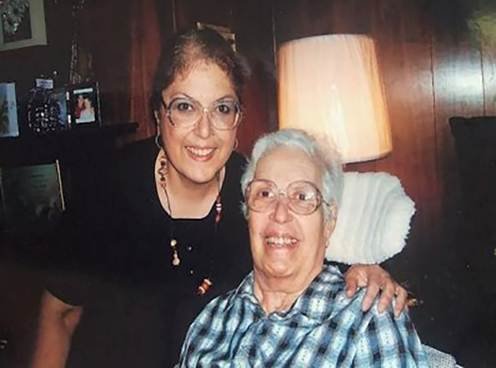
At night, she lifted her mother back into bed. Then, before she went to sleep herself, she checked on her at least once after midnight. On days when her mother was well enough to go out, Irene drove a secondhand ambulance they had purchased specifically for that purpose. It was the only vehicle that could accommodate her mother’s wheelchair and medical needs. Irene learned to operate it the same way she learned everything else during those three years: out of necessity, with no instruction manual, and no one to call if something went wrong.
She was also working a part-time tutoring job during this time. The caregiving and the work existed side by side, and neither one waited for the other.
The People Who Were Not There
Irene was the oldest of three children. Her sister, a physician, had remarried and relocated to Florida, where she had taken on a demanding administrative position. She was not available in the day-to-day. Her brother was not nearby either. The practical reality of caregiving fell to Irene, and it stayed there.
A neighbor named Linda offered to help. Irene does not blame Linda for how that went. By the time the offer came, she was already so deep inside the grief and the exhaustion that she could not figure out how to accept help, or even what to ask for. She said no. Linda did not push. And Irene kept going alone.
That is not an unusual pattern. Caregivers who are overwhelmed are often the least able to identify or articulate what they need, precisely because the overwhelm leaves no room to think about anything outside of the immediate task. The offer came. The capacity to receive it was not there. Nobody thought to come back and ask again.
When the Caregiving Ends and the Loneliness Stays
Zenovia Tunanidas died on January 2, 2007. When she was gone, the structure that had held Irene’s days together for three years dissolved overnight.
The phone did not ring. Her sister was in Florida. Her brother was not close by. The neighbor who had offered help was still there, but Irene was now inside a different kind of need, and the gap between what she felt and what she knew how to ask for was just as wide as it had been before.
She cried almost every day. She did not leave the house. It took two years before she pushed herself to attend a local community event just to be around other people. That was the beginning of finding a way back. It was a slow one.
What Irene experienced after her mother’s death is well-documented in research on family caregivers. The end of a caregiving relationship is one of the highest-risk periods for depression, isolation, and physical health decline in caregivers. The person they were caring for is gone. The support systems, thin as they often were, disappear along with the medical appointments and the visiting nurses. And the caregiver is left standing in a house full of equipment with no role, no structure, and often no one checking in.

The Larger Problem One Story Points To
Irene Tunanidas is not an edge case. She is the norm.
The majority of family caregivers in the United States provide care with little or no formal support. They do not have a backup. They do not have paid leave. They are not reimbursed for the equipment they buy, the hours they lose, or the health they sacrifice. And when the person they were caring for dies, there is no system that follows up on them, no transition support, no acknowledgment that what they just did was significant and that they might need help now.
Irene’s story is not told here to make a policy argument. It is told here because it is specific and real, and because specificity is what makes a problem visible. She managed a Hoyer lift alone. She drove a secondhand ambulance because there was no other option. She said no to the one neighbor who offered help because she was too far inside the grief to know what to do with kindness.
Fifty-three million people are in some version of that situation right now. Most of them will not be asked how they are doing. Most of them would not know how to answer if someone did.
The Book That Speaks to the One Nobody Asked About
Irene Tunanidas wrote about what it means to carry that incumbrance alone. Her book is called Rising From the Abyss of Grief. It was written for the person sitting in the quiet after. The one who gave three years to someone they loved, learned to operate equipment they never expected to touch, stayed up past midnight checking on someone, and then one day found themselves alone in a house full of medical equipment with no one calling to ask how they were holding up. Irene wrote this book because that person exists in the millions, and almost nothing on the shelf was written with them in mind. It is not a book about caregiving. It is a book about what comes after, and how to find a way back when nobody is pointing you toward the door.
In the Spotlight on WDTN-TV’s Living Dayton
Family caregivers are rarely the ones who end up on television. They are the ones behind the scenes, managing the equipment, covering the night shifts, holding things together while the attention stays on the person they are caring for. When WDTN-TV featured Irene Tunanidas on Living Dayton this year, it was a quiet disruption of that pattern. Her experience, three years of full caregiving with almost no support and very little acknowledgment, was given a platform and a face. For the people watching who recognized their own lives in her story, that visibility was not incidental. It was the whole point.