

By: Jamal Hamama
The hair restoration industry has experienced rapid expansion over the past decade. Large corporate chains, national brands, and heavily advertised clinics now dominate online searches and social media feeds. While these organizations have increased awareness of hair transplantation, they have also introduced a high-volume model that differs significantly from traditional physician-led practices.
For patients considering surgical hair restoration, understanding the structural differences between corporate clinics and physician-owned practices is important, particularly when it comes to surgical oversight, technique selection, and long-term results.
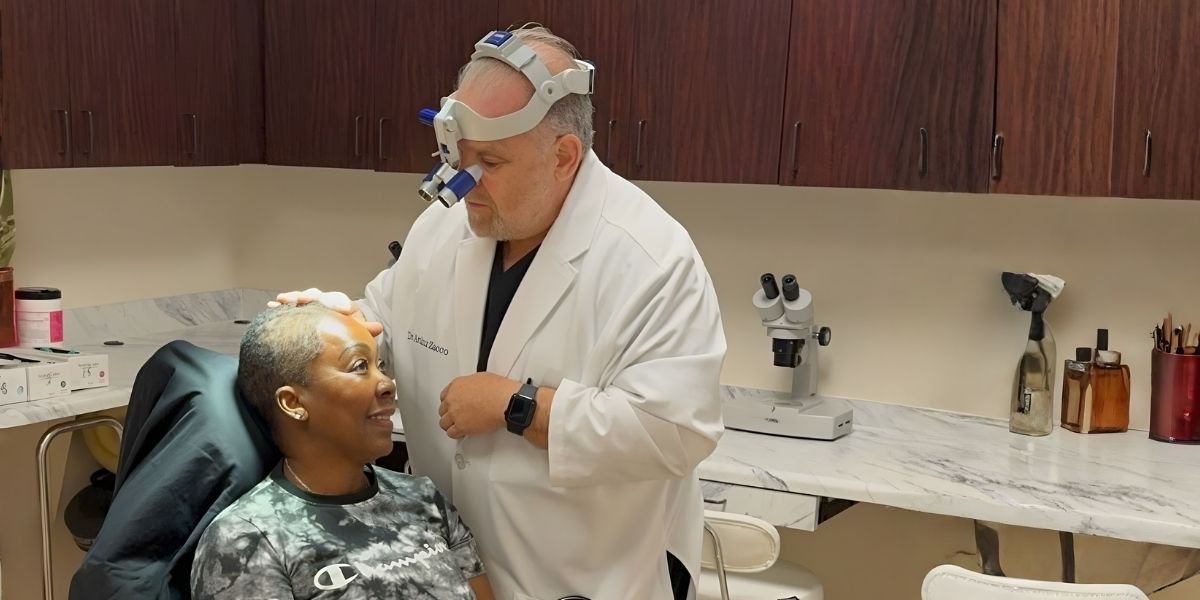
Dr. Arthur Zacco, founder of AZ Hair Restoration in Raleigh, North Carolina, has spent more than 30 years performing hair transplant procedures in a physician-led setting. His approach reflects a model that prioritizes surgical control, individualized planning, and long-term donor preservation.
The Corporate Model: Volume and Standardization
Corporate hair clinics often operate across multiple cities under centralized management structures, prioritizing high patient volume and standardized treatment packages. Their approach is typically driven by aggressive marketing campaigns and sales-focused consultation processes, which can sometimes influence the patient experience. As a result of these large-scale marketing efforts and operational models, pricing in these clinics is often higher.
In many cases, consultations are conducted by non-physician sales representatives rather than the operating surgeon. Surgical procedures may involve multiple technicians performing significant portions of the transplant, with limited direct physician involvement.
While this model can increase accessibility and brand recognition, it may also result in a more standardized approach to treatment, sometimes emphasizing speed and volume over personalization. In other words, less physician involvement with preoperative, operative, and postoperative care and more administrative and technician-driven healthcare.
The Physician-Led Model: Surgical Oversight and Individualization
In contrast, physician-owned clinics operate under a different philosophy. At AZ Hair Restoration, Dr. Zacco personally oversees every hair transplantation from the beginning to the end of the hair restoration process. He evaluates each and every patient during a free consultation.
Together with the patient’s input, he designs the hairline and entire hair transplantation process. The physician is present every step of the way, for the free consultation, pre-op appointment, day prior appointment, hair transplantation, next day follow-up appointment, six-month post-op appointment, and 12-month post-op appointment.
Dr. Zacco performs incisions and punches to create a natural appearing hair transplantation. “Hair restoration is surgery,” he explains. “It requires aesthetic judgment, long-term planning, and careful donor management. That level of responsibility should not be delegated.”
Physician-led practices typically prioritize patient-focused care over meeting the demands of large corporate structures, with an emphasis on keeping costs as accessible as possible. These practices often involve direct surgeon participation throughout the entire process, allowing for more personalized attention and customized treatment plans. They also tend to take a conservative approach to donor area management while developing long-term strategies that account for the progressive nature of hair loss.
This structure allows for greater surgical consistency and adaptability during the procedure itself.
Technique Selection: Trend vs. Strategy
One of the most significant differences between corporate and physician-led practices lies in technique selection.
Corporate clinics often promote a single method that is the most inexpensive, commonly Follicular Unit Extraction (FUE), as a widely used solution. While FUE is the most promoted procedure on the internet and thus the most requested technique, it is not ideal for most patients.
With over three decades of experience in both Follicular Unit Transplantation (FUT) and FUE, Dr. Zacco frequently evaluates which method or combination of methods will likely deliver the strongest long-term outcome. In many cases, FUT allows for greater graft yield and donor preservation, particularly for patients with advanced hair loss.
“Technique should be chosen based on the patient’s long-term goals, not marketing trends,” he notes.
Donor Preservation and Long-Term Planning
Hair transplantation is a finite resource procedure; the donor area contains a limited supply of permanent follicles. Overharvesting, particularly common with the FUE procedure, can compromise future surgical options and result in a donor area that permanently appears abnormal and too sparse.
Physician-led practices tend to emphasize conservative donor management, helping ensure that the patient doesn’t run out of donor area before they run out of recipient area.
The FUE procedure requires more expertise by the physician and staff, is more publicized and advertised on the internet, is requested more frequently, and is relatively less expensive for the clinic to perform; thus, a large corporation-based clinic is more likely to recommend it than a physician-based clinic.
Even though the FUE procedure may not be the best choice for most cases of alopecia, it is most frequently recommended by large corporate clinics and inexperienced clinics that only perform FUE procedures.
Consultation Experience
The consultation process itself can also differ significantly.
In corporate environments, consultations may focus heavily on pricing packages (frequently with hidden fees) and scheduling timelines. In physician-led settings, consultations often center around education, discussing realistic expectations, limitations, and long-term planning (considering hair loss progression).
Dr. Zacco emphasizes that not every patient is an immediate surgical candidate. Some may benefit from medical management or adjusting expectations based on donor capacity. During the free consultation, he will be open and honest with the client’s best options.
Quality Over Quantity
Corporate chains frequently operate with high daily procedure volumes. Physician-led practices typically perform fewer surgeries per day, allowing greater focus on detail and precision, and less risk of contamination.
At AZ Hair Restoration, this translates into careful graft dissection to minimize transection, along with precise control over the angle and direction of graft placement for natural-looking results. The approach also includes thoughtful density planning and donor area preservation, supported by personalized post-operative care provided directly by Dr. Zacco and his staff.
While both models aim to restore hair, the operational philosophies differ fundamentally.
An Informed Decision
The expansion of corporate clinics has increased the quantity of hair transplant clinics, but not necessarily the quality. Ultimately, choosing between a corporate clinic and a physician-led practice comes down to priorities.
For patients who value direct and frequent surgeon involvement, long-term donor preservation, and customized technique selection, including both FUE and FUT, a physician-led model appears to offer clear advantages. This approach favors an experience centered on the patient rather than the corporate bottom line, providing benefits that can extend well beyond the day of surgery.
After 30 years in practice, Dr. Zacco continues to advocate for a patient-first approach rooted in surgical craftsmanship and individualized care. “Hair restoration is not a commodity,” he says. “It’s a long-term investment in appearance and confidence. The planning and execution behind it matter.”
As the industry continues to change, understanding these distinctions allows patients to make decisions aligned with their long-term goals beyond just short-term marketing promises.
Disclaimer: The information presented in this article is intended for general informational and educational purposes only and does not constitute medical advice, diagnosis, or treatment. The views and opinions expressed are those of the featured physician and author and may not reflect those of all medical professionals or hair restoration practices. Individual results may vary, and outcomes are influenced by a variety of factors unique to each patient. Readers are encouraged to conduct their own research and consult with a qualified, licensed medical professional before making any decisions regarding hair restoration procedures or treatments. References to specific clinics, techniques, or practitioners are provided for informational purposes only and do not constitute an endorsement or guarantee of results.