


By Benny Torrez
Harry Kappen has found his heroes, and they are not standing beneath spotlights. They are not collecting trophies, campaigning for prizes or turning every charitable gesture into social-media content. They are the people who stop when someone falls, remain when others walk away and offer help without checking first to see whether a camera is rolling.
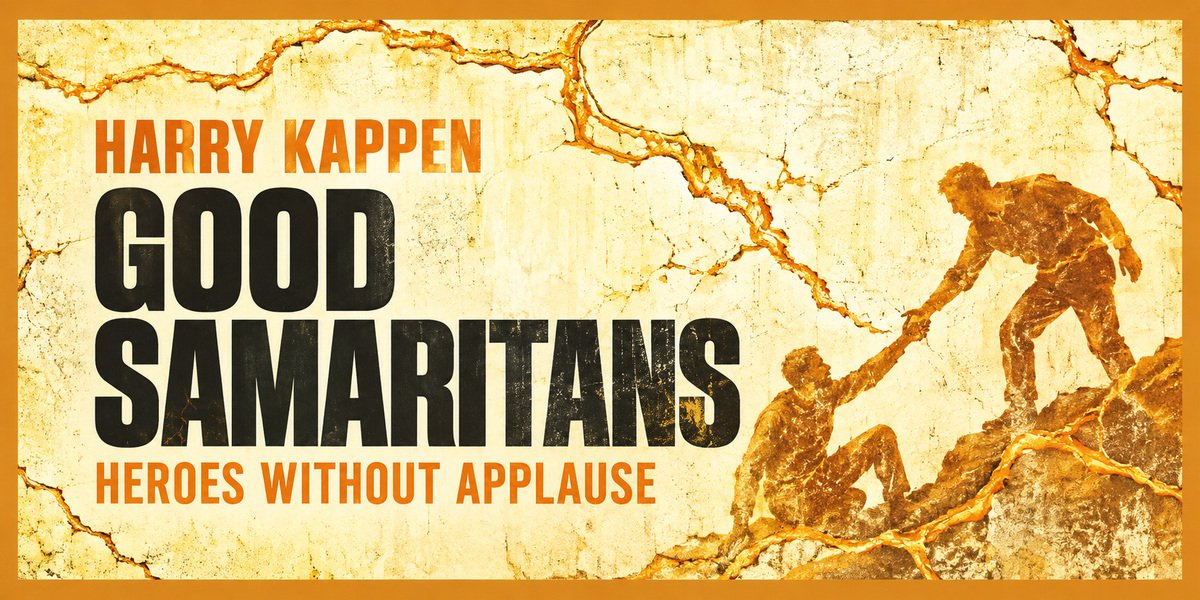
Those people occupy the heart of “Good Samaritans,” Kappen’s energetic new rock single from After the Crossing. The album is his first since moving from the Netherlands to Mexico, although Kappen resists the convenient suggestion that relocation transformed his songwriting. He has been writing music since he was young, gradually developing a style that now travels with him. As he jokes, living in Mexico does not mean a mariachi band will suddenly appear in one of his songs.
What has remained constant is his interest in human behavior: the stories people tell about themselves, the burdens they conceal and the moments when empathy becomes action. On “Good Samaritans,” Kappen examines the widening distance between appearing compassionate and actually helping someone.
The song began with a question about recognition. Kappen had been thinking about how the world’s highest honors get awarded, and about the distance between the people who campaign for acclaim and the people who quietly earn it. Who actually deserves credit for making the world better?
His answer is delivered with guitars rather than ceremony.
Kappen’s Nobel laureates are ordinary people moved by empathy and a sense of shared humanity. They do not boast about their actions or demand acknowledgment. They simply recognize that somebody is hurting and respond. In a society increasingly organized around visibility, Kappen argues that the most meaningful acts may be the ones nobody sees.
“Good Samaritans” opens by sketching the bright artificiality of contemporary life. Dreams are packaged and sold. Pain is filtered into something attractive. Golden sunsets, sculpted skies and carefully arranged smiles replace the untidiness of lived experience. It is a world in which every image has been corrected and every public gesture has been positioned for maximum approval.
Kappen does not condemn technology so much as the vanity it can magnify. Social media has become a stage for ego, unsupported opinion and idealized versions of the self. Everyone appears to be starring in a private advertisement, promising that happiness is available to anyone who chooses the correct angle, product or slogan.
Then the chorus arrives, and the camera turns toward the rain. The Good Samaritan is standing there, sharing another person’s pain. The image has none of the glamour described in the verses. That is precisely why it works. Kappen removes heroism from mythology and returns it to the street, where compassion is measured by what somebody does when remaining uninvolved would be easier.
The music supports the argument with firm, forward-moving rock. Kappen performs, sings and produces the material himself, giving the recording a unified sense of purpose. The guitars provide urgency without burying the melody, while the rhythm maintains a determined stride. Mexican vocalist Danna Gomez appears in the choruses, adding another voice to what becomes an increasingly communal statement.
There is also a musical nod to David Bowie, one of Kappen’s enduring influences. Yet the Bowie connection is less about imitation than perspective. Like Bowie, Kappen is interested in the identities people construct and the uneasy relationship between appearance and truth. “Good Samaritans” asks what remains when the performance ends and a real person needs help.
Working alone does not mean Kappen operates without trusted listeners. His sister Hanneke watches the structural side of his compositions. Jeroen Goeijers, a drummer and producer of music for films and documentaries, offers technical observations. Guitarist Koop Hofman contributes insights into guitar tones and their place within an arrangement. Kappen values their “fresh ears,” even while admitting that he is sometimes too stubborn to accept every suggestion.
That independent streak benefits “Good Samaritans.” The single does not sound as though its message has been softened by a roomful of strategists. Kappen allows a song to develop through recording, refinement and repeated changes until, in his words, the song tells him it is finished. It is an intuitive method, but the result here is focused rather than indulgent.
The track also gains credibility from Kappen’s background. He spent more than 20 years working in youth care as a music therapist and later lectured in an international master’s program in music therapy. His admiration for people who stay, listen and help is therefore not an abstract lyrical position. It reflects a professional life built around human connection.
“Good Samaritans” follows “Distant Shore,” a song developed during and after Kappen’s move. His frustrations with bureaucracy seemed minor after he watched reports of refugees crossing deserts, being crowded into trucks and risking their lives aboard unstable boats. Both singles ultimately ask listeners to see beyond personal inconvenience and recognize another person’s humanity.
Kappen is already looking ahead. His first Christmas single is scheduled for mid-November, followed by a completed 12-song album in early January, one he believes is his strongest work yet. He is also rehearsing with a new band in Mexico as undisclosed international opportunities begin taking shape.
The coming Christmas release feels like a natural next step. After all, the holiday season speaks constantly of generosity, mercy and goodwill. “Good Samaritans” reminds us that those ideas mean little unless somebody practices them after the decorations come down.
Kappen has made a rock song for people who do the right thing without demanding credit. They may never trend, collect prizes or become household names. But when the moment arrives and everyone else stands bewildered, they are the ones who step forward. That, Kappen insists, is what a hero actually looks like.