


Maya Okafor had a signed lease option, a business plan, and zero dollars in sales when she began looking for money to open Fern & Foundry, a fictional home goods shop used here as an illustrative case. Her eighteen months of decisions show what a lender can and can’t evaluate when there are no deposits to review. All names and numbers below are invented, and your own offers will differ.
The Starting Position: Month 0
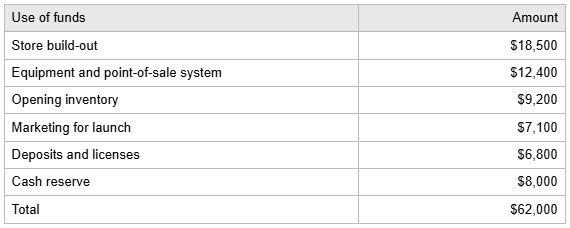
Maya had seven years of retail management experience, a personal credit score of 712, and $14,000 in savings she could commit. She also had a budget that forced her to be honest about what opening would cost.
Her first calls went badly. Online lenders asked for six to twelve months of bank statements, and she had none. Merchant cash advance funders buy future sales, so a store with no sales gave them nothing to purchase. That left a narrower group of options: SBA-backed lending, community lenders, nonprofit microlenders, and credit based on her personal profile.
Months 1 to 3: Research and Structure
Month 1: Learning the landscape. Maya read about government-backed products first. A summary such as Fundivi’s overview of SBA loans helped her understand the vocabulary, including guarantees and collateral, before she spoke to anyone at a bank. SBA programs don’t lend directly in most cases. They guarantee part of a loan made by a participating lender, and each lender layers on its own standards.
Month 2: Building the plan lenders wanted. She replaced a vague growth story with month-by-month projections for two years. Three assumptions got supporting evidence: foot traffic counted at the location on six different days, supplier quotes for inventory, and sales per square foot from her former employer’s comparable store, stated as an estimate.
Month 3: Assembling the capital stack. She settled on a structure in which the loan was only part of the answer.
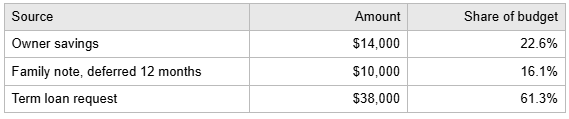
Many SBA lenders look for meaningful owner money in a startup, and 10% is a commonly cited floor, which would have been $6,200 on her budget. Maya’s lender preferred more, and her 22.6% gave the file some weight. Rules and lender overlays change, so confirm the current requirement with the lender you’re using. Her family note also needed review, since some lenders require that this kind of debt be placed on standby.
Months 4 to 8: Applications and Build-Out
Months 4 and 5: Applying. She approached a large bank, a community bank, and a nonprofit microlender. The large bank declined because the business had no operating history. The microlender offered a smaller amount with business coaching attached, and that program would have suited a smaller budget. SBA microloans, for example, have a maximum of $50,000, though many are considerably smaller.
Before committing, she used CompareBusinessLoansOnline.com startup loan comparisons as one place to learn how different products and terms are generally presented, then checked every detail against written offers.
Month 6: The offer. The community bank offered an SBA-backed term loan of $38,000 at an illustrative 11.5% over 72 months, with a personal guarantee and a lien on business assets.
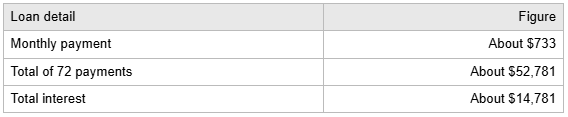
Her conservative projection showed about $2,650 in monthly cash available for debt service once the shop stabilized. That’s roughly 3.6 times the payment, comfortable enough to survive a weak start. The projection was still only a projection, and the underwriter discounted it. What closed the gap was her management history and the money she’d put in herself.
Months 7 and 8: Build-out. Contractor costs ran $1,300 over budget. The reserve absorbed the difference, which is precisely why she’d refused to spend it on extra inventory.
Months 9 to 18: Open for Business
Month 9: Opening. She set up a dedicated business account from the first day, along with a merchant account. Each deposit from here on became evidence for a future lender.
Months 10 to 14: The lean stretch. Sales came in below plan for three months. She renegotiated supplier terms from 15 to 30 days, cut one marketing channel, and made every payment on time. She also sent her banker a short quarterly update with sales, cash on hand, and any changes to the plan. Nobody required it, but it meant the first conversation about future credit wouldn’t start cold. The family note’s deferral meant she had only one debt payment during the hardest period.
Months 15 to 18: Becoming a business with a history. Sales steadied, and a card-processing record began to accumulate. Merchants who reach this stage have more choices, because a funder can now look at real receipts. A DMR News report on Fundivi’s card processing loans describes one recent launch tied to merchant card sales, a category that wouldn’t have been available to her on opening day. She decided she didn’t need extra financing yet.
What Maya Would Tell Another Founder
1. Sort lenders by what they can measure. Without deposits, cash-flow underwriters have little to work with. Spend your time with lenders who evaluate plans, experience, and personal credit.
2. Bring evidence for your largest assumptions. One well-supported revenue estimate does more than a dozen confident adjectives.
3. Treat owner money as your strongest signal. It tells a reviewer you carry risk alongside them. It also reduces what you must repay.
4. Keep the reserve out of reach. Every founder’s budget has a line that looks optional. A reserve is the one that saved her build-out.
5. Expect a personal guarantee. With no business history, your personal finances are effectively the credit file. Understand what could be pursued if the business fails.
6. Stagger your obligations. Deferring the family note during the opening months lowered the required cash when revenue was least certain.
7. Start your paper trail on day one. A separate account and clean records can make the next financing conversation much easier.
Where Other Founders Might Go Instead
Maya’s path isn’t the only workable one. A founder with a different profile might compare these:
• Equipment financing, where the asset itself provides some security
• Business credit cards, useful for modest purchases if balances are paid down quickly
• Grants and pitch programs, which are competitive but don’t need repayment
• Customer deposits or presales, which test demand while bringing in cash
• Personal loans or home equity, which can be cheaper but put household assets directly at risk
A contractor buying tools may need a different structure from a retailer opening a storefront. Reading a roundup such as this guide to online loans for contractors can show how trade-specific needs shape the options, even if your startup is in another industry. Treat any list as a starting point, and check the eligibility requirements, since many products on such lists expect some operating history.
A Pre-Application Checklist
☐ Two-year monthly projection with assumptions listed
☐ Sources-and-uses table that balances to the dollar
☐ Résumé highlighting directly relevant experience
☐ Personal financial statement and tax returns
☐ Lease, quotes, and licenses, in draft if necessary
☐ Evidence of the cash you’ll contribute
Frequently Asked Questions
Can a business with zero revenue qualify for a loan?
It’s possible for qualified applicants, usually through programs that weigh personal credit, experience, collateral, and owner investment rather than deposits.
What credit score do startup lenders want?
There’s no universal cutoff. Many conventional and SBA-backed lenders prefer good personal credit, and microlenders may be more flexible. Ask each lender directly.
Why won’t merchant cash advance companies fund a startup with no sales?
An advance is typically a purchase of future receivables, and those companies usually want to see an existing sales record first.
Is collateral required for a startup loan?
Often, lenders will take whatever business assets are available, and they may look at personal assets as well. A personal guarantee is common even if collateral is limited.
How long does the loan process take?
Plan on weeks or months for bank and SBA-backed loans. Leave room in your opening schedule so that a delay doesn’t force a costly last-minute choice.
Should a founder borrow more than the budget to be safe?
Build the reserve into the budget, then borrow only what the budget supports. Extra debt adds a payment at the moment your revenue is least predictable.
Does a family loan count as equity?
Not automatically. Lenders may treat it as debt unless it’s a true gift or is subordinated, so disclose it early and ask how it’ll be counted.
Disclaimer: This article is for general informational purposes only and does not constitute financial, lending, legal, tax, or investment advice. The businesses, names, figures, loan terms, rates, projections, and scenarios presented are fictional and illustrative only and do not represent actual offers or guaranteed outcomes. Financing requirements, eligibility criteria, pricing, collateral requirements, approval decisions, and funding timelines vary by lender, product, and applicant. Readers should independently verify current requirements and carefully review any financing agreement before making a decision.