


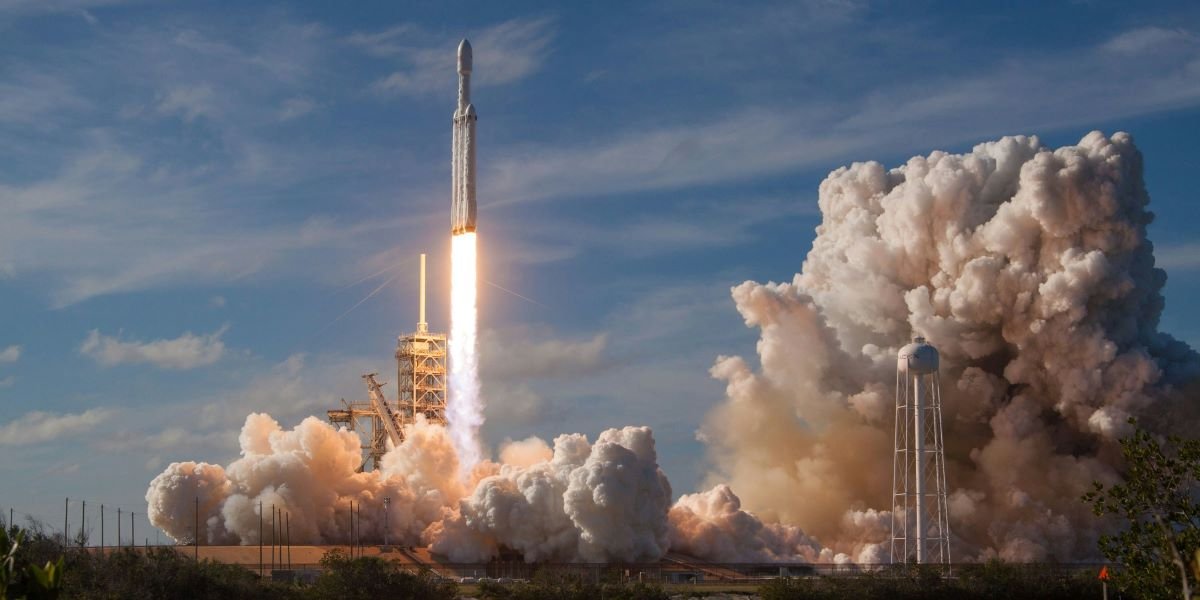
NASA opened its checkbook this week for what the agency is calling the foundation of a permanent American presence on the Moon. At a Tuesday news conference at the Mary W. Jackson NASA Headquarters in Washington, D.C., Administrator Jared Isaacman announced nearly $1 billion in initial contracts to four U.S. companies tasked with building the rovers, landers, and drones that will populate the agency’s Moon Base near the lunar south pole. The announcement marks the formal launch of the build-out phase of a program NASA has been previewing since its Ignition event in March 2026, and it sets up a sprint toward the Artemis IV crewed landing planned for 2028.
The Companies, the Contracts, and the Hardware
The largest dollar commitments went to two rover developers and one lander provider. Astrolab received a $219 million contract under the Phase 1 High Achievability Mission task orders of the Lunar Terrain Vehicle Services program for its CLV-1 crewed rover, and Lunar Outpost received $220 million for its Pegasus rover. Both vehicles are designed to be drivable by astronauts on the surface, capable of autonomous operation between crewed missions, and engineered to handle slopes of up to 20 degrees while traversing as many as 200 kilometers, or roughly 124 miles, of lunar terrain.
According to NASA’s official news release on the awards, Astrolab is teamed with Axiom Space, Interlune, and Odyssey Space Research. Lunar Outpost is partnering with General Motors, Goodyear Tire & Rubber, and Leidos — a roster that reflects how deeply traditional American industrial firms are now embedded in the lunar economy.
Jeff Bezos’ Blue Origin won the contract to deliver those rovers to the Moon. NASA awarded Blue Origin an initial $188 million for its robotic Blue Moon Mark 1 lander, with an option period worth an additional $280.4 million across two task orders. The combined ceiling brings Blue Origin’s potential haul to roughly $468 million if NASA exercises the full option set.
Firefly Aerospace, the fourth named company, was selected to deploy NASA’s MoonFall hopping drones — four small flying scouts designed to survey landing sites, search for water ice, and establish communication networks around the base. The contract value for Firefly was not publicly disclosed at the briefing.
Where Intuitive Machines Lands
Intuitive Machines, which had competed for one of the rover slots alongside Astrolab and Lunar Outpost, was not selected. The company’s stock dropped nearly 9% on the day of the announcement after rising almost 20% earlier in the session on anticipation of an award. CEO Steve Altemus, per SpaceNews, framed the result as the opening phase of a broader buildout and said the company remains eligible for future task orders.
Intuitive Machines is not out of the program. Its Nova-C Trinity lander will fly the Moon Base III mission, carrying NASA’s Lunar Vertex experiment — the first payload selected through the agency’s Payloads and Research Investigation on the Surface of the Moon, or PRISM, program. Lunar Vertex will study lunar swirls, the bright surface markings thought to be tied to magnetic anomalies. The Moon Base III lander will also carry payloads for the European Space Agency and South Korea’s Korea Astronomy and Space Science Institute, marking the first formal international participation in the Moon Base initiative.
A Multi-Vendor Strategy, Not a Single Prime
Isaacman framed the contracting structure as a deliberate departure from how NASA ran the original Apollo program. “America is returning to the moon,” he said at the Washington briefing. “We are working alongside our many international and commercial partners to leverage the incredible capabilities from commercial industry to build a moon base for all we hope to accomplish in this endeavor.” He described the Moon Base itself as “America’s and humanity’s first outpost on another celestial world.”
The strategic shift is significant. Apollo relied on a single prime contractor model that concentrated risk and innovation inside a small number of aerospace giants. Moon Base spreads contracts across multiple vendors at every layer — rovers, landers, drones, payloads — with the explicit goal of stimulating a commercial lunar economy. Isaacman has publicly argued that building “one exquisite LTV” does nothing to build that economy, and the dual rover award to Astrolab and Lunar Outpost is the clearest expression of that philosophy.
The Launch Timeline
Three initial missions were confirmed at the briefing:
Moon Base I, targeted for launch no earlier than fall 2026, will use Blue Origin’s Blue Moon Mark 1 Endurance lander to deliver NASA science payloads to the Shackleton Connecting Ridge region near the south pole. Equipment will include the Stereo Cameras for Lunar Plume-Surface Studies and the Laser Retroreflective Array for orbital positioning.
Moon Base II will use Astrobotic’s Griffin-1 lander, carrying an Astrolab FLEX rover equipped with an Interlune imaging system designed to detect helium-3 deposits, alongside other international payloads bound for the Nobile Crater area.
Moon Base III is the Intuitive Machines mission carrying Lunar Vertex, the ESA experiments, and the South Korean payload.
NASA also confirmed that more than a dozen Moon Base missions will be announced this year. Astrolab and Lunar Outpost will finalize rover designs over the next 18 months, conduct crewed evaluations, and qualify flight units ahead of an expected 2028 launch.
Why the South Pole
The lunar south pole was selected because its permanently shadowed craters are believed to hold substantial water ice deposits. That ice matters for three reasons: drinking water for crews, breathable oxygen, and the production of rocket fuel for deeper missions, including the agency’s longer-term Mars ambitions. Establishing a functioning water-extraction and fuel-processing capability on the lunar surface is one of the key reasons NASA is investing in semi-permanent infrastructure rather than the flags-and-footprints model of the Apollo era.
For taxpayers, the immediate question is whether $1 billion in initial contracts represents a manageable down payment on a multi-decade program or the opening tranche of a much larger commitment. NASA has signaled that further awards are coming, and Congressional appropriators will have the final say on how the program scales.
Disclaimer: Information in this article reflects publicly disclosed details from NASA’s May 26, 2026 press briefing and the agency’s official Moon Base program announcements. Contract values, mission timelines, partner roles, and launch dates are subject to revision based on Congressional appropriations, technical milestones, and NASA program decisions. References to publicly reported market activity, including share price movement, are provided for context only and do not constitute investment, financial, or policy advice. Readers seeking the most current program details should consult NASA’s official Moon Base release.