

The architecture profession has grown from designing buildings to assuming an increasingly broad social position as a discipline. History preservation and reuse, along with civic involvement, have become integral parts of many architectural works, especially those dealing with controversial periods in history. As reported by the American Institute of Architects, the College of Fellows includes only around 3 percent of all AIA members, which is the most prestigious part of its membership system. In the context of this evolving field, architects are supposed to work in collaboration with the government, universities, cultural organizations, and locals.
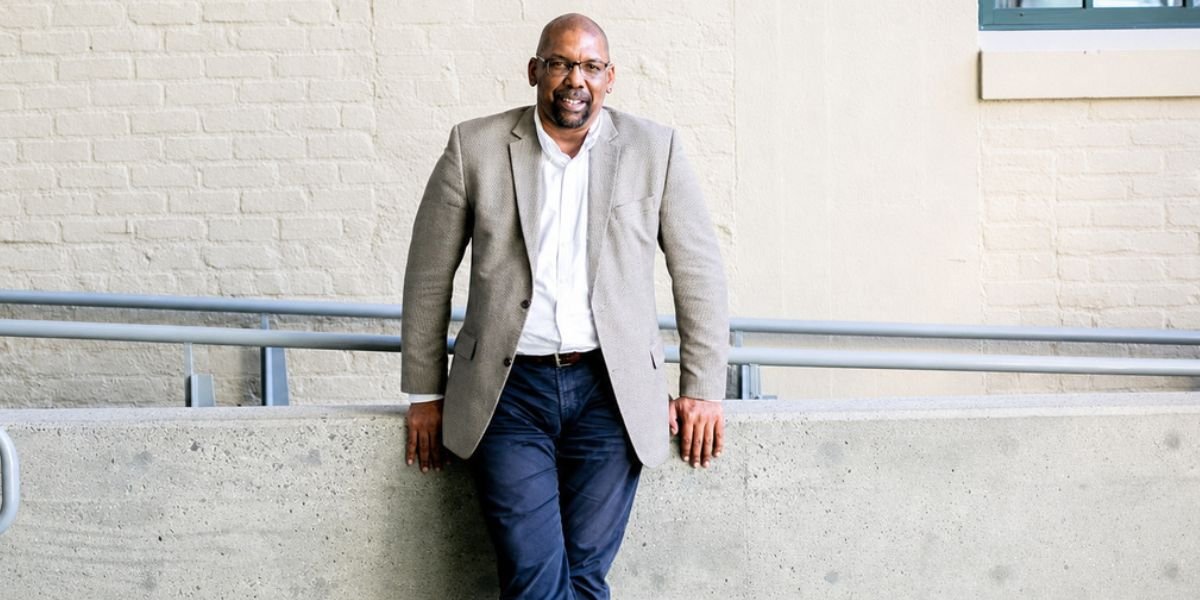
Burt Pinnock has built much of his professional career around those ideas. Based in Richmond, Virginia, Pinnock is a principal and Chairman of the Board at Baskervill, a design firm founded in 1897. After earning a Bachelor of Architecture from Virginia Tech, he developed his early experience through internships and design positions in New York, Switzerland, Paris, and Italy before beginning his career in Virginia. Those experiences exposed him to different architectural traditions before he returned to Richmond, where much of his later work would focus on civic projects, historic places, and cultural institutions.
Pinnock first worked at Baskervill before establishing BAM Architects in 1999, serving as founder and principal for more than a decade. Following the merger of BAM Architects with Baskervill, he returned to the firm in 2013 and later became Chairman of its Board of Directors in 2019. Alongside practice, he also served as an adjunct faculty member at Virginia Commonwealth University. He participated in numerous public boards and advisory groups, including the Richmond Planning Commission, Historic Richmond Foundation, Venture Richmond, and the Legal Aid Justice Center. These appointments placed him within both the architectural profession and wider civic planning discussions.
Throughout his career, Pinnock’s work has concentrated on projects where architecture intersects with history and public life. Rather than focusing exclusively on new construction, his portfolio includes historic preservation, adaptive reuse, master planning, affordable housing initiatives, memorial design, and cultural facilities. Clients have included the City of Richmond, the Black History Museum and Cultural Center of Virginia, the Better Housing Coalition, William & Mary, the University of Richmond, and Emory University. Many of these commissions involve public participation and long-term planning in addition to architectural design.
Another common thread throughout Pinnock’s career is his conviction that architecture can play an important role in helping people learn about history. Often, Pinnock’s projects are designed not only from an architectural perspective but also from one that includes interpretation, archaeology, and collaboration with local communities. This can be seen in projects such as the Richmond Slave Trail, the Memorial to the Enslaved at William & Mary, the University of Richmond Burying Ground Memorial, and the Shockoe Project in Richmond.
Community participation also forms a consistent part of Pinnock’s professional work. In 2011, he co-founded the non-profit Storefront for Community Design, which offers free design and planning services and workshops designed to help neighborhoods plan and design better. He went on to become co-chair of the Richmond 300 Advisory Council, contributing to the development of the city’s long-term comprehensive planning process. In his published essay entitled A Modern Imperative, he similarly suggests that housing must be considered a basic human right, and that all of the above-mentioned stakeholders are responsible for designing more equitable spaces.
As part of his continued public scholarship, Pinnock has engaged in lecture series and discussion panels organized by such organizations as UCLA, the Society of Architectural Historians, the Congress for the New Urbanism, Virginia Tech, and the Menokin Foundation. The topics of discussion have included memorialization, race, preservation, housing, and the connection between architecture and civic identity. These are just some examples of how he continues to contribute to the architectural discourse outside of his practice.
Pinnock’s achievements have been acknowledged by professional bodies as well. In 2019, he was honored to be elected to the American Institute of Architects College of Fellows, which honors only a select few individuals who have made notable progress in the field. Three years later, AIA Virginia presented him with the William C. Noland Medal, the most distinguished award in the organization, given to architects whose contributions span a wide variety of professional practices. In 2024, Virginia Business included him in its Virginia Black Business Leaders.
In its entirety, Pinnock’s body of work accurately reflects the ever-evolving nature of architecture, which is practiced in various domains, including design, planning, preservation, education, and public history. In his work, he seeks to incorporate physical spaces with cultural interpretation and to work with governmental agencies, non-profit organizations, schools, and communities. Given the ongoing discussion regarding historic preservation, commemoration, and development in many US cities, the works of Burt Pinnock indicate how architects have been involved in such discourse.