


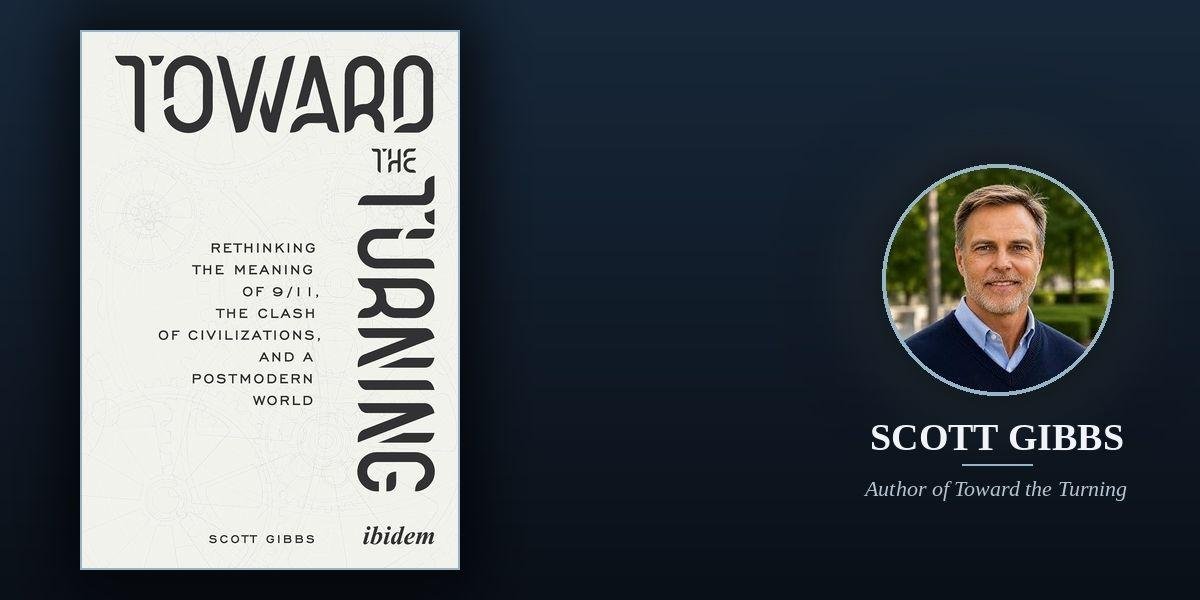
By: Maya Towers
Public life has started to feel like a room where everyone has backed against opposing walls. Left and right. Secular and sacred. Nation and globe. Victim and perpetrator. At home, Americans argue over who is to blame instead of working out what to do about the problems in front of them. Abroad, nations and peoples harden around old wounds, inherited grievances, and fearful pictures of what comes next. That diagnosis opens Toward the Turning, and it frames the question Scott Gibbs spent decades trying to answer.
The book works across philosophy, religious studies, psychology, and political analysis, and it doubles as a personal record of one thinker’s long attempt to understand a particular human pathology. People build civilizations and wreck them in the same historical breath. Gibbs comes at that contradiction from several directions at once rather than from inside a single discipline, a kind of synthesis most academic training quietly discourages. Doing it credibly takes nerve and years of preparation. He has both.
What Gibbs Means by Identification
The engine he points to is identification. Groups inherit a sense of who they are, hold it as settled fact, and then react to whatever seems to threaten it. Our inherited identities do real work. They give people a shared world, a place to stand, a way to make sense of being alive without firm ground underneath. The same machinery turns rigid under pressure, though, sorting people into the righteous and the threatening.
Gibbs traces this back to a mistake about what a self actually is. Selfhood gets treated as a settled object and the surrounding world as neutral scenery, when neither is fixed and each keeps shaping the other. Built up across the chapters from philosophical groundwork through specific historical and political cases, the argument carries a weight that narrower political or psychological treatments of the same material rarely manage.
Where the Book’s Intellectual Honesty Shows
Much of what makes the book readable comes down to how Gibbs handles material that most writers approach either with the confidence of someone who already knows which side is right or with the false evenhandedness of someone determined not to offend. He is not confirming an existing framework. He is not sidestepping the discomfort that serious analysis of group conflict produces. He wants to know what drives these cycles and what interrupting them would actually require, and that preference for understanding over a comfortable landing is where the value sits.
A Challenge to How Readers Understand Conflict
Kirk Schneider, reviewing the book for the Existential-Humanistic Institute, wrote that it arrives at a moment when identities are being “reduced to caricatures and simplistic cycles of polarizing tit-for-tat.” That is the situation Gibbs is writing into. Toward the Turning puts a hard question to anyone who suspects that the frameworks now shaping public argument about group conflict are too thin for the thing they are trying to explain.
Readers who want an account of group conflict that refuses the easy assignment of blame, and that insists on the philosophical rigor the subject has rarely received, will find it in Toward the Turning on Amazon.