

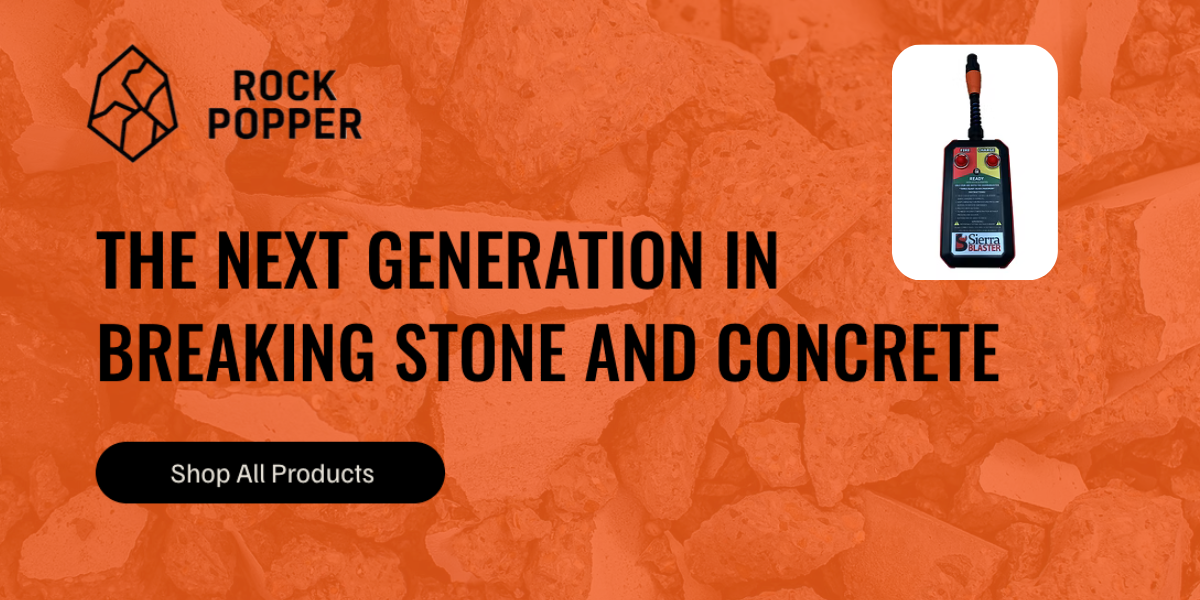
If you have ever stood next to a boulder that landed where it should not be, you already know the problem. The usual answer is a phone call, a rented excavator, and a bill that grows by the hour. Rock Popper, a company based in Deer Lodge, Montana, offers a different route: a compact, propellant-based rock fracturing system that is designed to break stone and concrete from the inside out.
This article walks through what the product is, how it works, and where it may fit into construction, mining, trail work, and property maintenance. Nothing here replaces the company’s own documentation, so treat it as an overview rather than a manual.
What Is Rock Popper?
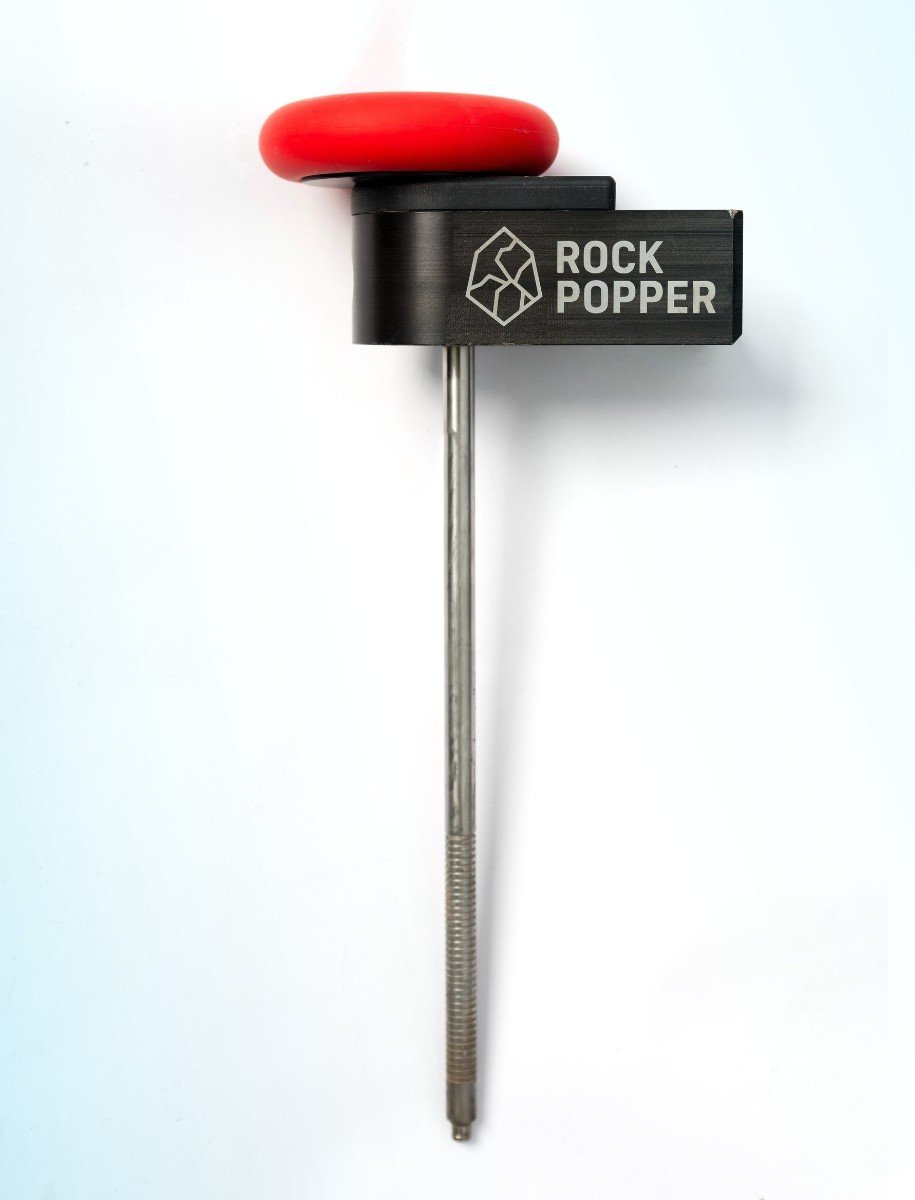
Rock Popper is a rock-breaking system built around a cartridge that fractures rock and masonry using controlled internal pressure. The core consumables are the .375 Magnum Cartridge and the .375 Magnum Booster Charge, which are set into a drilled borehole and initiated electrically.
The idea behind the design is straightforward. Rock and concrete tend to be strong under compression, which is exactly why they hold up buildings, but they are comparatively weak under tension. Tools like hydraulic hammers work against the compressive strength of the material, which can make demolition slow and hard on equipment. Rock Popper aims to work with the material’s weaker property instead, placing force inside the borehole so the rock splits rather than being pounded apart.
The company sells the equipment, runs a certification program for buyers of the cartridges, and offers consulting for jobs that call for a more controlled approach to breaking rock.
How the Rock Fracturing System Works
The process starts with a borehole. Using an SDS bit, an operator drills a small hole (around 10mm) into the target. According to the company, drilling speed varies by material: concrete, andesite, and some granites may drill fairly quickly (roughly 12 inches in 20 to 30 seconds), while harder materials such as quartz can take a few minutes.
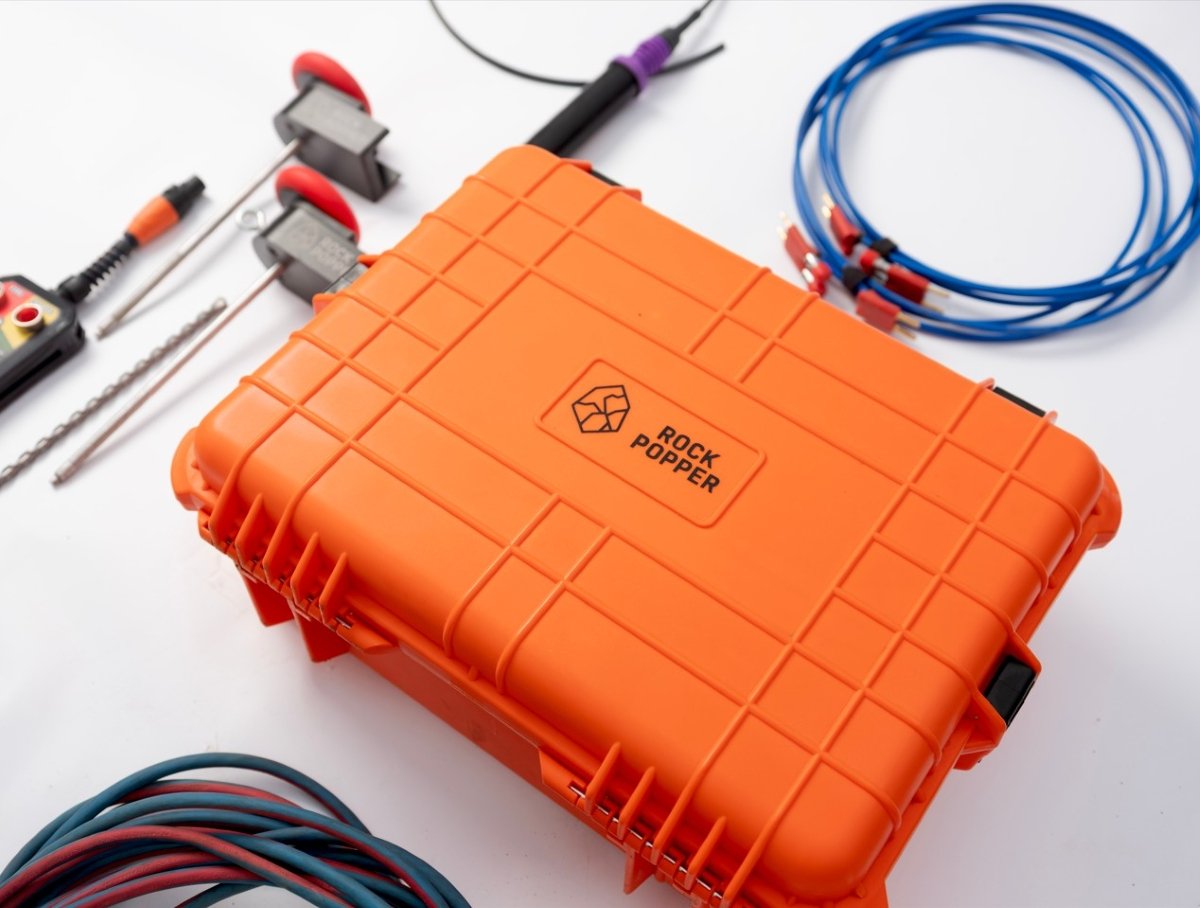
A cartridge is then placed in the hole and fired using either the battery-powered initiator or a legacy wired trigger. The company describes the initiation as an inert, electrically driven system rather than a primer or pyrogen setup, which it presents as part of the product’s safety approach.
What happens next is what the company calls a synergistic loop. The propellant burns and builds pressure, the added pressure lets it burn faster, and that cycle continues until the borehole ruptures. Once the containing rock gives way, the loop ends, so the system is described as largely self-regulating: the pressure it can build is limited by what the surrounding material can contain. In practice, this is meant to let the same cartridge handle a car-sized boulder and a much smaller rock without producing excessive flyrock.
Water can play a role, too. Because the cartridges are described as water-resistant, boreholes can be filled with water to take advantage of their incompressible nature. The company suggests this can extend the effective splitting plane along a deeper borehole and can help fill voids in cracked material that might not otherwise fracture well.
Where It May Fit on the Job Site
The company positions the system for a range of settings, including construction, mining, trail and road building, rock quarries, and road maintenance. A few situations it highlights:
Boulder removal in tight spots, where bringing in oversized equipment would be slow or costly. The suggestion is that a large rock can be reduced to pieces that standard equipment, or even a crew by hand, can move.
Trenching work for electrical, water, or sewer lines, where a buried boulder blocks the path. Rather than excavating the entire rock and hauling it off-site, an operator could fracture the portion sitting in the trench and clear it out.
Concrete work, since the company reports the system performs well on concrete and materials of similar hardness. It notes that the condition of the concrete matters, because existing cracks and pores can reduce effectiveness.
Safety Considerations
Rock Popper describes its system as safe with reasonable precautions, and the asterisk it uses on that word is worth keeping in mind. This is a propellant-based tool, not a toy, and the company’s own guidance leans on proper handling.
The material states that the system can be used next to, inside, or under structures when the area is properly ventilated, and that flyrock can be kept to a minimum. It suggests covering the blast area with something like a carpet remnant or moving blanket to contain any fragments that break loose. The company also notes that the system tends to run quieter than a large rotohammer or a hoe-ram and that firing with water in the borehole can be quieter still.
As with any demolition tool, following the manufacturer’s instructions and local safety practices is the responsible baseline.
The Certification Process
Buyers cannot simply add cartridges to a cart. Rock Popper requires a certification step first. The workflow, as described on the site, is to create a store account, sign in with the email you will use for certification, watch the introduction and certification video, and then complete a certification test. Once certified, an account gains access to purchase the Charge and Booster Cartridges.
The stated eligibility is that anyone 18 or older who completes the cartridge certification process may own a Rock Popper system.
Materials It Handles, and Where It Struggles
The company is candid about limits, which is useful. The system is described as working best in solid, hard material, and the harder the material, the better it tends to break.
Softer or heavily fractured rock is a different story. Because gases can escape through cracks and foliations, the propellant may not build the pressure the synergistic loop needs. The company notes the system can still work on such material, but the learning curve is steeper, and results may be reduced. Adding water to fill voids is the suggested workaround. A rough field test it offers: if the borehole holds water, the blast is more likely to succeed; if it drains, pressure may fall short.
Organic material is outside the intended use. The company reports it has not had consistent results on tree stumps or trunks, and it does not vouch for effectiveness or safety on those.
Cost and Practicality
Rock Popper frames the system as an economical option relative to heavy equipment, though it stops short of quoting figures. The stated advantages are a lower initial investment than some alternatives, reasonably priced SDS bits and cartridges, and reduced reliance on machinery like backhoes and hydraulic hammers.
Setup and cycle times are presented as modest. The company describes setup as around five minutes, with successive blasts as short as three minutes, with drilling usually being the longest step. On the power side, the wired trigger runs on a standard 120-volt outlet and needs roughly 200 watts per blast head, while the battery-powered initiator is rated for over 70 blasts on four AA batteries and is designed to fire up to several heads at once.
Rentals are not offered directly at this time. The company suggests checking with local equipment providers and is open to inquiries.
Is It Legal?
This is the question that hangs over any product in this category, and Rock Popper addresses it directly. The short version, in the company’s words, is that each system ships with a letter referencing its ATF Special Explosives Device (SED) exemption from 27 CFR Part 555. The company states this means a Federal Explosives License is not required to purchase, possess, or use the .375 Magnum Cartridges and Booster Charges for their intended purpose.
That is not the whole picture, and the company says so. State and local rules still apply, and they can vary widely. It notes, for example, that Massachusetts requires a full state blasting license for use, and that some municipalities may require demolition or other permits. The company is clear that keeping up with local regulations is the user’s responsibility, and that the exemption letter does not cover illegal activity. Anyone considering the system should verify the current rules with the relevant federal, state, and local authorities before use.
Final Thoughts
Rock Popper offers a rock and concrete fracturing system aimed at operators who want a smaller, more portable alternative to heavy breaking equipment. Its approach, using internal pressure and a self-regulating propellant cycle to split hard material, is described as fast to set up, reasonably quiet, and adaptable across a range of jobs, with honest limits on soft, cracked, or organic material.
For contractors, trail crews, quarry operators, and property owners weighing their options, the practical next steps are to review the company’s use and information overview, confirm the certification requirements, and check the legal landscape where the work will happen.