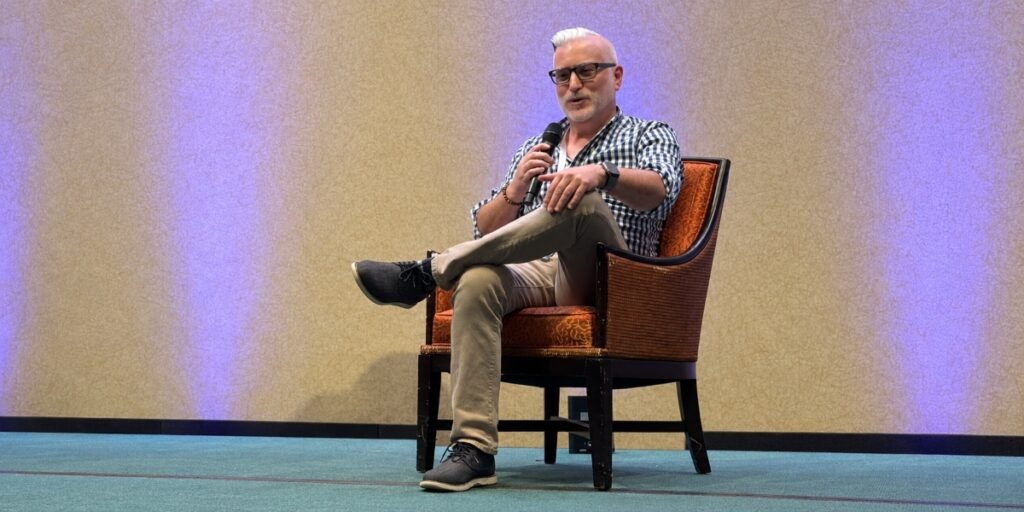


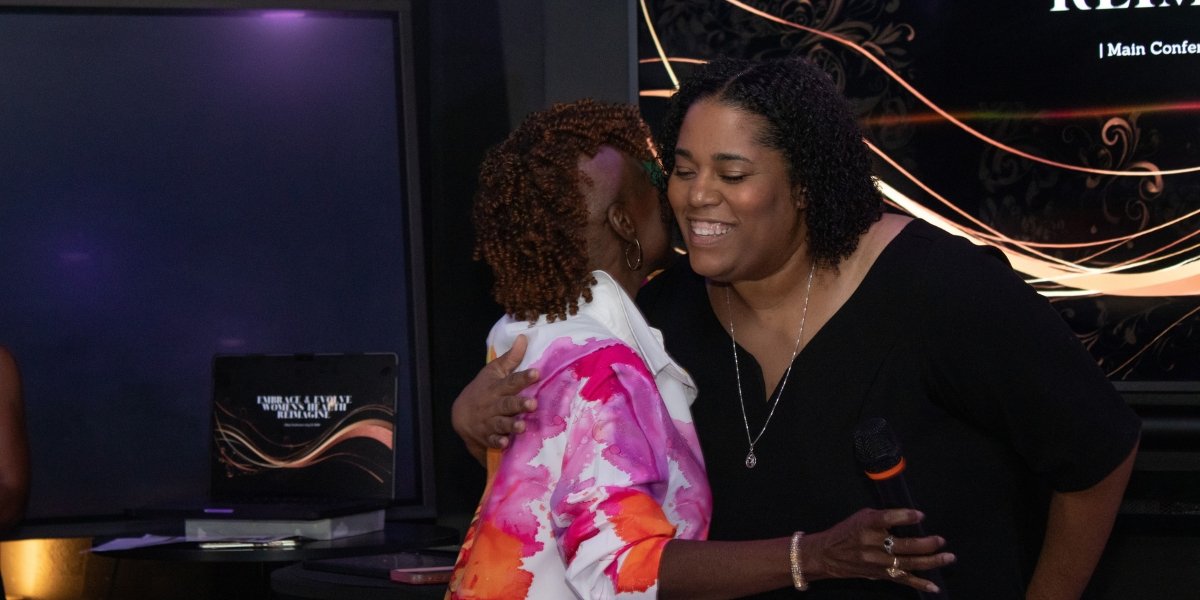
On a Saturday in mid-August, a hotel conference centre off J M Keynes Drive filled with nurses, midwives, lactation consultants and community health workers who had driven in from across North Carolina and flown in from further. The programme ran nine hours. The subject was a question the American health system has been circling for a decade: what would maternity care look like if it were designed around what the body actually needs?
Embrace & Evolve: The Reinvention of Women’s Health was held on Saturday, August 15, 2026, at the Hilton Charlotte University Place in Charlotte, North Carolina. Doors opened at 8 a.m. and the programme ran from 9 a.m. to 6 p.m., with a parallel virtual track for attendees joining remotely.
The summit was convened by Toni Curtis, founder of BirthWise Doula Services, a Charlotte maternal and women’s health practice, and drew an audience of nurses, midwives, lactation consultants, childbirth educators, mental health professionals, community health workers, doulas, business leaders and members of the public. Three organisations partnered on the event. AmeriHealth Caritas North Carolina, the Medicaid managed care organisation behind the state’s doula pilot, came on as a sponsor. The International Childbirth Education Association partnered on the programme and promoted it to its membership, and was represented on site by executive director Jenna Owens. Splendid Inspiration contributed attendee resources in kind.
A single-day programme built around seven tracks
Rather than organising the day by professional discipline, the programme was built around seven subject tracks: education and access, career and economic stability, healthcare systems and advocacy, mental health and emotional wellness, nutrition, human design and wellness, and cultural and holistic care.
The structure reflects a specific argument, and one the organiser has made consistently in her published work. Health outcomes for women are shaped by factors that sit well outside the clinic, and a programme that separates the nutrition conversation from the economic stability conversation is describing a system that does not exist in a patient’s actual life.
Sessions across the day covered physiological birth, trauma-informed care and maternal health policy.
Who spoke
The day opened with a performance by Dr. Sequina DuBose and remarks from State Representative Vantoinette Savage, president of FCCEF, before Curtis gave the keynote.
The main-stage programme moved across the seven tracks in turn. Dr. Elizabeth Marie Alston Ottey, an orthodontist and ABO diplomate, spoke on oral health as a foundation for whole-person wellness. Dr. LaVerne Collins made the case for treating mental health as a routine part of women’s care rather than a referral of last resort. Dr. Jacqueline Rushin spoke on wellness, leadership and the courage to change direction. Dr. Tanya Jones addressed motherhood and purpose. Tomeka James Isaac, founder of Jace’s Journey, spoke on trauma, survival and the path to healing. Marcia Blane, a licensed professional counselor, took a holistic view of women’s mental and emotional health. Dr. Amber Rose Washington spoke on how patients find providers who actually hear them. Allyson Barbato, a licensed clinical social worker, delivered “From Insight to Embodiment: Coming Home to Ourselves in an Overwhelmed World.” Dr. Cody Arvidson closed the academic strand with a session on the dissertation process.
The virtual track ran in parallel over Zoom. Gail Tully, CPM, founder of Spinning Babies, whose techniques for fetal positioning in labour are taught to birth professionals internationally, presented “Move, Sway, Release: The Power of Oscillation in Birth.” Cortes Maria Lewis James, a registered nurse and certified doula, spoke on why advocacy matters inside women’s healthcare. Kelli Brien, founder of In Full Bloom Maternity Service and the nonprofit Mahogany Maternity, spoke on leadership. Shanela Chaudary addressed fertility as a whole-woman question rather than a narrow clinical one. Sharee Wells, a career strategist, spoke on negotiation beyond mid-career.
Why Charlotte, and why now
The location is not incidental. North Carolina has become one of the more closely watched states in American maternity care, in part because of what happened to a doula pilot programme run there over the past two years.
AmeriHealth Caritas North Carolina, a Medicaid managed care organisation, partnered with BirthWise on a two-year programme serving roughly 200 families across four counties. Based on program cost analysis, the partnership produced an estimated $2,000 in savings per birth. The programme is expanding statewide.
What made that result unusual is the population it covered. The pilot included high-risk pregnancies, inductions and surgical births, not a selected group of straightforward cases. That detail is central to the organiser’s argument and she has corrected the record on it publicly: the case for supported birth is not a low-risk case with a caveat attached.
For state health officials and payers watching cost trends in maternity care, a result of that kind in a Medicaid population is a data point with budget implications, which is part of why a single-day summit in Charlotte drew attendees and organisational representation from outside the state.
The national numbers behind the programming
The context the summit was addressing is well documented in federal data.
The National Center for Health Statistics reported a United States maternal mortality rate of 18.6 deaths per 100,000 live births for 2023. Within that figure the variation by race is substantial. The rate for non-Hispanic Black women was 50.3 per 100,000, against 14.5 for non-Hispanic white women, a gap of roughly three and a half times that persists across income and education levels.
Analysis by state maternal mortality review committees, covering 2017 to 2019 across 36 states, found an estimated 84 percent of pregnancy-related deaths were preventable. That preventability finding is what turns a public health statistic into an operational question, and it was the framing several sessions worked from.
The clinical picture around it has been shifting too. NCHS final data for 2024 put the total cesarean delivery rate at 32.4 percent of all United States deliveries, with the primary cesarean rate at 22.9 percent, up from the previous year.
Research interest in the specific role of doula support has grown alongside those figures. A scoping review published in npj Women’s Health in November 2025, covering 23 peer-reviewed studies across six databases, reported associations between doula support and reduced cesarean rates, shorter labour duration, lower reported maternal anxiety and improved breastfeeding initiation, while noting variation across study designs.
The organiser
Toni Curtis, CD(DONA), LCCE, CLC, CVD(TVL), CHW, SpBCPE, SpBAP, founded BirthWise Doula Services in Charlotte in 2020. Her work in maternal support began in 1996, as a high school peer educator running safe sex classes and supporting teen mothers through pregnancy, labour and the postpartum period.
She is the developer of The Lifespan Birth Method, a framework organised around clinical care, body and breath work, nutrition and fertility, and policy and advocacy, which treats birth as a physiological event across a woman’s life rather than an isolated clinical episode. Across nearly 30 years of practice she reports an 88 percent vaginal delivery rate including VBAC and a 98 percent breastfeeding initiation rate, with zero preventable maternal or infant losses. Those are practice-wide figures rather than individual guarantees.
Curtis serves as Director of Advocacy for DONA International and as a United Nations Representative through the Africana Women Working Group, a consultative body to the UN Economic and Social Council. In July 2026 she was appointed to the global advisory board of the Forttuna Health & Wellness Council. She is also the author of Beyond Depletion: The Nutritional Therapist’s Guide to Postpartum Healing, published in 2026.
Her stated position on the relationship between physiological support and medical care is deliberately non-oppositional. She describes birth as a natural process that is medically observed, and her model is designed to work inside hospitals, alongside inductions and during surgical births rather than in opposition to them.
“I built Embrace & Evolve because families deserve more than information,” Curtis said. “They deserve support that is evidence-based and trauma-informed, deeply human, culturally responsive and within reach. This is the room where that belief becomes a movement.”
What happens next
Continuing education approval for the programme was in process through FCCEF and North Carolina Health and Human Services at the time of the event.
The larger test is the statewide expansion of the AmeriHealth Caritas partnership, which will determine whether a cost result achieved across four counties holds across a far more varied population. For the practitioners who spent a Saturday in Charlotte, that question is not academic. It determines whether the care model they were being trained in is something a system will pay for, or something families will keep buying on their own.
Embrace & Evolve was hosted by BirthWise Doula Services. Further information is available at birthwisedoulas.com.