

By: Aman Jalan
Forests VC is building an investment and development model around land, biological growth, and multiple potential revenue streams across varying time scales.
Alternative investors have spent decades looking beyond public markets for differentiated sources of value.
Real estate, private equity, infrastructure, and commodities are familiar parts of that landscape. Forests VC believes productive natural capital presents another compelling frontier.
The natural capital development company, co-founded by regenerative finance executive Ronny Castillo and business strategist Kimberly Lacayo, is building a model to acquire or partner on undervalued land and develop it into diversified productive assets.
The attraction begins with something investors understand: an underlying real asset, and the opportunity comes from what can be built around it.
High-value regenerative forestry can combine biological growth with long-duration asset value. Agriculture can create nearer-term revenue. Processing can retain additional margin. Circular systems can transform byproducts into productive inputs or new outputs. Tourism and measurable ecosystem services may add further opportunities where appropriate.
Castillo, who is also known for teaching circular economics in Spain, sees productive land as an opportunity to move circularity from concept to practical economics.
“The most compelling circular systems are those that work economically as well as environmentally,” he says.
When agricultural residuals become inputs, processing retains value closer to its source, and complementary systems share resources, circularity can contribute directly to asset performance.
Together, these activities can create multiple economic engines across varying time scales.
The underlying natural system adds another dimension. Biodiversity can strengthen ecological resilience, while strategic water management can support forestry, agriculture and long-term productive capacity. Healthy soil, water systems and habitat are not simply environmental outcomes. They can be part of the infrastructure supporting the asset itself.
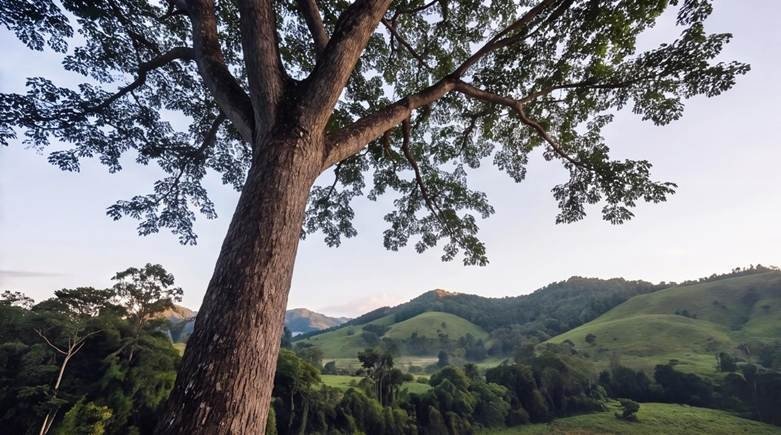
For Castillo, the opportunity ultimately returns to investment fundamentals.
“Capital is extraordinarily good at finding opportunity,” he says. “The challenge is designing natural assets that deserve that capital, with real economics, measurable performance and structures investors can understand.”
Forests VC intends to create those assets through its FINCA Framework: Acquire, Design, Grow, Measure, Optimize and Connect.
Costa Rican businessman and business partner Marco Zúñiga summarizes the development mindset:
“The question extends beyond what the land is worth today. It’s what the land could become.”
That potential must be grounded in what the property can support.
Forester Javier Esquivel brings decades of tropical forestry and silviculture experience to the group.
“A forest has yet to grow according to your financial model,” Esquivel says. “The biology has to work first.”
Biodiversity, watershed dynamics, soil, climate, species selection, infrastructure and market access all influence what a property can support and how resilient its productive systems can become.
Agronomist and Forests VC Head of Asset Management Adrian Vargas extends that discipline into agricultural operations, focusing on irrigation, crop efficiency, logistics, and the measurable performance of productive systems.
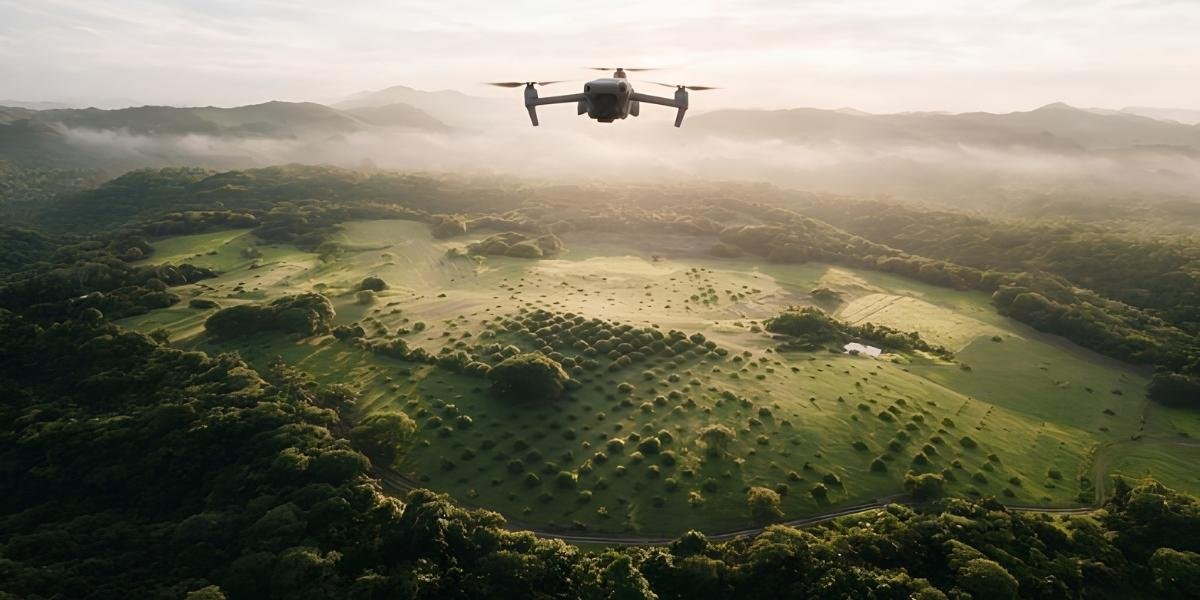
Remote sensing, ground-level monitoring, and planned digital-twin capabilities can make that performance increasingly visible.
Raíz de Oro, the group’s flagship Costa Rican development, where Castillo serves as president, provides an opportunity to apply the model across high-value regenerative forestry, agriculture, and complementary productive systems.
The larger vision is repeatability.
Forests VC ultimately aims to create a pipeline of undervalued properties that can be acquired or partnered around, intelligently developed and connected with capital seeking differentiated real-world assets. That creates opportunity in both directions: investors seeking productive natural assets and property owners whose land may be capable of considerably more.
Some assets create value because people build on them. Natural assets can create value because people build intelligently around something that keeps growing.