

By: KeyCrew Media
There is leadership advice that sounds good in a conference room and falls apart in the field. And then there is the kind that has been tested across 16 years of high-stakes international competition, organizational relocation, and the daily challenge of getting the best out of a team that cannot afford a weak link.
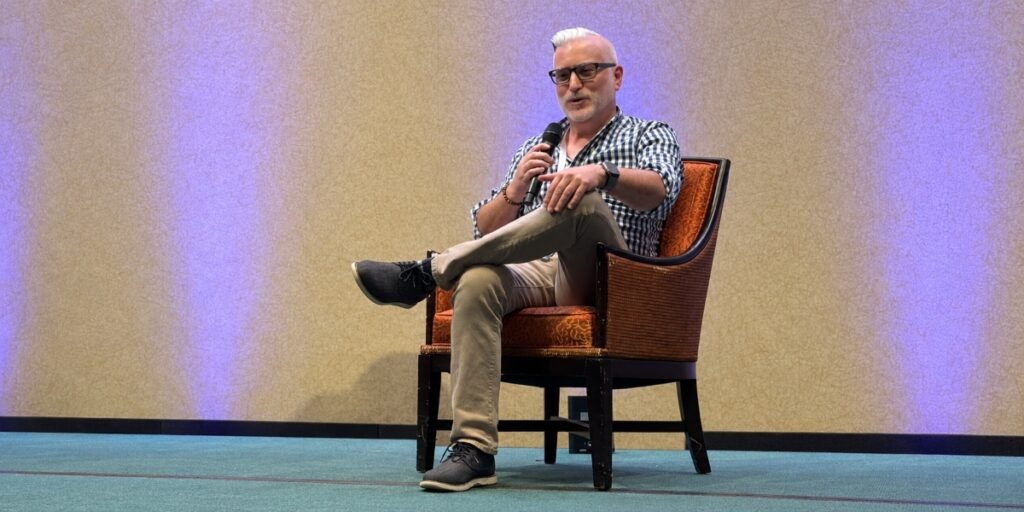
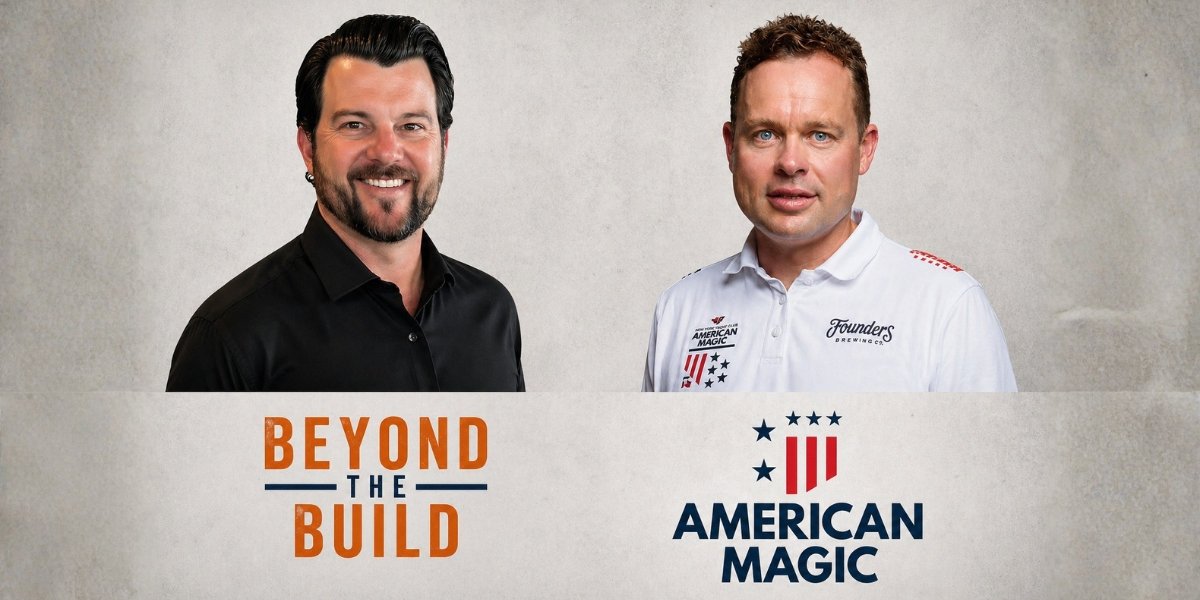
Tyson Lamond, Chief Operating Officer of American Magic, the high-performance sailing and composite manufacturing organization based in Pensacola, Florida, joined host Kelvin Enfinger on a recent episode of Beyond the Build, the official podcast of Associated Builders and Contractors North Florida. The conversation between the two revealed just how much a sailing organization and a construction company have in common in building teams that perform.
Several of Lamond’s principles are worth examining in detail.
Know Your People’s “Why” Before You Try to Lead Them
Lamond’s starting point for aligning a diverse, high-performance team is not a mission statement or a culture deck. It is a direct conversation with every individual about what they actually want from their work.
He calls it the “why.” For a veteran sailor, it might be one final shot at the highest level of the sport. For a new local hire, it might be enough to save to buy a truck. For someone with a young family, it is probably something else entirely. The point is not the answer. It is asking the question.
“Every single person has their why,” Lamond said. “What’s really important for me is spending time sitting down with people, understanding a little bit about them. What does their family look like? What are they into? What do their weekends look like?”
Leaders who have this information can give feedback that actually lands. They can assign roles that play to their real strengths. They can spot early warning signs before disengagement becomes a departure. Enfinger noted the cost of skipping this step in construction. Skilled tradespeople who perform well technically but quietly check out because no one has bothered to ask what they are working toward. Retention is not always a pay problem. Often, it is a visibility problem.
Accountability Without Intimidation
Lamond described a recent incident on his shop floor, a mistake that affected the whole team. His response was not to make an example of anyone. He gathered the group, acknowledged the situation plainly, and asked everyone to write an honest breakdown report of what went wrong and why.
“I said, ‘Be as candid as you like, because we’re not going to grow unless we grow together,'” he recalled. Three newer team members told him afterward they had never worked somewhere that handled a failure that way.
That reaction is the point. Publicly dressing down a team for a mistake is common. Sitting with a failure and systematically learning from it is not. Organizations that do the second build a culture where problems surface early, before they compound into something much harder to fix.
Enfinger, who started in construction in 1999 working for his father, knows this from personal experience. His father led by example and taught directly, even when that meant being harder on his own son than on others. That directness, Enfinger said, shaped him.
Debrief as Your Performance Depends on It, Because It Does
In competitive sailing, every race is followed by a structured debrief. Every decision is examined. Every outcome is traced back to a cause. This is not treated as optional or as punishment. It is treated as a competitive advantage.
Most organizations do not do this. When they do hold post-mortems, they often become blame assignments dressed up as learning exercises, and nothing actually changes.
“Debriefing and understanding each decision that is made (thinking back to why we made that decision and what we are going to do better next time) is a very strong thing,” Lamond said.
The discipline applies universally. Project managers reviewing why a schedule slipped, site supervisors reviewing why a safety near-miss occurred, executives reviewing why a client relationship frayed. The mechanism is the same regardless of industry. You do not get better at high-pressure decisions by avoiding the review of past ones.
When Enfinger asked what advice Lamond would give to anyone making decisions under pressure, the answer was precise: look at the facts, trust your gut, and make sure your intentions are genuinely about the organization rather than any one individual. He closed with a line Enfinger wrote down on the spot: “Pressure is a privilege.”
Open the Door. Then Get Out of the Way.
Lamond’s standard for developing people is clear: he will create every opportunity he can. What an individual does with it is on them.
He described a local hire brought in for two weeks to fill a temporary gap. The worker could have coasted through the assignment and moved on. Instead, he showed up every day with energy that made it impossible to let go. Four years later, he is still with American Magic.
“We didn’t do that for him,” Lamond said. “We opened the door. We created the opportunity. But he needed to show up every day.”
At the organizational level, this philosophy drives American Magic’s workforce partnerships with the University of West Florida, Pensacola State College, and Children’s Home Society. These institutions build the pipeline of composite technicians, project managers, and design engineers the organization needs. The institutions open access. The individuals have to walk through it.
Enfinger connected this directly to a gap he sees in construction: the industry has invested in technical training and apprenticeship programs, but mentorship for the next generation of field managers, superintendents, and project managers is harder to find. The organizations that deliberately build those pipelines, rather than waiting for experience to accumulate on its own, are the ones that develop teams built to last.
About American Magic: American Magic is a high-performance sailing and composite manufacturing organization based in Pensacola, Florida. Home to the American Magic High Performance Center, the organization serves as SailGP North America’s Training Hub and supports operations in composite manufacturing and design innovation.
About Beyond the Build Podcast: Beyond the Build is the official podcast of Associated Builders and Contractors North Florida, hosted by Kelvin Enfinger Jr. Episodes are available on major podcast platforms, with the full episode featuring Tyson Lamond available on YouTube.
Disclaimer: This article is intended for informational purposes only. The views and opinions expressed herein reflect those of the individuals quoted and do not represent an endorsement of any company, product, or service mentioned.