

Forensic science is today an increasingly interdisciplinary field that incorporates scientific techniques, criminal investigations, psychology, digital technology, and data analysis. Educational institutions and specialised organisations have increased the number of courses to keep up with the rising demand for qualified individuals proficient in this field. In Europe, educational programmes, including those related to forensic science, usually align with national and European qualifications frameworks. Within this wider educational landscape, the European Forensic Institute, established by Andreas Melinato, is one example of a specialist higher education institution focused on forensic and investigative disciplines through accredited academic programmes and practical training.
The origins of the European Forensic Institute date back to 2011, when professionals working in criminology, investigation, forensic sciences, and security began collaborating on educational, consultancy, and professional training activities. Those early efforts later developed into a dedicated higher education institution, which was formally established in 2018. Since then, the Institute has operated from the Malta Life Sciences Park in San Ġwann, Malta, a national hub that supports scientific organisations, research, innovation and education.
The European Forensic Institute is licensed by the Malta Further and Higher Education Authority under Licence No. 2018-014. All of its programmes are aligned with both the Malta Qualifications Framework (MQF) and the European Qualifications Framework (EQF).
Since its establishment, the Institute has expanded its academic portfolio to include programmes in forensic sciences, investigative criminology, criminal psychology, forensic biology, cyber security, crime and intelligence analysis, forensic investigative psychology, and specialised master’s programmes in financial crime, digital technologies and related disciplines.
Many of these programmes are delivered through a blended learning model combining online classes with laboratory sessions and assessments held in Malta. According to the programme documentation, a full-time Bachelor’s (Hons) degree consists of 180 ECTS credits completed over three academic years.
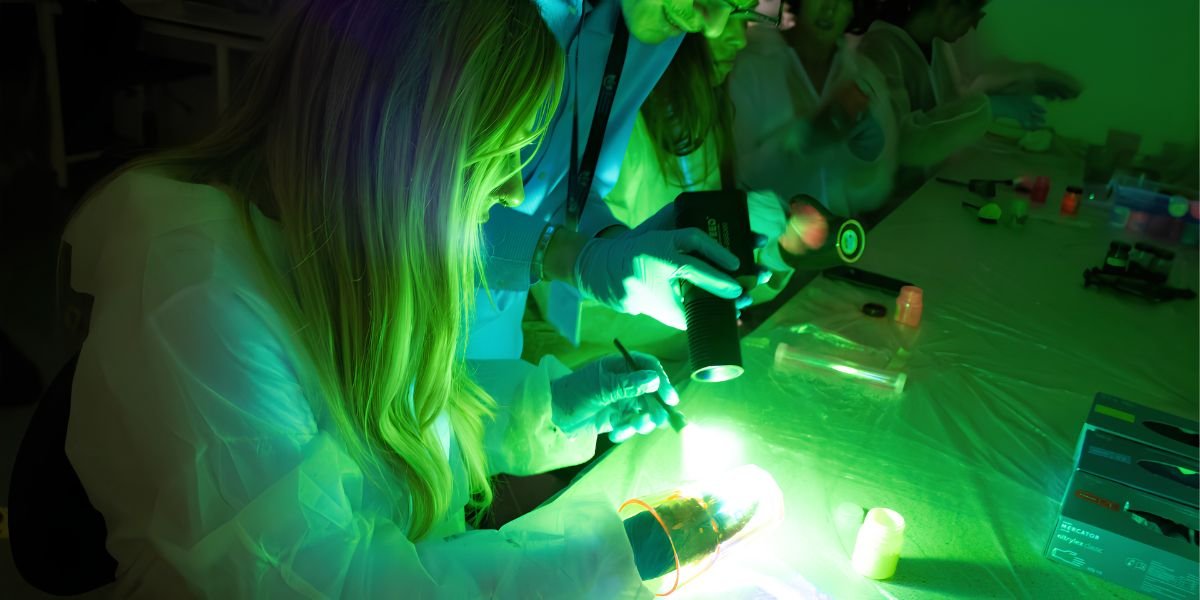
The Institute places a strong emphasis on practical learning. For programmes that include a hands-on component, students have the opportunity to develop their laboratory and analytical skills through practical forensic training, including simulated crime scene investigations, supported by augmented and virtual reality technologies for the exploration and analysis of three-dimensional crime scene reconstructions.
Bachelor’s and Master’s programmes at the Institute have been developed in line with the evolution of forensic practice, the introduction of new technologies into crime-solving, and the real demands of the forensic profession.
According to information published by the Institute, most of its faculty members continue to work professionally as forensic consultants, investigators, or researchers, bringing real cases, current challenges, and first-hand professional expertise into the classroom.
Rather than separating academic training from practical experience, the Institute’s teaching model is based on the analysis of real forensic cases through lectures, laboratory sessions, and practical exercises. This reflects a broader trend in specialist higher education, where universities and educational institutions increasingly combine academic study with professional practice to better prepare graduates for the demands of their profession.
Academic development has also included collaboration with public institutions and professional organisations. One of the first joint projects between the Institute and the Malta Police Force was the delivery of an Award in Forensic Biology for serving police officers. In 2022, the programme came to an end, and the first three Maltese police officers completed the programme and obtained the award. This collaboration formed part of a broader effort to strengthen forensic capacity within law enforcement agencies and to provide specialist education for serving police officers. Over time, the Institute has continued to collaborate with law enforcement agencies and other institutions in forensic education and applied training.
Meanwhile, the Institute has continued to evolve alongside developments in forensic science and higher education, expanding its academic portfolio to reflect advances in digital investigations, multidisciplinary learning, and emerging forensic technologies. While maintaining its accreditation within Malta’s national higher education system, it has continued to broaden the scope of its specialist programmes, combining online learning with laboratory-based practical training conducted in Malta.
The continued evolution of forensic science, driven by technological innovation and increasingly complex forms of crime, has also influenced the way specialist higher education is delivered. Institutions offering professionally focused programmes are placing greater emphasis on combining academic study with practical experience, reflecting the growing demand for graduates equipped with both scientific knowledge and operational skills.