

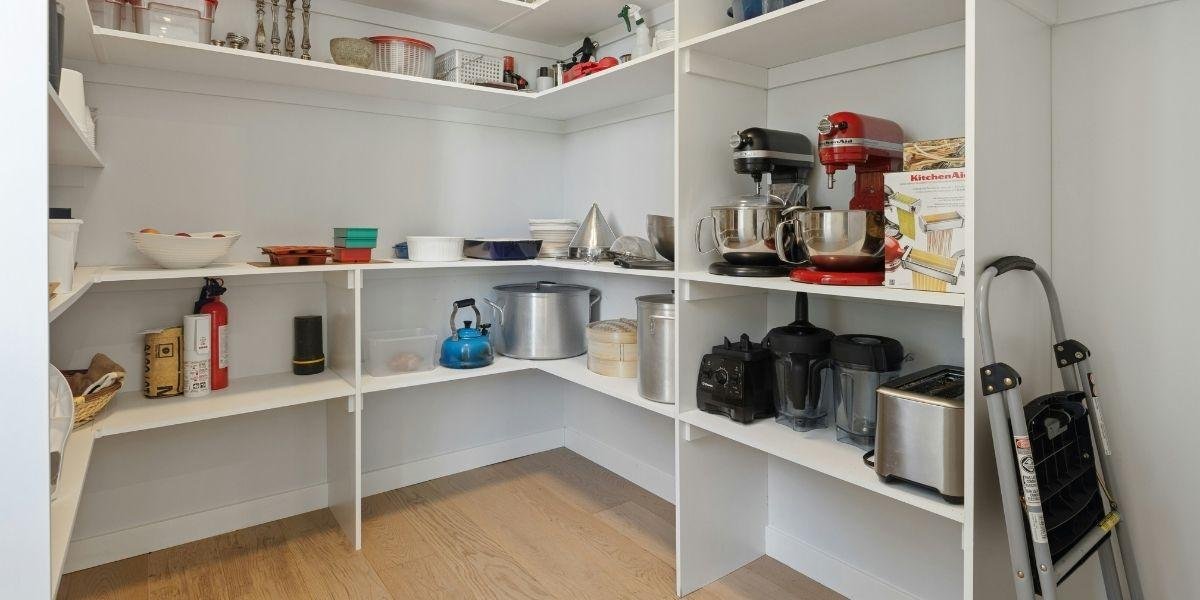
Most pantry closets were never designed to be pantry closets. They started as hallway closets that got reassigned when someone drew the kitchen floor plan, which is why the shelves are the wrong depth, the wrong height, and configured for nothing in particular. The right Pantry Closet Company in Florida starts with what you store, not what fits a standard layout.
Choosing the Right Pantry Closet Upgrades
Bins and label makers with matching containers don’t fix a shelf that’s too deep to reach. Organization products can make things look better, but they don’t change how the space functions. The upgrades worth spending money on are the ones that change the closet’s configuration.
Pull-out shelving can supply the most significant functional changes for your pantry. When a shelf can slide forward on full-extension drawer slides, the back of the pantry comes to you. Items that would otherwise push backward and expire unnoticed stay in rotation because they stay visible. In Southwest Florida homes that stock a few weeks of hurricane supplies alongside everyday groceries, a pantry where everything is visible and reachable is a practical requirement.
Shelf height adjustability matters in a pantry more than almost anywhere else in the house because the inventory shifts constantly. A fixed shelf with 14 inches of clearance works for cereal boxes until you start storing small appliances, the kids get older, or shopping habits change. A pin-based adjustable system takes an afternoon to reconfigure when that happens.
The back of the pantry door is a space you can use. A full-height door has room for spice racks, foil organizers, snack pouches, and condiment packets without consuming a single shelf. Most pantry designs ignore it entirely.
Cost-Efficient Pantry Shelving Upgrades
Tiered risers are little levels that stack on an existing shelf. They can cost $20 to $40 and are used to stack canned goods so nothing is hidden. A lazy Susan at $15 to $35 handles the storage problem in corner sections, or anywhere shelves run deeper than 12 inches.
Easy sliding organizers from ClosetMaid and comparable brands can drop into existing cabinets on standard runners and convert existing shelving into pull-outs. A single unit runs $30 to $60. Quality matters here because ball-bearing slides will hold up under weight, while plastic runners will wobble and eventually fail.
What these shelving updates don’t address is an underlying problem in shelf placement. If you have a pantry where the shelves are at the wrong heights, your closet will get tidier with add-ons but not functional. Three hundred dollars spread across a dozen individual organizers is a common path that ends with a pantry that photographs well and still frustrates people to use. The math on that quickly points toward a custom-configured system.
High-End Pantry Upgrades For Your Home
For wine racks, lattice-style racking is a good visual starting point, and they do the job. Wine bottles can sit on their side with their labels facing out. The whole thing looks intentional when the pantry door swings open. One important question is whether you actually have people over regularly, because that determines how much wine storage the pantry needs to handle versus how much is just visually in line of sight. Sarasota and Naples homeowners tend to keep a large wine collection, and a lattice rack holding a dozen runs out fast when guests arrive Thursday and stay through Sunday or Monday morning. The X-style cubbies give individual bottles a slot and handle large collections without stacking. Storing wine inside the pantry means it lives where the cooking and prep already happen.
Appliance garages solve a problem most kitchens have, and most people have stopped noticing. A stand mixer, an air fryer, and a coffee station all sit on the counter because they’re used too often to store elsewhere but take up workspace the rest of the time. A built-in appliance garage adds a door to the pantry wall so the equipment disappears when it is not running and swings open when it is. The kitchen counter recovers the workspace.
Built-in LED lighting makes a material difference in any walk-in pantry. Deep shelves at the back of a dark space are where things expire. An outlet inside the pantry supports a beverage cooler or a coffee setup on its own circuit, separate from the kitchen. Butcher block or quartz countertop sections provide a prep surface that keeps the main kitchen clear during food assembly. In Southwest Florida homes set up for regular entertaining, that prep surface gets used as much as the kitchen island does.
What You Should Expect From a Pantry Closet Company
The first conversation should be the company asking questions, not presenting designs. How the pantry is currently used, what categories of food and supplies are stored there, what isn’t working and why. A designer who arrives with a portfolio and starts showing examples before measuring the room is presenting a product line rather than solving a specific problem.
The design should come back as a rendering of your pantry. Your door swing, your ceiling height, your wall dimensions, your specific configuration. A showroom example in similar proportions is not the same thing. You should be able to see where every shelf and pull-out lands in the actual room before committing to anything.
Panel thickness is the material question worth asking every company before signing a proposal. Pantry shelving should be 3/4’’ minimum. Thinner panels flex under sustained weight and eventually sag. Pull-out systems should be full-extension with ball-bearing slides. In Southwest Florida, hardware rated for coastal humidity lasts considerably longer than standard hardware, and any company doing regular work in the area should be selecting for that without being asked.
The installation crew should be employed by the company, not subcontracted. Ask specifically who is accountable if something needs to be addressed after installation day. The answer tells you more about how the warranty works than the warranty document does.
This article was sponsored by Bella Systems Custom Closets in Southwest Florida. Located in Bradenton, Florida, we serve Manatee County and Sarasota County with custom pantry closet designs that are beautiful and functional. Contact us for a free pantry closet design consultation.