

Ziyue (Michelle) Bai belongs to a new generation of designers whose work moves fluidly between technical precision and conceptual depth. Currently pursuing a Master of Engineering in Design & Technology Innovation at Duke University, following her honors degree in Product Design from ArtCenter College of Design, she has cultivated a multidisciplinary practice that is as intellectually rigorous as it is visually compelling. Rather than positioning design as a purely problem-solving discipline, Michelle approaches it as a mode of inquiry, one that interrogates systems, behaviors, and the often-invisible frameworks shaping contemporary life.
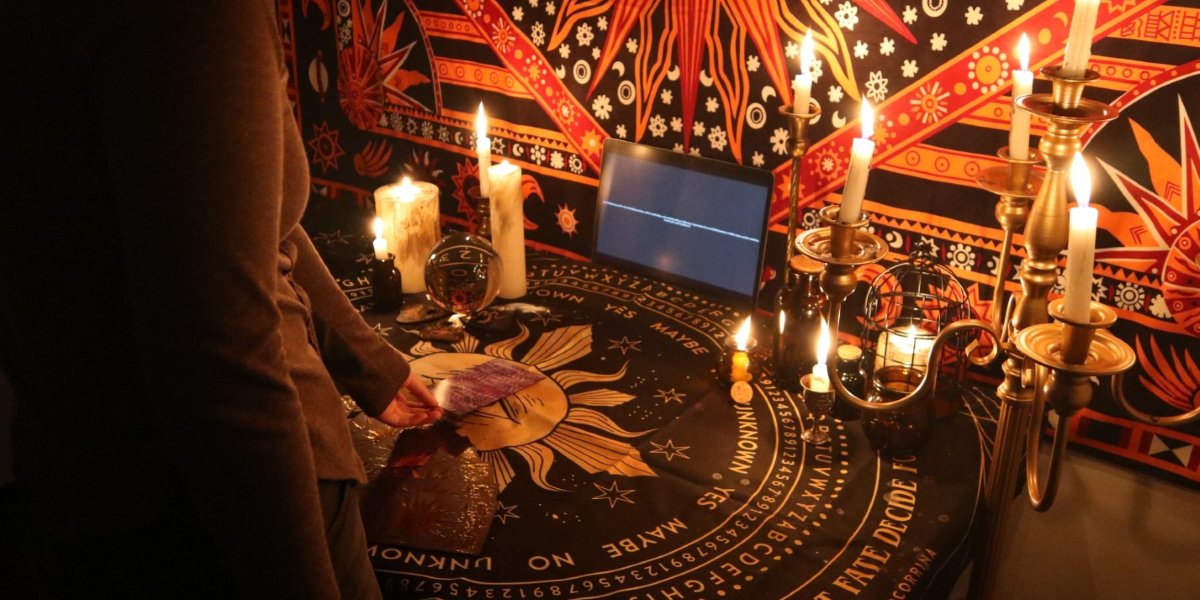
Her project The Algorithmic Seer stands as a striking embodiment of this philosophy. The work brings together two seemingly disparate domains: traditional divination practices and artificial intelligence. Yet this pairing is far from arbitrary. By aligning algorithmic prediction with ancient methods of interpreting uncertainty, Michelle constructs a powerful conceptual bridge between past and present modes of belief. In doing so, she reframes AI not as a purely rational tool, but as a cultural artifact, one that, much like divination, derives its authority from human perception as much as from its internal logic. The project unfolds as an immersive and experiential installation, inviting participants to engage with algorithmic outputs in ways that mirror how individuals have historically sought guidance from mystical systems.

What emerges is not merely an aesthetic encounter, but a deeply revealing psychological study. The Algorithmic Seer probes the ways in which humans make decisions when confronted with uncertainty, exposing the subtle interplay between trust, bias, and interpretation. Participants often read meaning into algorithmic results selectively, gravitating toward outcomes that affirm their existing beliefs while overlooking contradictions, a dynamic that echoes confirmation bias. Through this lens, Michelle’s work transcends the boundaries of design and enters the territory of critical research, situating itself within contemporary conversations in human-computer interaction. Rather than celebrating the precision of AI, she illuminates the fragility of human judgment in the presence of perceived authority.
This critical positioning distinguishes Michelle’s practice in a landscape where artificial intelligence is frequently treated as an unquestioned advancement. While much of the design industry focuses on optimizing systems for efficiency, Michelle redirects attention toward the human side of the equation: how these systems are experienced, interpreted, and ultimately trusted. Her work suggests that the true impact of AI lies not only in what it produces, but in how it shapes human perception and behavior. By framing AI as a modern oracle, she invites viewers to confront an unsettling continuity, that even in an age defined by data and computation, our reliance on interpretive belief systems remains profoundly unchanged.
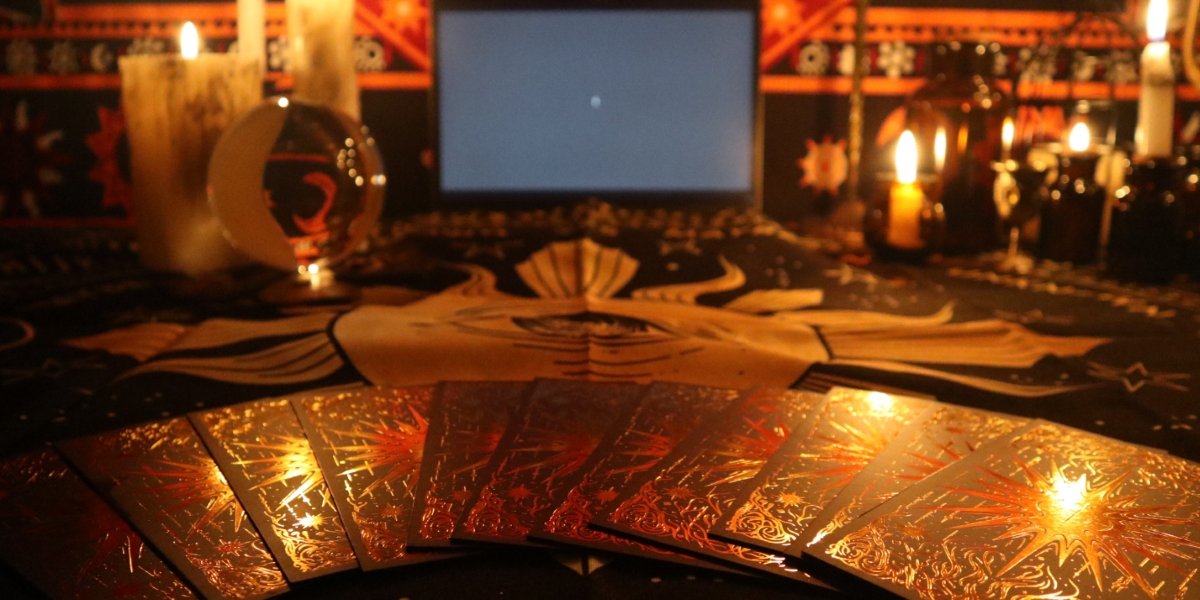
Underlying this project is a design methodology that integrates storytelling, research, and prototyping. Michelle’s background across branding, museum education, and product design has given her a particular sensitivity to both narrative and audience engagement. In The Algorithmic Seer, this manifests as an environment that is not only aesthetically refined but also intellectually charged, guiding participants through an experience that is at once intuitive and thought-provoking. Her ability to translate complex theoretical concerns, such as algorithmic bias and the psychology of trust, into accessible, embodied experiences underscores a maturity of practice that is both considered and compelling.
Michelle Bai’s work ultimately signals a broader shift in contemporary design: from creating tools to questioning them, from solving problems to revealing their deeper implications. She does not merely employ artificial intelligence as a medium; she interrogates it, challenges it, and, in doing so, expands our understanding of its role in human life. With a practice grounded in both criticality and craft, she has established herself as a designer of clarity and vision, one whose work not only reflects the complexities of our technological moment, but also dares to ask what lies beneath them.
Project link: https://www.youtube.com/watch?v=nLvRdB0zhb8